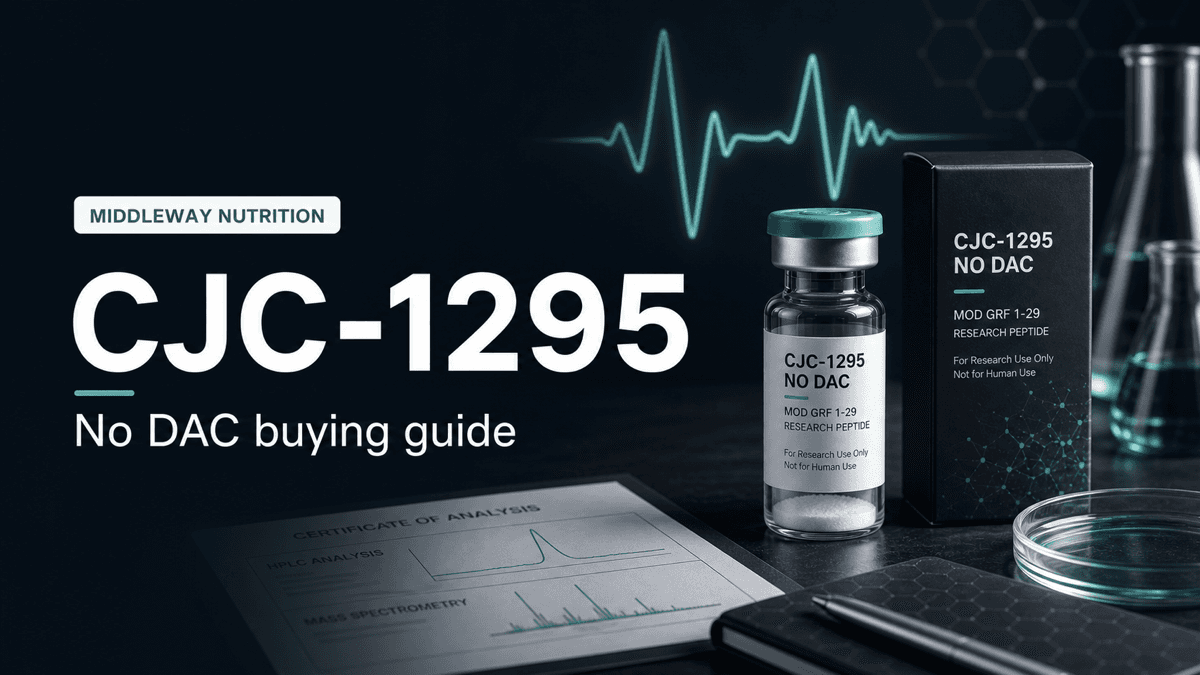
CJC-1295 for sale is almost always a 10mg no-DAC vial, currently listed around $70.00, or roughly $7.00 per milligram. What separates a real vial from a decorative one is a batch-specific certificate of analysis you can tie to the lot number on the glass. Prices and specs first, then the verification checklist that decides whether the vial is worth the money. For a wider vendor comparison, see our where to buy CJC-1295 guide.
Key Takeaways
- A 10mg no-DAC vial currently lists at about $70.00, roughly $7.00/mg. Compare per milligram, never per vial
- CJC-1295 is not FDA-approved. It sells for research use only, so the seller, not a regulator, decides what quality means
- A COA only counts if it is batch-specific, dated, and its lot matches the vial in your hand
- Demand both numbers: HPLC purity and mass spec identity. High purity of the wrong peptide is still the wrong peptide
- A vial priced far below market is usually underfilled, low-purity, or a cheaper peptide in disguise
CJC-1295 price and specs
| Compound | CJC-1295 (no DAC) |
| Vial size | 10mg |
| Price | $70.00 USD |
| Cost per mg | $7.00/mg |
| Batch COA | Batch-specific, published in a public certificate library |
| Form | Lyophilized powder, sealed glass vial |
| Shipping | US only; free over $250 |
Ascension Peptides pricing verified September 2026. Prices move, so check the live listing before ordering.
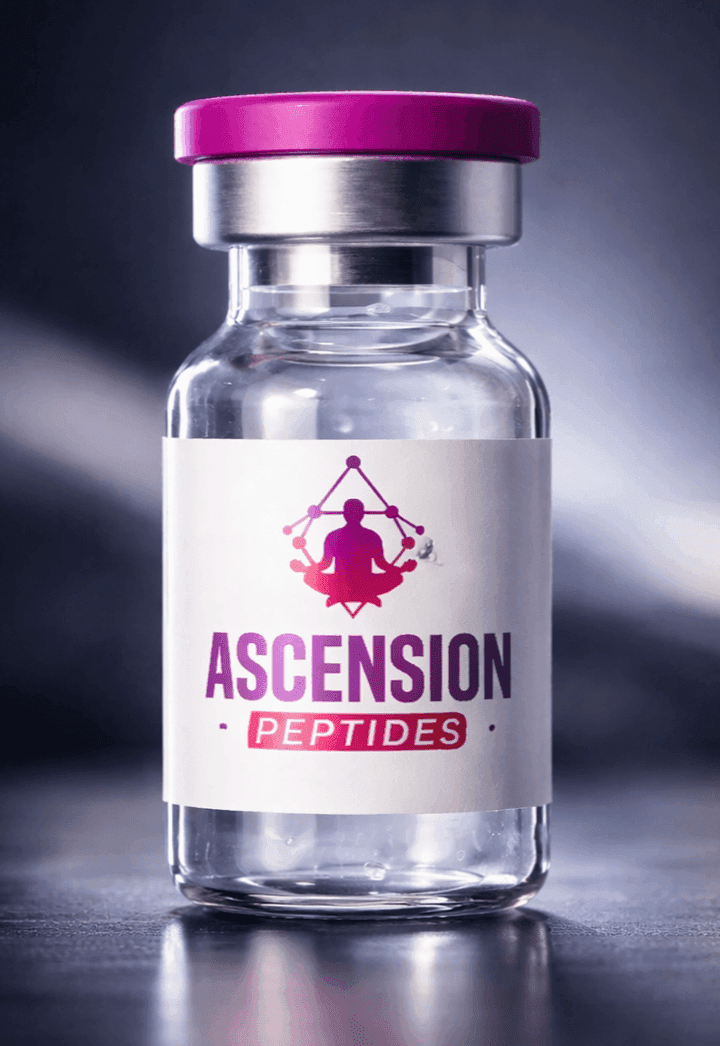
Ascension Peptides has every batch independently tested by a third-party lab and publishes 85 batch-specific certificates in a public library, rather than leaning on a single generic product-line PDF reused across every lot. That is the part worth paying for: you can find the certificate for your lot, so the document you are reading belongs to the vial in your hand. The current Kovera Labs reports cover HPLC purity, LC-MS identity, net content, endotoxin, a rapid sterility screen and heavy metals. That is why Ascension is our pick for CJC-1295, and new customers can use code PEPTIDEDECK for 50% off.
Pricing sanity check
Rough 2026 market bands, useful as a fraud filter more than a shopping target:
- No-DAC, 5mg vial: roughly $50 to $90
- No-DAC, 10mg vial: roughly $50 to $110
- With DAC, 5mg vial: roughly $50 to $140
- CJC-1295 / ipamorelin blend, 5mg/5mg: roughly $70 to $90
- CJC-1295 / ipamorelin blend, 10mg/10mg: roughly $110 to $145
Compare per milligram. A 10mg vial at $70.00 works out to $7.00/mg, which sits comfortably inside the normal band. Treat a price far below the band as a warning, not a win: synthesis sets a cost floor, and when someone clears it by a wide margin the money came out of fill weight, purity, or identity. A premium price guarantees nothing either. Price is a filter; documentation is the decision. Vendor lineups change quarterly, so a second where to buy CJC-1295 roundup is useful for confirming a supplier is still shipping.
What you are actually buying
CJC-1295 is a synthetic analog of growth-hormone-releasing hormone (GHRH). In research models it binds GHRH receptors on the pituitary and prompts the gland to release its own growth hormone in pulses, rather than delivering GH directly.
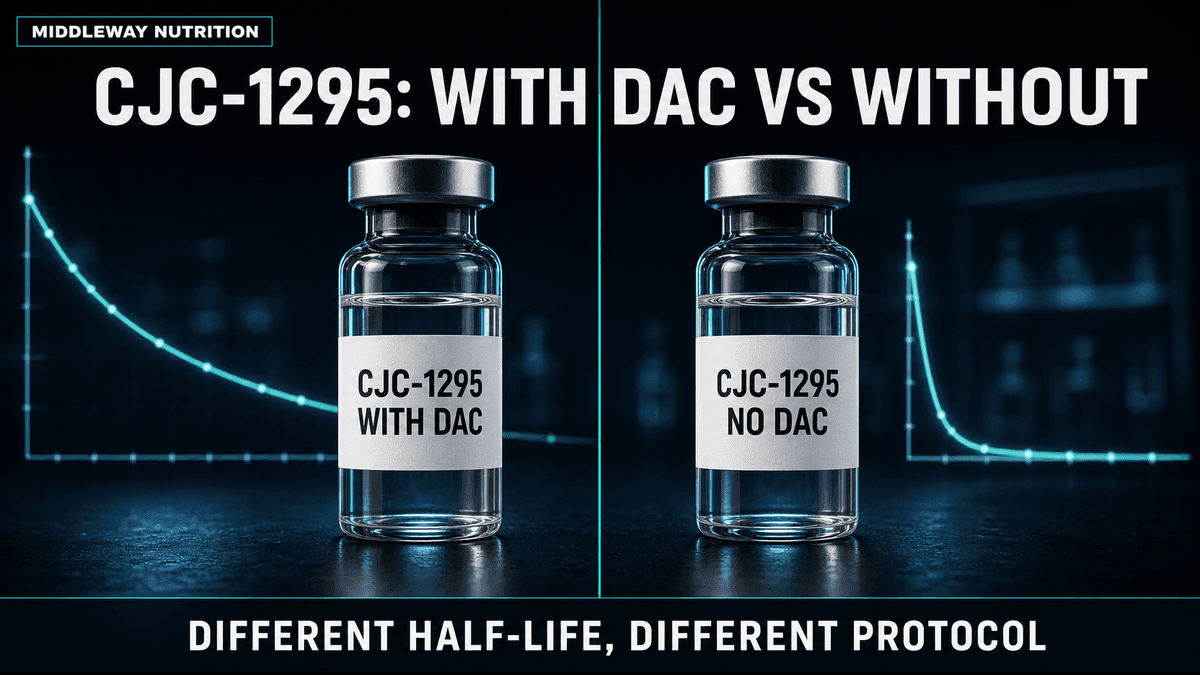
It comes in two forms, and the difference matters for verification. With DAC, a Drug Affinity Complex modification binds the peptide to albumin and stretches its half-life to roughly six to eight days. Without DAC, the half-life is about thirty minutes and the sequence is identical to Mod GRF 1-29. The two carry different molecular weights, roughly 3,367 g/mol for no-DAC and roughly 3,647 g/mol with DAC, which is why a mass spec line tells you which one you received.
Neither form is approved therapy. When a research vendor lists CJC-1295, none of the pharmacy checks apply: no agency verifies purity, fill weight, or sterility, the vendor picks which testing to publish, and there is no recall mechanism. CJC-1295 is also cheap to synthesize compared to a GLP-1 analog, which floods the market with listings. Good for price competition, bad for trust: low production cost lets sloppy operators sell weak material and still undercut everyone honest.
How to read a CJC-1295 COA without being fooled
What separates a real certificate from a decorative PDF:
Batch-specific, not product-level. A product-level COA describes a product line and may have been run a year ago on different material. A batch-specific COA names the exact lot. When the vial arrives, compare the lot on the label to the certificate. If they differ, or the vial has no lot number, treat it as untested.
HPLC purity. High-performance liquid chromatography reports what percentage of the sample is the target peptide. For research-grade material, 98% or higher is the working bar. Below 95%, the remaining mass is by-products nobody can identify.
Identity, not just purity. The check most buyers skip. HPLC tells you the sample is 99% something. Mass spectrometry confirms molecular weight, the only thing standing between you and a substitution, including DAC material sold as no-DAC. And note the limit of a purity figure on its own: a vial can be 99% pure by HPLC and still be underfilled, because purity says nothing about how much powder is actually in the glass.
A recent date, from an independent lab. Lot-specific analysis within roughly six months, run by a lab that is not the vendor. In-house testing means the seller graded its own homework. A lab name on a PDF proves nothing on its own, because anyone can paste letterhead into an image, which is why named labs with verifiable report numbers matter. Endotoxin testing (LAL assay) and sterility data are a bonus; their absence is common, which is why their presence tells you something.
The blend problem nobody warns you about
Much of the CJC-1295 on the market is not sold alone. It ships as a no-DAC blend with ipamorelin, typically 5mg/5mg or 10mg/10mg in one vial, and blends are where verification gets genuinely hard.
A blend COA has to account for two compounds: purity and identity for each, CJC-1295 near 3,367 g/mol and ipamorelin near 712 g/mol, plus the ratio. What you usually see instead is a single purity figure with no breakdown, which is close to meaningless. A vial can be 99% "peptide" while containing far more of the cheaper component than the label implies. Ask for the individual mass spec results; a vendor who cannot produce them does not know what is in the vial either.
Watch also for ambiguity about DAC. "CJC-1295" with no DAC designation is a labeling failure, not shorthand. If you want to sidestep the whole problem, buy the single compound rather than a blend.
What actually arrives
Research CJC-1295 arrives as a lyophilized white powder in a sealed glass vial, usually 2mg, 5mg, or 10mg. It is not pre-mixed, and should not be, because peptides in solution degrade and you cannot know how long that vial sat warm.
Inspect on arrival. The powder should be a white or off-white cake or fine deposit. Discoloration, visible particulate, a loose stopper, or a warm vial billed as cold-shipped are grounds for a refund. Lyophilized material is stored cold; reconstituted material has a short usable window under refrigeration.
Red flags to walk away from
Any single one is enough:
- No COA, or only a generic product-line certificate
- A COA whose lot does not match the vial
- Purity with no identity test, meaning HPLC only, no mass spec
- One certificate reused across every product and batch, or an undated analysis
- A blend sold with a single combined purity figure, or no DAC designation anywhere
- "Pharmaceutical grade" or "99% pure" as a banner with no document behind it
- Pricing far below market, unexplained
- Pre-mixed solution sold as standard
Legal and safety reality
CJC-1295 is not a controlled substance in the United States and sells legally as a research chemical. It is not approved for human use, so there is no prescription route and no insurance pathway. Buying it for personal use sits outside the regulated medical system, and state and import rules vary. It is also banned in competitive sport: WADA prohibits growth hormone secretagogues and GHRH analogs at all times.
Pre-purchase checklist
- A lot-specific, dated COA exists for the exact vial
- HPLC purity is 98% or higher
- Mass spec confirms identity, and for a blend, both compounds
- The testing lab is independent and named, and the report is verifiable
- The listing states clearly whether it is DAC or no-DAC
- The price sits inside the normal per-mg band
- It ships as lyophilized powder, not pre-mixed
- On arrival, the vial lot matches the certificate
Any "no" is a reason to stop.
FAQ
How much does CJC-1295 cost?
A 10mg no-DAC vial currently lists at about $70.00, or roughly $7.00 per milligram. Across three vendors checked in July 2026, a 5mg no-DAC vial ran $41 to $46, and a 10mg was listed at $68. Compare per milligram, and treat anything far below these figures as a warning.
Is CJC-1295 legal to buy?
CJC-1295 is legal to buy in the US as a research chemical for laboratory use. It is not a controlled substance, but it is not FDA-approved for human use, so there is no legal route to buy it as a medicine. State laws and import rules vary, and it is banned at all times in tested sport under WADA rules.
How do I know CJC-1295 is real?
Ask for a batch-specific certificate showing HPLC purity of 98% or higher and mass spec identity confirmation, roughly 3,367 g/mol for no-DAC, roughly 3,647 g/mol with DAC. Verify the report with the named lab directly, then match the certificate lot to the one on the vial.
Do I need a prescription for CJC-1295?
No, because there is no prescription version. CJC-1295 is not an approved drug in the United States, so no clinician can write a standard prescription for it. Everything sold is research material, which is why the checks above carry the weight a pharmacy otherwise would.
What is the difference between CJC-1295 with DAC and without DAC?
DAC binds the peptide to albumin and extends its half-life to roughly six to eight days. Without DAC, the half-life is about thirty minutes and the compound is identical to Mod GRF 1-29. Different molecules, different molecular weights, so a listing that does not specify which it sells has not told you what you are buying.
Where to order
If you want a listing that already clears the documentation bar, Ascension Peptides sells the 10mg no-DAC vial at $70.00 USD, with batch-specific third-party certificates showing >98% purity published in its certificate library. It ships within the US only, with free shipping over $250; all sales are final, though damaged or incorrect items are replaced if reported quickly. Code PEPTIDEDECK takes 50% off for new customers. Order the vial, then match the lot to the certificate anyway.
Medical Disclaimer: This article is informational only and is not medical advice. CJC-1295 is not FDA-approved and is sold for laboratory research use only. Nothing here endorses self-administration. Consult a qualified healthcare professional before any health decision. Research peptides carry legal and health risks that vary by jurisdiction.