GHK-Cu for sale runs about $59 for a 100mg vial, or roughly $0.59/mg, and the only thing separating a real vial from a repackaged one is a batch COA you can trace to a named lab. Prices and specs are below, then the verification checks that actually apply to a copper peptide.
If you are comparing sellers rather than checking a specific vial, our GHK-Cu vendor comparison covers sourcing options side by side.
Key Takeaways
- A 100mg research vial sits around $59, or roughly $0.59/mg, which is cheap next to almost any other research peptide
- GHK-Cu is not an FDA-approved drug. The lyophilized form is sold for laboratory research use only, and the label is not a formality
- HPLC purity alone does not prove you have GHK-Cu. It can be 99% pure peptide with little copper bound to it
- Check the molecular weight on the COA. Free GHK is about 340 g/mol; the copper complex is closer to 402
- Genuine GHK-Cu is visibly blue as a powder and a solution. A white powder is not the copper complex
GHK-Cu Price and Specs
Ascension Peptides pricing, verified September 2026. Prices move, so treat the table as a reference point rather than a fixed quote.
| Spec | Detail |
|---|---|
| Size | 100mg, in a 3mL or 10mL vial |
| Price | $59.00 USD (3mL) or $69.00 USD (10mL) |
| Per mg | About $0.59/mg (3mL) |
| Form | Sealed vial, research use only |
| Purity | Certificate pass mark >98% by HPLC; every batch tested by an independent third-party lab |
| COA | Batch-specific certificates in a public library of 85 |
| Shipping | United States only, free over $250 |
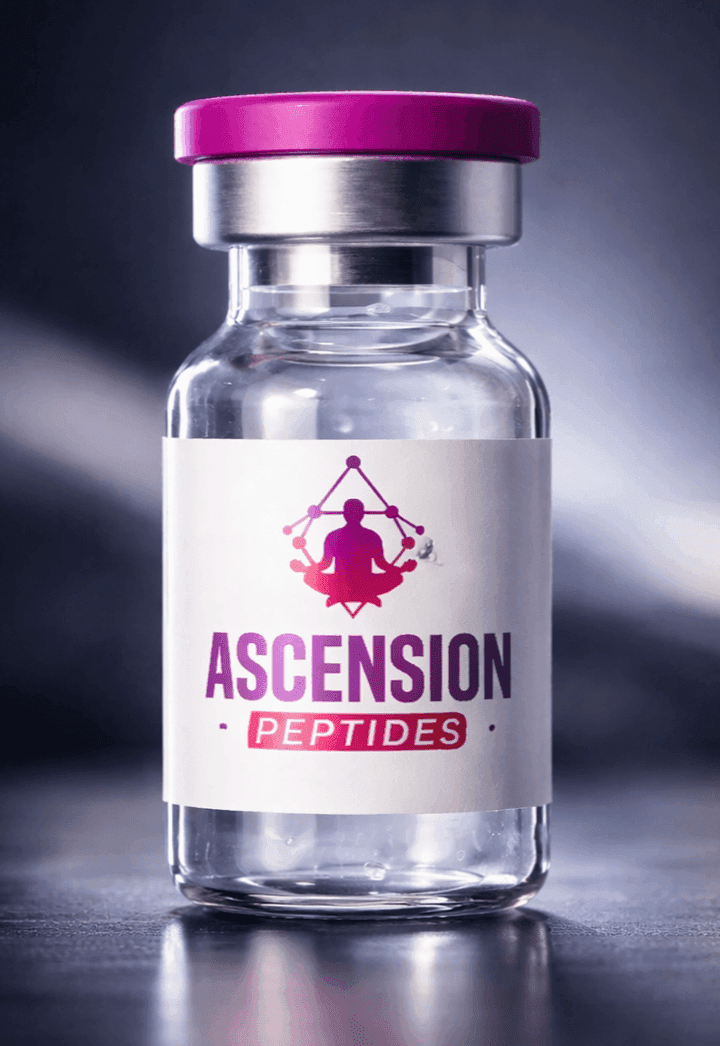
Current listing: Ascension Peptides. Its certificates are batch-specific reports from an independent lab (currently Kovera Labs) rather than a single evergreen document, published in a public COA library, so you can match the lot in your hand to the lot on the report. They cover HPLC purity, LC-MS identity, net content, endotoxin, a rapid sterility screen and heavy metals, and the product is sold honestly as research material. New customers get 50% off with code PEPTIDEDECK.
Is That a Fair Price?
GHK-Cu behaves differently from the GLP-1 peptides, and generic buying advice misleads people here. With retatrutide or tirzepatide, a rock-bottom price is a loud alarm because the raw material is genuinely expensive. GHK-Cu is a three-amino-acid peptide, cheap to synthesize at scale, so legitimate 100 mg vials commonly sit in the tens of dollars. A low price is not automatically a scam signal for this compound.
What should still make you pause: prices far under what every other established vendor is charging, with no testing published; aggressive bulk discounts paired with zero batch documentation; or a price that only appears after you agree to an untraceable payment method. Because price is a weak signal here, documentation carries proportionally more weight. Judge the COA, not the discount. For a wider vendor comparison than the table above, a dedicated where to buy GHK-Cu roundup covers more suppliers.
What You Are Actually Buying
GHK-Cu is glycyl-L-histidyl-L-lysine, a naturally occurring human tripeptide, complexed with copper(II). First isolated from human plasma by Loren Pickart in the 1970s, it is studied in research settings for tissue remodeling, collagen synthesis, and wound repair. The same molecule appears in cosmetics as Copper Tripeptide-1. The lyophilized research vials are a different market entirely, with an enormous quality spread between the best and worst listings.
Every vial listed for sale online is sold as a research compound, not a medicine. No regulator checks identity, purity, sterility, or fill weight, and there is no recall path if the batch is wrong. The seller decides what testing to publish. You decide whether to believe it.
The COA Is the Whole Game
A certificate of analysis is a lab report describing one production batch. No COA, no purchase. But most buyers stop at "they have a COA," which is exactly the gap bad sellers exploit. A COA is worth something only if it is:
- Batch-specific. It names a lot number matching the vial that arrives. A product-level certificate covering "GHK-Cu" in general describes a synthesis run you will never receive.
- Recently dated. A certificate from two years ago describes material that is long gone.
- Complete. Identity, purity, and, for injectable research work, sterility and endotoxin results.
- Legible and unedited. Cropped images, missing letterhead, or a blanked-out sample ID are reasons to ask a direct question before ordering.
- Third-party. An in-house COA is a self-graded exam. The version that carries weight comes from an independent analytical lab with no financial stake in the result, on letterhead, naming the lab and the method. A report you can trace to a real laboratory, carrying its own batch number you can quote back, is categorically different from one generated in an image editor.
If a vendor will not send the current batch COA on request, treat the refusal as your answer.
The Copper-Specific Check Nobody Talks About
This is where GHK-Cu differs from every other peptide you might buy, and where most buying guides go quiet.
HPLC purity measures the peptide: what fraction of the material is the intended tripeptide sequence rather than truncated fragments or synthesis byproducts. What it does not tell you is whether copper is present and properly chelated. A vial can be 99% pure by HPLC and still be mostly plain GHK with only a trace of copper, and the chromatogram will still look excellent. The same goes for fill weight: purity says nothing about how much powder is in the vial.
Two checks close that gap:
Molecular weight on the mass spec. The uncomplexed tripeptide GHK is roughly 340 g/mol. Adding copper(II) pushes the complex to roughly 402. Read that line carefully, because a spec sheet listing the free-peptide mass on a product sold as GHK-Cu is either a copy-paste error from a chemical database or a description of material without the copper. Either way it is fair to ask about before you pay.
Elemental copper analysis. The cleanest confirmation is a copper content result, by ICP-MS or atomic absorption, reported as a percentage by weight. Not every vendor runs it, and the ones that do are telling you something.
What Actually Arrives
A research-grade order should arrive as a sealed 3 mL glass vial containing a lyophilized cake, crimped under an aluminum seal with a flip-top cap, labeled with compound name, quantity, and lot number. Common sizes are 50 mg, 100 mg, and 200 mg. Bacteriostatic water is sold separately, and the sealed vial should be kept cold and dark.
Then check the color, the one visual test this compound gives you for free. The copper complex is blue: the cake should look blue to blue-violet and dissolve to a clear blue solution. A white powder that reconstitutes colorless is not the copper complex, whatever the label says. Cloudiness, sediment, or a murky green tint points to degradation or contamination.
Red Flags That Mean Walk Away
- No COA, or one certificate reused across every product with the numbers changed
- A certificate with no lot number, no test date, or no identifiable lab
- Molecular weight listed as the free peptide, with a vendor who cannot explain it
- Human dosing charts or therapeutic claims sitting next to a "research use only" disclaimer. The contradiction tells you which one they mean
- Crypto-only or wire-only payment with no card option and no refund policy
- No physical address or company name, with support that exists only on a messaging app
Quick Pre-Purchase Checklist
- Batch-specific COA, dated within the current stock cycle
- Lot number on the certificate matches the vial
- Independent third-party lab named on the report
- HPLC purity of at least 98%
- Mass spec or copper analysis confirming the complex, not free GHK
- Sterility and endotoxin results if relevant to your work
- Real company identity, refund policy, and a payment method with recourse
- Product described as research material, with no human dosing claims
Legal and Safety Reality
GHK-Cu is not a controlled or scheduled substance in the United States, so buying it as a research chemical is legal in that narrow sense. Selling it for human use is not approved, which is why every vendor carries a research-use-only disclaimer, and there is no prescription pathway because no approved injectable GHK-Cu drug exists.
Copper is not benign in unlimited amounts, and self-administering unapproved research material carries real risk including contamination, incorrect concentration, and unknown impurities.
FAQ
How much does GHK-Cu cost?
Less than most peptides. A 100mg research vial runs about $59, or roughly $0.59/mg. Because the peptide is short and inexpensive to synthesize, a low price is less alarming than for a GLP-1 compound, but anything dramatically below the prevailing market range with no published testing deserves scrutiny. Check current listings rather than relying on any published figure.
Is GHK-Cu legal to buy?
Yes. In the United States GHK-Cu is not a controlled or scheduled substance and can be sold and purchased as a research compound. It is not an FDA-approved drug, so it cannot legally be marketed for human use. Topical Copper Tripeptide-1 formulations are sold openly at retail.
How do I know GHK-Cu is real?
Three checks: a batch-specific third-party COA whose lot number matches your vial, a molecular weight consistent with the copper complex rather than the free peptide, and the blue color of the powder and solution. Purity alone does not prove copper is bound.
Do I need a prescription for GHK-Cu?
No. There is no approved injectable GHK-Cu drug, so there is no prescription to obtain. Research vendors sell it without one, explicitly for laboratory rather than human use, and cosmetic copper peptide products are available over the counter.
Why is my GHK-Cu solution blue?
Because the copper(II) ion absorbs light in the visible range. Blue is expected and roughly confirms you have the copper complex rather than plain GHK.
Before You Order
The compound is not the risk. The supply chain is. Copper peptide is easy to sell convincingly and hard to verify, because the purity number everyone quotes does not answer the question that matters for this molecule. Ask for the batch COA, check the lab is independent, the lot matches the vial, and the molecular weight reflects the copper complex. If a vendor makes any of that difficult, that is the whole review.
For a current listing, Ascension Peptides sells GHK-Cu at $59.00 for a 100mg 3mL vial and $69.00 for the 10mL size. Every batch is tested by an independent third-party lab, with certificates showing >98% HPLC purity, LC-MS identity, net content, endotoxin, a sterility screen and heavy metals. It ships within the United States only, free over $250, and all sales are final, though damaged or incorrect items are replaced if reported quickly. New customers get 50% off with code PEPTIDEDECK.
Medical disclaimer. GHK-Cu discussed here is sold for laboratory research use only. It is not an FDA-approved drug and is not intended to diagnose, treat, cure, or prevent any disease. This article is informational, is not medical advice, and does not endorse self-administration. Consult a qualified healthcare professional before making any health decision.