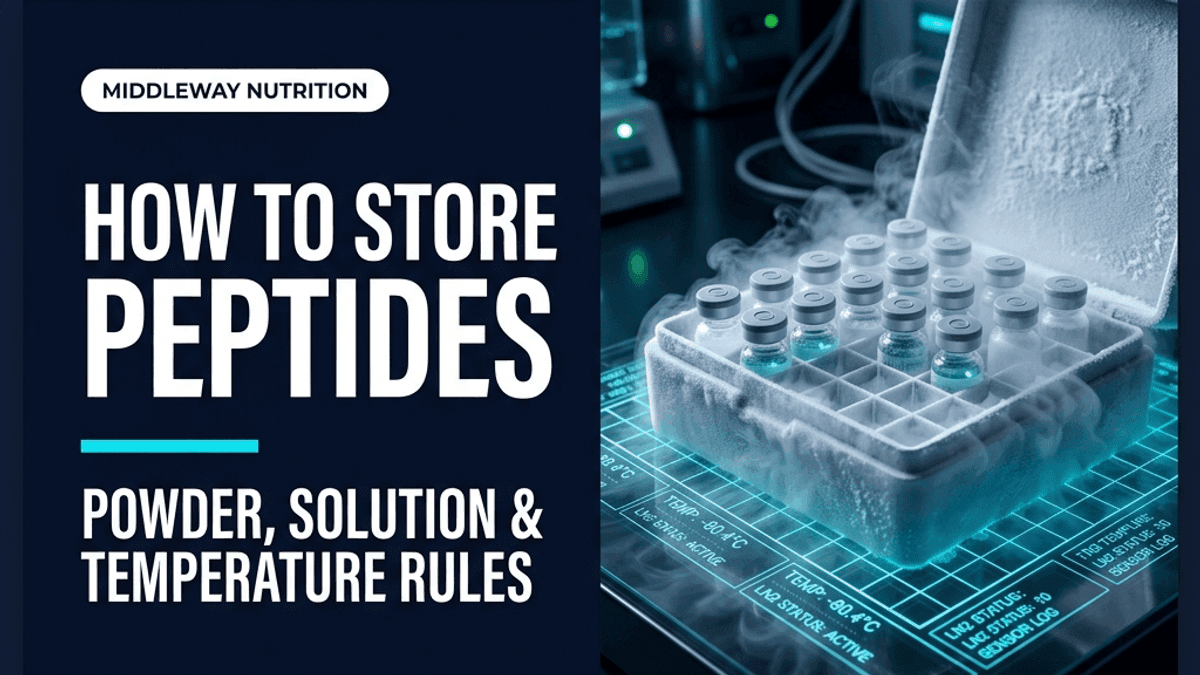
How to store peptides so they actually last is mostly one rule with two halves: sealed powder goes in the freezer or fridge and keeps for months to years, while anything you have added water to lives in the refrigerator and has roughly two to four weeks before potency becomes unreliable. Everything else is detail around those two states.
The reason storage matters more than people expect is that peptide degradation is invisible. A vial that has lost a third of its activity looks exactly like a fresh one, so the feedback you get is not a cloudy solution but a compound that quietly stops doing what it did in week one. Learning how to store peptides properly is the cheapest thing you can do to protect what you already paid for.
How to Store Peptides So They Actually Last: Sealed Powder
Freeze drying removes the water, and water is what drives most peptide breakdown. That makes lyophilised powder remarkably durable.
| Storage location | Realistic shelf life | When it makes sense |
|---|---|---|
| Freezer, around -20°C | 2 to 5 years for most compounds | Long term stock, anything you will not open soon |
| Refrigerator, 2 to 8°C | 6 to 12 months | The vial you plan to open in the next few months |
| Room temperature, under 25°C | Weeks without meaningful loss | In transit, or a short gap before you get home |
The room temperature row is why peptide orders arrive without dry ice and are still fine. A few days in a delivery van does not ruin sealed powder. What does ruin it is humidity reaching the powder through a compromised seal, which is why a bathroom cabinet is a poor storage location regardless of temperature.
Practical habits worth adopting: keep vials in their original box or wrapped in foil to block light, store multiple vials together in a sealed container with a desiccant packet, and write the date received on each label.
After Reconstitution: The Clock Starts
Adding bacteriostatic water changes everything. Hydrolysis becomes possible, oxidation speeds up, and the stopper has now been punctured.
Two to four weeks refrigerated is the working assumption for most research peptides mixed with bacteriostatic water. Some hold longer, a few degrade faster.
| Compound | Typical usable window, refrigerated | Note |
|---|---|---|
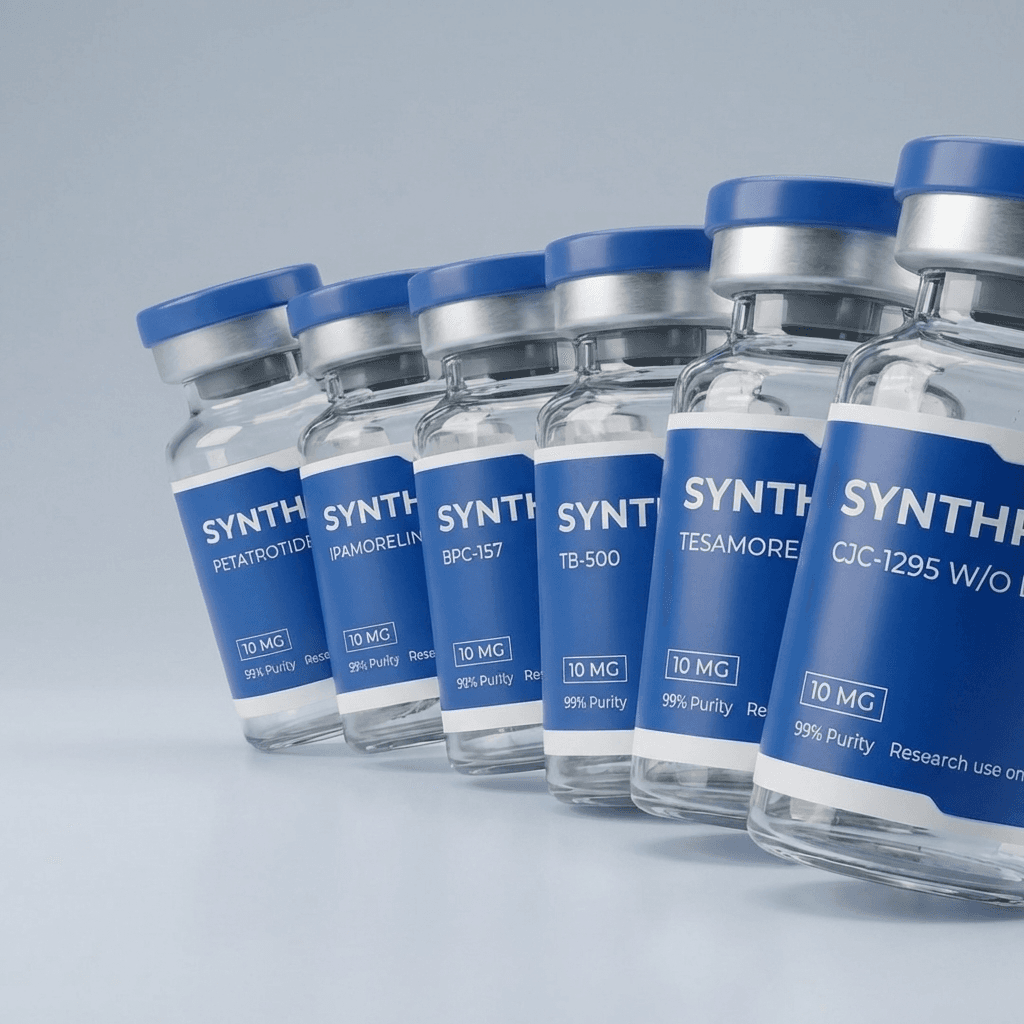
| BPC-157 | 3 to 4 weeks | Among the more stable after mixing |
| TB-500 | 2 to 3 weeks | |
| Ipamorelin | 2 to 3 weeks | Typical for the GH secretagogue group |
| CJC-1295 | 3 to 4 weeks | |
| GHK-Cu | 2 to 3 weeks | The copper complex adds some instability |
| Semaglutide and tirzepatide | 4 weeks or more | Engineered for stability as pharmaceuticals |
| Selank | 2 weeks | Short peptides tend to go faster |
Treat these as planning figures rather than guarantees. They come from vendor stability guidance and common practice, not from published stability studies on every compound, and actual performance depends on how consistently the vial stayed cold.
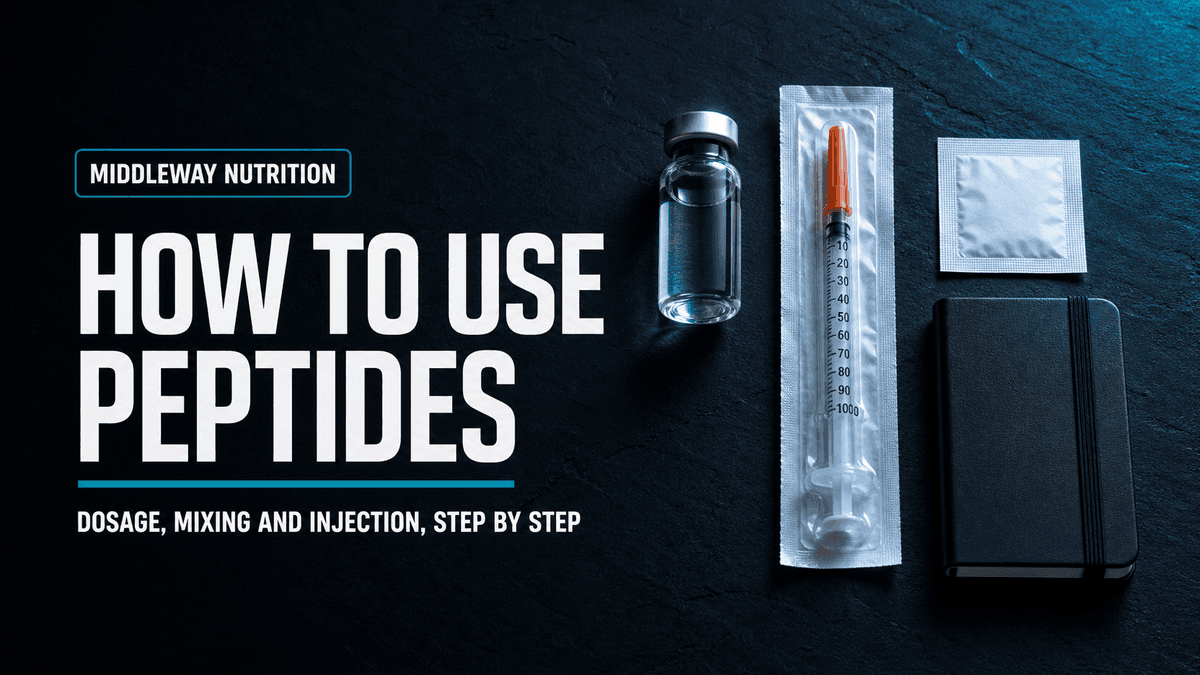
Our how to use peptides guide covers reconstitution volumes and the dose maths behind that table, and best peptide vendors covers what to ask for before ordering.
The most useful consequence of this table is that it should change how much water you add. If a vial holds more doses than you can use in three weeks, reconstitute a smaller portion or accept that the last few draws are weaker than the first.
Bacteriostatic Water Versus Sterile Water
This distinction decides whether your vial lasts weeks or days.
Bacteriostatic water contains around 0.9% benzyl alcohol, a preservative that suppresses bacterial growth inside the vial after the stopper is punctured. Sterile water contains nothing but water. It is sterile in the bottle and stops being protected the moment a needle goes through the seal.
If you reconstitute with sterile water, treat the vial as single session material and use it within about 24 hours. For anything you will draw from repeatedly over days, bacteriostatic water is the only sensible choice.
The Four Things That Degrade Peptides
Heat. Accelerates the hydrolysis reactions that cleave peptide bonds. A reconstituted vial left on a warm counter all day has measurably less in it by evening, with no visible change.
Light. Photo-oxidation attacks certain amino acid residues, particularly tryptophan, tyrosine and methionine. Exposure is cumulative, so a clear vial sitting on an open fridge shelf under a light adds up over a month. Amber glass or foil solves it.
Moisture. Only relevant before reconstitution, but decisive there. Powder that has absorbed humidity may look slightly clumped or wet, and it has already started degrading.
Contamination. Every needle through the stopper is an opportunity. Swab before every draw, use a fresh needle each time, and never touch the needle to anything before it goes in.
Should You Freeze a Reconstituted Vial?
No. Ice crystals form as the solution freezes and physically disrupt the peptide's folded structure. What thaws is not reliably the same molecule that went in, and repeated freeze and thaw cycles compound the damage.
Freezing is appropriate for sealed lyophilised powder only, which was dried under controlled conditions specifically to survive that state.
Storing Peptides While Travelling
Sealed powder travels easily. It tolerates room temperature for days, so a domestic flight or a road trip needs nothing special beyond protecting the glass from breakage.
Reconstituted vials need the cold chain maintained. An insulated medication case with a frozen gel pack holds refrigeration temperatures for roughly eight to twelve hours, which covers most journeys. Keep the vial from touching the gel pack directly, since freezing the solution is the thing you were trying to avoid.
Two practical rules. Keep peptides in your carry-on rather than checked luggage, because cargo holds swing between very cold and very warm. And refrigerate on arrival, which for most hotels means asking the front desk rather than trusting a minibar, which often runs warmer than a proper fridge.
If you are crossing a border, check the destination country's rules before you pack. Several countries treat peptides as prescription-only and enforce it at customs. Our overview of whether peptides are legal covers where the restrictions bite.
How to Tell a Vial Has Gone Bad
Some signs are visible: a solution that was clear turning cloudy or hazy, particles or strands floating in it, any yellowing, or powder that has gone clumpy and damp.
Others are not. The most common real world signal is a compound that produced a consistent effect quietly ceasing to, at the same dose, from a vial that is a few weeks old. Increased stinging or redness at the injection site from a compound that previously caused none is also worth taking seriously.
If any visual sign is present, discard it. Degradation products can provoke local reactions, and a replacement vial costs less than an infected injection site.
Quick Reference
- Sealed powder: freezer for long term, fridge for six to twelve months
- Reconstituted: refrigerator only, two to four weeks
- Always bacteriostatic water for multi-dose vials, sterile water only for single use
- Store at the back of a fridge shelf, not in the door where the temperature swings
- Foil or original packaging to block light
- Never freeze a mixed solution
- Label every vial with the date water went in
- When a solution looks wrong, throw it out
FAQ
How long do peptides last in the fridge?
Sealed powder holds six to twelve months refrigerated and considerably longer frozen. Once reconstituted with bacteriostatic water, most peptides are considered reliable for two to four weeks in the fridge, with the exact window depending on the compound.
Can peptides be left at room temperature?
Sealed powder tolerates room temperature for weeks, which is why shipping without cooling is normal. Reconstituted vials should go back in the fridge within minutes of drawing a dose, since every hour warm accelerates breakdown.
What is the difference between bacteriostatic water and sterile water?
Bacteriostatic water contains benzyl alcohol, which suppresses bacterial growth after the vial is punctured, supporting multi-week use. Sterile water has no preservative, so a vial reconstituted with it should be used within about a day.
Does storing peptides in the fridge door matter?
Yes, and it is an easy fix. The door sees the largest temperature swings every time the fridge opens. The back of a shelf is the most stable spot and is where reconstituted vials should live.
Do peptides expire?
They degrade rather than expire on a fixed date, and the rate depends entirely on how they were stored. A vendor expiry date assumes correct storage throughout. If your vial has spent time warm or in the light, the real usable life is shorter than the printed date suggests.