Acid reflux and heartburn can show up on GLP-1 medications even in people who mainly expected nausea or constipation.
Short answer: GLP-1 acid reflux is often related to delayed stomach emptying, larger meals, fatty foods, late eating, carbonated drinks, alcohol, or lying down too soon after eating.
Quick Guide
| Trigger | Practical adjustment |
|---|---|
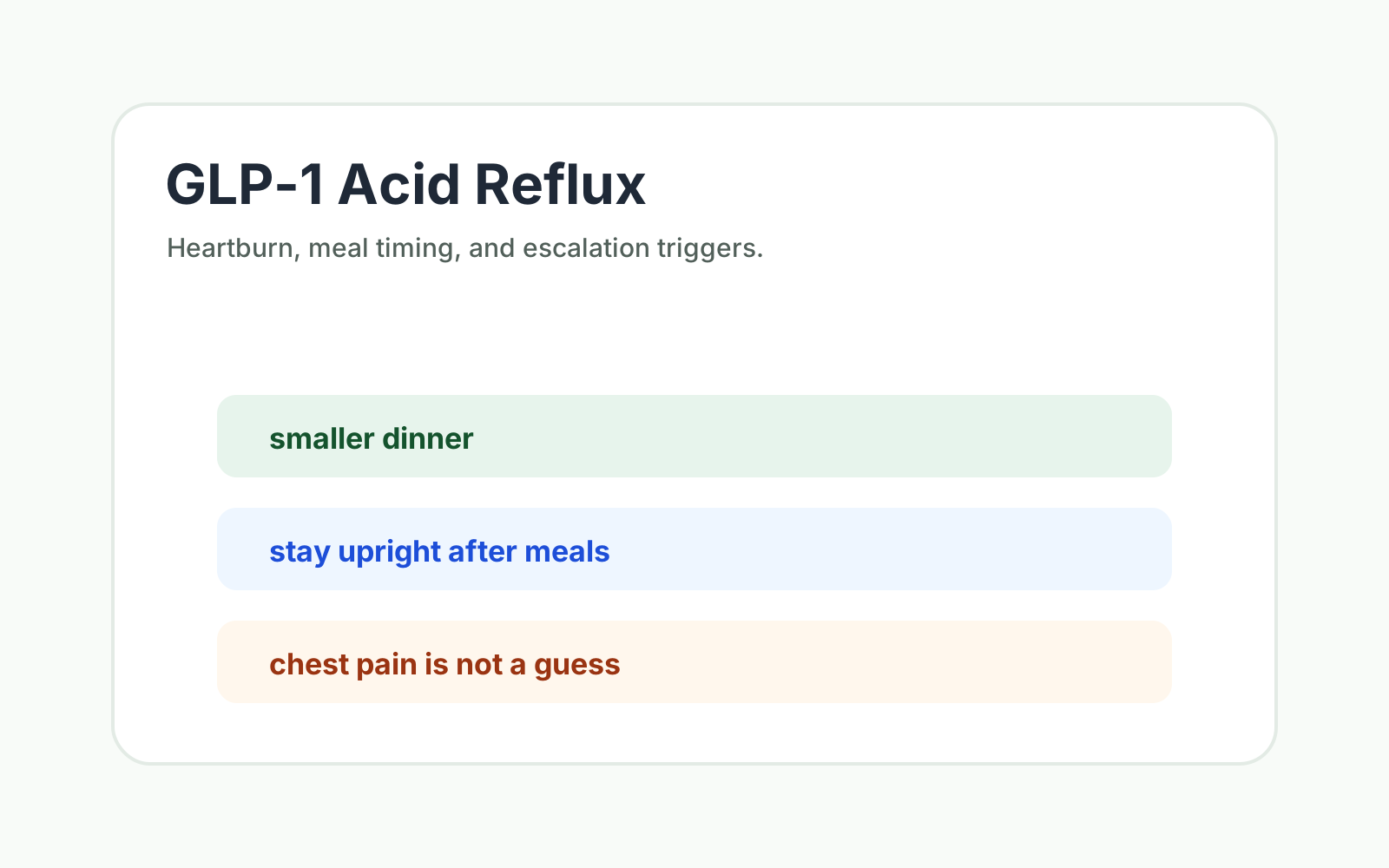
| Large evening meals | Smaller dinner and earlier timing |
| Greasy foods | Lower-fat meals during escalation |
| Carbonation | Pause or reduce bubbly drinks |
| Lying down after eating | Stay upright after meals |
| Reflux after dose increase | Ask whether escalation should slow |
When Reflux Needs Care
Call a clinician for chest pain, trouble swallowing, vomiting blood, black stools, unintentional inability to eat, severe abdominal pain, persistent vomiting, or reflux that does not improve with basic changes.
Do not assume chest discomfort is reflux if it is new, severe, exertional, or comes with shortness of breath, sweating, dizziness, or pain radiating to the arm or jaw.
Acid Reflux on GLP-1: Why It Happens
Acid reflux on GLP-1 medications is common, and the mechanism is mostly mechanical rather than chemical. GLP-1 receptor agonists — Ozempic, Wegovy, Mounjaro, Zepbound, Saxenda, Rybelsus, Foundayo — all slow gastric emptying. Food sits in the stomach for longer, intra-gastric pressure rises, and the lower esophageal sphincter is more likely to relax under that pressure. The result is reflux of stomach contents into the esophagus, perceived as heartburn, sour taste, or chest burn.
Three patterns explain almost all acid reflux on GLP-1 medications:
- Reflux after a large or fatty meal. The most common trigger. Larger meals stretch the stomach and stay there longer on a GLP-1.
- Reflux after a dose increase. Each titration step intensifies gastric slowing for 1–2 weeks before settling.
- Reflux when lying down within 2–3 hours of eating. Gravity normally helps gastric contents stay below the LES; recumbence removes that help.
People who never had reflux pre-treatment can develop it on GLP-1s. People who had mild reflux before may find it worsens during titration weeks, then settles.
Acid Reflux on GLP-1: What Usually Helps
- Smaller, more frequent meals (target stomach 60–70% full, not 100%)
- Lower fat per meal — under ~15 g during titration weeks
- No eating within 3 hours of bedtime
- Slight head-of-bed elevation if night reflux is the main pattern
- Carbonated drinks paused or reduced
- Alcohol minimized, especially within 24 hours of a dose
- Antacids only with prescriber/pharmacist input — they can interact with timing of other drugs
If reflux persists after 2–3 weeks of these adjustments, ask the prescriber whether holding the current dose longer or stepping the escalation back makes sense.
How Common Is GLP-1 Heartburn and Acid Reflux?
Reflux is a labeled side effect, not an internet rumor. Every FDA-approved GLP-1 below lists gastroesophageal reflux disease as an adverse reaction reported more often on drug than on placebo. The rates are low in absolute terms, and they are consistently higher at weight-management doses than at diabetes doses of the same molecule.
| Drug (dose studied) | Reflux on drug | Reflux on placebo | Indigestion (dyspepsia) on drug vs placebo |
|---|---|---|---|
| Wegovy 2.4 mg weekly, adults | 5% | 3% | 9% vs 3% |
| Zepbound 5 / 10 / 15 mg weekly | 4% / 4% / 5% | 2% | 9% / 9% / 10% vs 4% |
| Saxenda 3 mg daily | 4.7% | 1.7% | 9.6% vs 2.7% |
| Mounjaro 5 / 10 / 15 mg weekly | 1.7% / 2.5% / 1.7% | 0.4% | 8% / 8% / 5% vs 3% |
| Ozempic 0.5 / 1 mg weekly | 1.9% / 1.5% | 0% | 3.5% / 2.7% vs 1.9% |
| Rybelsus 7 / 14 mg daily | 2% / 2% | 0.3% | 3% / 0.6% vs 0.6% |
Two patterns are worth pulling out. First, the obesity-dose products report roughly two to three times the reflux of the diabetes-dose products built on the same molecule: Wegovy 5% against Ozempic 1.5–1.9%, Zepbound 4–5% against Mounjaro 1.7–2.5%. Higher dose, slower stomach, more reflux. Second, indigestion is reported far more often than reflux proper on every single product, which fits the mechanical explanation — the stomach feels overfull long before acid reaches the esophagus.
These are reported adverse events over 40 to 72 weeks of trial, not endoscopy results. They almost certainly undercount people who had occasional heart burn and never mentioned it to a study coordinator.
Outside the trials, a 2025 cohort study in Annals of Internal Medicine followed 24,708 adults with type 2 diabetes starting a GLP-1 and 89,096 starting an SGLT-2 inhibitor, for a median of three years. GLP-1 users had a 27% higher relative risk of a new reflux diagnosis (risk ratio 1.27, 95% CI 1.14 to 1.42), which worked out to 0.7 extra cases per 100 people over three years. Reflux complications were rarer but also raised (risk ratio 1.55, 95% CI 1.12 to 2.29; 0.8 extra cases per 1,000).
Hold both numbers at once. The relative increase is real and it replicates. The absolute increase is small. Most people on a GLP-1 never get reflux, and most who do can manage it with meal size and meal timing rather than with a new prescription.
Reflux, Gastroparesis, and What the Labels Actually Restrict
Ozempic, Wegovy, Mounjaro, Zepbound, Saxenda and Rybelsus all carry the same sentence in Warnings and Precautions: the drug is not recommended in patients with severe gastroparesis. Gastroparesis is the extreme end of the same delayed-emptying effect that produces ordinary reflux — a stomach that will not empty on its own schedule. If gastroparesis is already on your chart, that belongs in the conversation before the first injection, not after reflux starts.
The same labels carry a second instruction that reflux sufferers should know: tell any clinician about the GLP-1 before surgery or a procedure using general anesthesia or deep sedation. Pulmonary aspiration during anesthesia has been reported in patients on GLP-1 receptor agonists undergoing elective procedures, and retained stomach contents are the reason.
GLP-1 Heartburn: How to Tell It Apart From Other Chest Symptoms
GLP-1 heartburn is the same physiology as acid reflux on GLP-1 — stomach acid traveling up into the esophagus where it doesn't belong — but the experience people search for as "heartburn" — or as "heart burn," or as acid indigestion — often blends several distinct symptoms. Sorting them matters because some need a different response.
| Symptom | What It Usually Means | What To Do |
|---|---|---|
| Burning chest pain after meals | Classic GLP-1 heartburn / reflux | Smaller, lower-fat meals; upright after eating |
| Sour or bitter taste in throat | Reflux of stomach acid reaching the pharynx | Same as above; check if night-time pattern |
| Chest burn with sour burps or sulfur smell | Reflux + delayed emptying interacting | Reduce fatty foods specifically; review fiber and hydration |
| Bloating + reflux | Air swallowing or constipation contributing | Address constipation first; smaller bites, slower eating |
| New chest pressure or pain with exertion | NOT GLP-1 heartburn — seek same-day medical care | Rule out cardiac cause before treating as reflux |
| Reflux + difficulty swallowing | Possible esophageal involvement | Tell the prescriber; may need GI evaluation |
GLP-1 Heartburn vs Cardiac Pain
Reflux and cardiac pain can mimic each other badly. The features that lean toward GLP-1 heartburn:
- Triggered by meals, especially large or fatty
- Worse lying down, better sitting up
- Burning quality, often with a sour taste
- Relieved (even partially) by antacid
Features that argue against GLP-1 heartburn and toward cardiac evaluation:
- Triggered by exertion, not meals
- Pressure or squeezing quality, not burning
- Radiation to jaw, neck, or arm
- Accompanied by shortness of breath, sweating, dizziness, or nausea unrelated to a recent injection
When in doubt, treat new or unusual chest symptoms as cardiac until proven otherwise. The GLP-1 reflux diagnosis is one of exclusion in those scenarios.
Internal Reading Path
FAQ
Can GLP-1 medications cause reflux?
They can contribute in some people because food may remain in the stomach longer. Acid reflux is a labeled adverse reaction on every approved GLP-1: 5% on Wegovy against 3% on placebo, 4–5% on Zepbound against 2%, and 4.7% on Saxenda against 1.7%.
Should I take an antacid?
Ask a clinician or pharmacist, especially if symptoms are frequent, severe, or you take other medications.
Is reflux worse after dose increases?
It can be. Dose escalation is a common time for GI symptoms to flare.
Can GLP-1 cause heartburn?
Yes, and the labels say so. In the Wegovy weight-management trials 9% of people reported dyspepsia — indigestion, the dull upper-stomach burn most people call heart burn — against 3% on placebo, and 5% reported gastroesophageal reflux against 3% on placebo. Zepbound reported dyspepsia in 9–10% against 4%. The cause is delayed gastric emptying rather than extra acid production, which is why meal size and meal timing move the symptom more than acid strength does.
Can GLP-1 cause acid reflux if I never had it before?
Yes. In the three-year cohort above, people starting a GLP-1 had a 27% higher risk of a first reflux diagnosis than people starting an SGLT-2 inhibitor — 0.7 extra cases per 100 people. In practice new-onset reflux usually appears during a titration week and settles once the dose holds steady for two to three weeks.
Why do I get acid reflux after ice cream on a GLP-1?
Ice cream is close to a worst case for a stomach that is already emptying slowly: high saturated fat, high simple sugar, usually a large portion, usually late in the evening. High-fat meals measurably raise esophageal acid exposure in people with reflux disease, and in pH-monitoring studies the effect is still measurable four hours after the meal. Diet research also finds the type of fat and carbohydrate matters more than the total amount — a higher saturated-to-unsaturated fat ratio and sugar-sweetened items track with more acid exposure than fat quantity alone. The practical fix is a smaller portion, earlier in the evening, and not lying down after. If lower-fat dairy causes the same trouble, raise lactose intolerance with a clinician instead of assuming the GLP-1 is the whole story.
Why This Symptom Can Happen on GLP-1 Treatment
GLP-1 Acid Reflux: Why Heartburn Happens and What Usually Helps usually needs to be understood in the context of delayed gastric emptying, appetite suppression, dose escalation, lower food intake, hydration changes, and other medications. GLP-1 and GIP/GLP-1 drugs can change how quickly food moves, how full someone feels, and how much they naturally eat or drink. Those changes can improve weight and glucose outcomes, but they can also create side effects when the dose, meal pattern, or hydration plan is not matched to the person's tolerance.
Symptoms often show up during the first few weeks or after a dose increase. They can also appear after a large meal, high-fat meal, alcohol, dehydration, constipation, or a long gap between meals. The timing is useful because it helps a clinician decide whether the symptom is likely dose-related, food-pattern related, or possibly unrelated to the medication.
First 24 to 48 Hours: What to Track
A useful symptom log does not need to be complicated. Record the dose date, dose strength, meals, fluids, bowel movements, alcohol, caffeine, exercise, and any other medications. Include severity from 1 to 10 and whether the symptom affects eating, drinking, sleeping, work, or exercise.
| Track this | Why it helps |
|---|---|
| Dose timing | Symptoms may peak after injection or escalation |
| Meal size and fat content | Large or greasy meals often worsen GI symptoms |
| Fluid intake | Dehydration can worsen headache, dizziness, constipation, and palpitations |
| Bowel pattern | Constipation can drive bloating, reflux, and abdominal pain |
| Blood sugar, if diabetic | Low or high glucose can mimic other symptoms |
| Red flags | Severe, persistent, or systemic symptoms need care |
Dose Escalation Questions
Many side effects become more disruptive when the dose is increased before the previous dose feels stable. Before moving up, it is reasonable to ask whether symptoms are mild and improving, whether protein and fluids are adequate, whether constipation is controlled, and whether work or daily function is being affected.
Do not adjust the dose independently. The practical question for the prescriber is whether to hold the current dose longer, step down, treat the symptom, review meal timing, or evaluate another cause.
Questions to Bring to the Prescriber or Pharmacist
- Does my current dose and timing match the official label or my prescription?
- Are my symptoms or concerns expected at this stage, or do they suggest changing the plan?
- Should I delay escalation, restart lower, hold steady, or be evaluated before continuing?
- Are any of my other medications increasing risk, especially insulin, sulfonylureas, blood pressure medication, diuretics, or drugs affected by delayed gastric emptying?
- What exact symptoms should make me call urgently or seek same-day care?
- If cost or supply interrupts therapy, what is the safest backup plan?
Bottom Line for GLP-1 Acid Reflux: Why Heartburn Happens and What Usually Helps
The practical answer is rarely just one number, food list, or yes-or-no rule. For GLP 1 acid reflux, the safest approach is to combine the direct answer with the variables that change it: product type, dose, timing, side effects, storage history, other medications, and the person's medical context. When those variables are unclear, the best next step is to ask the prescriber or pharmacist before acting.
Additional Scenarios Readers Commonly Compare
| Scenario | How to think about it |
|---|---|
| Symptoms started after a dose increase | Treat escalation as a likely contributor and ask whether to hold the dose longer |
| The plan changed because of supply | Confirm whether a restart or lower dose is safer after the gap |
| Advice online conflicts with the label | Use the label, pharmacy, and prescriber as the authority |
| The medication is compounded | Verify concentration, BUD, storage, sterility, and dose instructions directly with the pharmacy |
| The goal is maintenance | Prioritize sustainable intake, resistance training, monitoring, and follow-up |
More FAQ
Why do different websites give different answers?
Most differences come from assuming different products, concentrations, patient goals, dose histories, or risk tolerance. A chart or tip can be mathematically correct but still wrong for a specific prescription.
What information should I keep in my notes?
Keep the medication name, dose, date taken, pharmacy label, concentration if vial-based, side effects, food and fluid changes, weight trend, and any clinician instructions. This makes follow-up safer and more specific.
When is it better not to troubleshoot at home?
Do not troubleshoot at home when symptoms are severe, rapidly worsening, involve chest pain or fainting, include repeated vomiting or dehydration, suggest allergic reaction, or involve a possible dosing or storage error.
Edge Cases That Change the Answer
For GLP 1 acid reflux, the usual advice can change when there is a long medication gap, a recent dose increase, active vomiting or diarrhea, diabetes medications that can cause low blood sugar, kidney disease, pregnancy planning, surgery or anesthesia, a compounded vial, or uncertainty about the exact product. Those details should be treated as decision points, not footnotes.
A practical way to handle edge cases is to pause and sort the issue into one of three buckets. The first bucket is routine planning: questions about meals, timing, cost, or what to ask at the next visit. The second bucket is same-week clinical guidance: persistent side effects, repeated missed doses, uncertain conversions, or a plan that cannot be filled. The third bucket is urgent evaluation: severe pain, chest symptoms, fainting, allergic reaction symptoms, dehydration, confusion, or a possible large dosing error.
| Bucket | Examples | Best next step |
|---|---|---|
| Routine planning | Meal changes, mild symptoms, coverage questions | Bring notes to the next visit |
| Prompt guidance | Persistent symptoms, switch timing, unclear label, storage uncertainty | Call prescriber or pharmacist |
| Urgent care | Severe pain, fainting, chest pain, allergic symptoms, dehydration | Seek same-day or emergency care |
Practical Takeaway
If a reader remembers only one thing from this page, it should be that GLP 1 acid reflux is context-dependent. The safest answer comes from matching the general information to the exact medication, dose, timing, symptoms, product label, and medical history. When those details are incomplete, the right move is to ask before acting.
Summary
GLP-1 reflux is often meal-size and timing related, but chest pain, swallowing problems, bleeding signs, or severe symptoms require medical care.
References
- GLP-1 Receptor Agonists and Risk for Gastroesophageal Reflux Disease in Type 2 Diabetes — Annals of Internal Medicine
- GLP-1 receptor agonists and delayed gastric emptying — NIH/PMC
- Ozempic (semaglutide) Prescribing Information — U.S. FDA
- Wegovy (semaglutide) injection and tablets, Prescribing Information — DailyMed
- Zepbound (tirzepatide) injection, Prescribing Information — DailyMed
- Mounjaro (tirzepatide) injection, Prescribing Information — DailyMed
- Saxenda (liraglutide) injection, Prescribing Information — DailyMed
- Rybelsus and Ozempic (oral semaglutide) tablets, Prescribing Information — DailyMed
- Effect of high-fat, standard, and functional food meals on esophageal and gastric pH — Journal of Digestive Diseases
- Type of carbohydrate and type of fat matter in gastroesophageal reflux disease — Therapeutic Advances in Gastroenterology