Vomiting can happen on GLP-1 medications, especially after starting, increasing the dose, eating a large meal, or eating a high-fat meal.
Short answer: GLP-1 vomiting is usually related to slowed stomach emptying and appetite signaling. Nausea, vomiting, and diarrhea are the most frequently reported adverse effects of GLP-1 receptor agonists. One isolated episode may be manageable, but repeated vomiting, dehydration, severe abdominal pain, or inability to keep fluids down needs prompt medical guidance.
Quick Guide
| Situation | What it may mean | Next step |
|---|---|---|
| Vomiting after a large meal | Too much volume or fat for slowed digestion | Return to smaller, simpler meals |
| Vomiting after a dose increase | Escalation intolerance | Ask whether to pause escalation |
| Repeated vomiting | Dehydration risk | Call the clinician |
| Severe abdominal pain with vomiting | Possible pancreatitis or gallbladder issue | Seek urgent care |
How Common Is Vomiting on Each GLP-1?
Yes, GLP-1 medications cause vomiting, and the labels put numbers on it. Vomiting is a listed common adverse reaction on every semaglutide, tirzepatide, dulaglutide and liraglutide product below. Nausea outruns it everywhere: far more people feel sick than actually throw up. The rates come from the FDA labels.
| Medication | Nausea | Vomiting | Vomiting on placebo |
|---|---|---|---|
| Wegovy (semaglutide 2.4 mg, weight management) | 44% | 24% | 6% |
| Saxenda (liraglutide 3 mg, weight management) | 39.3% | 15.7% | 3.9% |
| Zepbound (tirzepatide 5 / 10 / 15 mg, weight management) | 25% / 29% / 28% | 8% / 11% / 13% | 2% |
| Trulicity (dulaglutide 0.75 / 1.5 mg, type 2 diabetes) | 12.4% / 21.1% | 6.0% / 12.7% | 2.3% |
| Ozempic (semaglutide 0.5 / 1 mg, type 2 diabetes) | 15.8% / 20.3% | 5% / 9.2% | 2.3% |
| Mounjaro (tirzepatide 5 / 10 / 15 mg, type 2 diabetes) | 12% / 15% / 18% | 5% / 5% / 9% | 2% |
Four things in that table matter more than the ranking.
The higher-dose weight-management products report the higher rates. Semaglutide at 2.4 mg reported vomiting in 24% of patients; the same molecule at 1 mg for diabetes reported 9.2%. Tirzepatide shows the same gap, 13% at 15 mg for weight management against 9% at 15 mg for diabetes. The labels caution that rates from separate trial programs cannot be compared directly, so read this as a pattern rather than a head-to-head.
Placebo groups vomited too, from 2% to 6% depending on the trial. Not every episode on a GLP-1 belongs to the GLP-1.
Escalation is when it clusters. The Ozempic, Mounjaro and Zepbound labels all state that the majority of reports of nausea, vomiting and diarrhea occurred during dose escalation, and the Mounjaro and Zepbound labels add that those reactions decreased over time.
It rarely ends treatment. In the Wegovy trials, vomiting led to permanent discontinuation in 1.2% of treated patients versus 0% on placebo, against a 24% overall vomiting rate. Most people who vomit at some point do not stop the drug over it.
Two groups sit outside the table. In the pediatric Wegovy trial in patients aged 12 and older, vomiting was reported by 36% versus 10% on placebo, higher than the 24% seen in adults. And in the trials supporting the newer 7.2 mg Wegovy dose, vomiting ran 22% against 16% for 2.4 mg and 6% for placebo within those same studies.
What Usually Helps
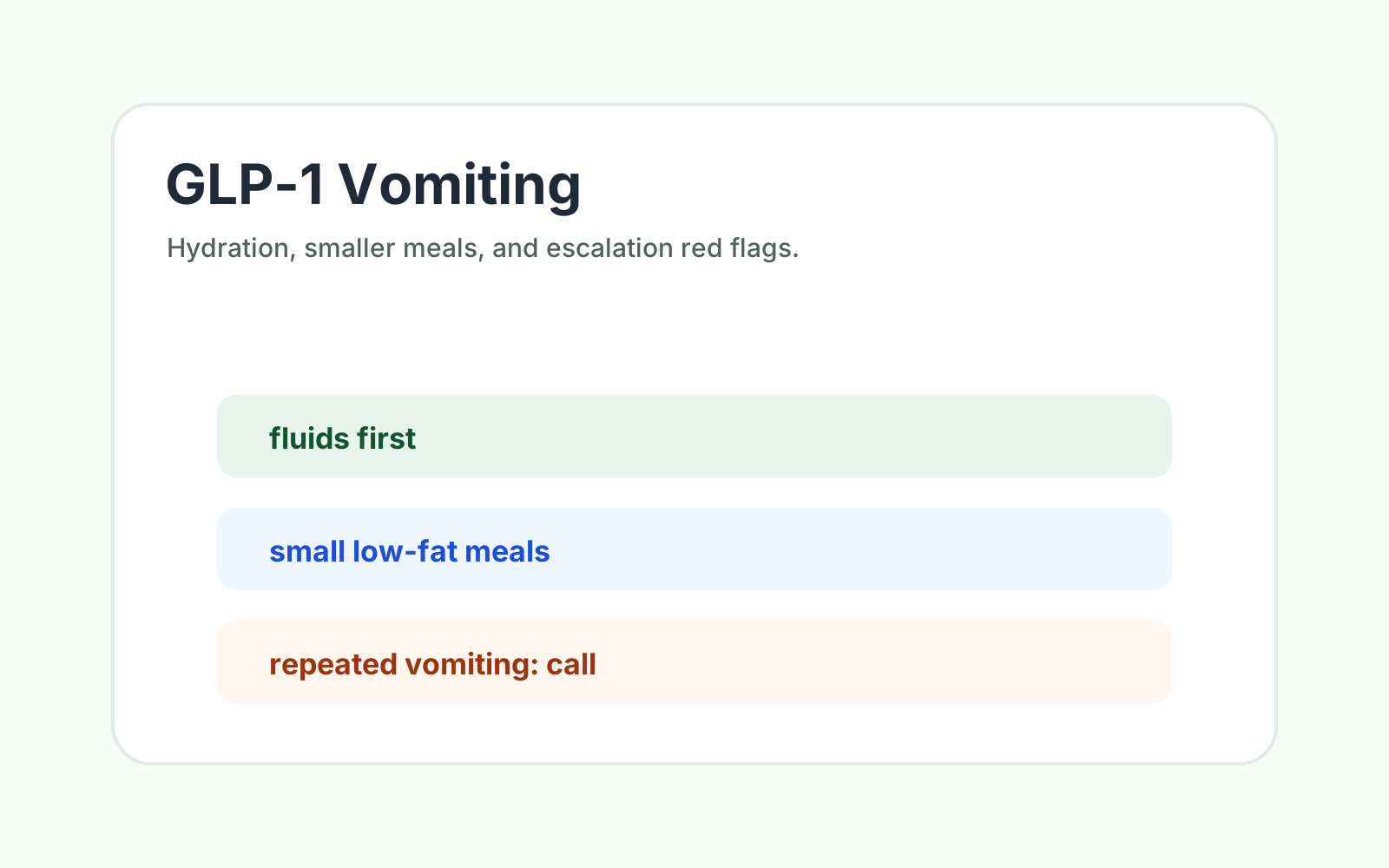
Keep the plan simple: small meals, slow eating, lower-fat choices, bland protein options, and steady fluids. Avoid alcohol, greasy meals, and oversized portions while symptoms are active.
Do not take anti-nausea medication, skip doses, restart, or change dose timing without the prescriber.
GLP-1 Vomiting Management: A Two-Day Plan
Managing vomiting on a GLP-1 has three jobs, in this order: keep fluid going in, shrink the load the stomach has to move, and decide whether this is a phone call or a wait. Handle them in that order rather than all at once.
- Small amounts of clear liquid, often. MedlinePlus advises drinking small amounts of clear liquids frequently. A full glass at once is more likely to come straight back up than four small sips spread across the same half hour.
- Five or six small meals, not two or three large ones. NIDDK's eating guidance for delayed gastric emptying is five or six small, nutritious meals a day, soft and well-cooked foods, and foods and beverages that are low in fat and low in fiber. Being on a GLP-1 is not the same as having gastroparesis, but the mechanical problem that eating pattern is built for is the same one: food leaving the stomach slowly.
- Cut what a slow stomach handles worst. The same NIDDK guidance names what to avoid: food and drink high in fat, food and drink high in fiber, anything that cannot be chewed easily, carbonated drinks, and alcohol. Pull them together for the reset, not one per week.
- Treat the injection as its own variable. If throwing up started within days of a step-up, that timing is the first thing to raise with the prescriber. Do not skip, halve, or re-time a dose on your own.
- Count episodes instead of estimating. MedlinePlus puts the threshold for contacting a clinician at vomiting three or more times in one day, vomiting for longer than 24 hours, or being unable to keep any fluids down for 12 hours or more. Those are numbers, not judgment calls, which is why they are worth writing down as they happen.
- Audit everything else you swallow. Alcohol, new supplements, and other prescriptions can all be contributing. Bring the list to the pharmacist rather than dropping something on your own.
| Time since the first episode | What matters most | Concretely |
|---|---|---|
| First 6 hours | Fluid, in sips | Small amounts of clear liquid at short intervals, no attempt at a full meal |
| 6 to 24 hours | Reintroduce small, soft, low-fat food | Five or six small portions rather than a meal; nothing fried, fizzy, or alcoholic |
| 24 to 48 hours | Decide, do not drift | Three or more episodes in a day, vomiting past 24 hours, or 12 hours with nothing staying down is a call |
| Past 48 hours | Look past the meal | Ask whether escalation should pause and whether another cause needs ruling out |
Red Flags
Get medical help for repeated vomiting, signs of dehydration, fainting, severe or persistent abdominal pain, pain radiating to the back, blood in vomit, confusion, or symptoms after a dosing mistake.
Published guidance puts specific numbers on several of those. NIDDK lists red blood in vomit or vomit that looks like coffee grounds, sudden sharp stomach pain that does not go away, vomiting for more than an hour, severe pain or cramping in the abdomen, blood glucose that is too high or too low, feeling extremely weak or fainting, difficulty breathing, and fever as reasons to seek a doctor's help right away. MedlinePlus adds the volume and duration thresholds: vomiting three or more times in one day, vomiting for longer than 24 hours, no fluids staying down for 12 hours or more, and no urination for 8 hours or more. Blood or dark, coffee-colored material in vomit is an emergency room item, not a next-appointment item.
Dehydration is why the thresholds are that tight. The Wegovy and Zepbound labels both carry postmarketing reports of acute kidney injury, in some cases requiring hemodialysis, occurring mostly in patients whose gastrointestinal reactions such as nausea, vomiting or diarrhea led to dehydration. Both Medication Guides give the same instruction: drink fluids to help reduce the chance of dehydration, and tell your healthcare provider right away if you have nausea, vomiting, or diarrhea that does not go away.
Is Severe Vomiting a Contraindication to GLP-1 Treatment?
Not on the current FDA labels. Wegovy, Zepbound, Ozempic and Mounjaro each list exactly two contraindications, and vomiting is neither: a personal or family history of medullary thyroid carcinoma (MTC) or Multiple Endocrine Neoplasia syndrome type 2 (MEN 2), and a prior serious hypersensitivity reaction to the active ingredient or to any excipient in the product.
What the labels do restrict on gastrointestinal grounds sits one level down, in Warnings and Precautions.
| Label statement | Wegovy | Zepbound | Ozempic | Mounjaro |
|---|---|---|---|---|
| Severe GI adverse reactions, drug vs placebo | 4.1% vs 0.9% (injection), 2% vs 0% (tablet) | 1.7% / 2.5% / 3.1% vs 1% | 0.4% / 0.8% vs 0% | 1.3% / 0.4% / 1.2% vs 0.9% |
| Not recommended in severe gastroparesis | Yes | Yes | Yes | Yes |
| Acute kidney injury from volume depletion | Warning; monitor renal function | Warning; monitor renal function | Warning; monitor renal function | Warning; monitor renal function |
| Pulmonary aspiration under general anesthesia or deep sedation | Warning | Warning | Warning | Warning |
Two practical readings. First, "severe gastroparesis" is a diagnosed condition, not a description of a rough week on a new dose, so the restriction is about people who already carry that diagnosis rather than about anyone with intolerance. Second, the aspiration warning is the one that changes plans outside the digestive system: all four labels report rare postmarketing pulmonary aspiration in patients on GLP-1 receptor agonists who had residual gastric contents before elective procedures despite following preoperative fasting instructions, and all four instruct patients to tell their providers about the medication before any planned surgery or procedure.
Internal Reading Path
- GLP-1 nausea
- GLP-1 abdominal pain
- When to increase GLP-1 dose
FAQ
Is vomiting normal on GLP-1 medication?
It can happen, but repeated vomiting is not something to push through.
Should I eat after vomiting?
Focus on hydration first and ask the clinician if vomiting continues. When food returns, keep portions small and simple.
Does vomiting mean the dose is too high?
It can be a sign of escalation intolerance, but the prescriber should decide what to change.
Can a GLP-1 cause vomiting, or does it only cause nausea?
It causes both, and the labels count them separately. In the Wegovy trials, 44% of patients reported nausea and 24% reported vomiting. In the Zepbound trials, nausea ran 25% to 29% by dose and vomiting 8% to 13%. Nausea is roughly two to three times more common than actually throwing up on every label in the table above.
What should I do if I have vomiting and loose motions after a GLP-1 injection?
Vomiting and loose stools together is the combination that dehydrates fastest, because output rises while intake drops. The Wegovy and Mounjaro Medication Guides give the same instruction for exactly this situation: diarrhea, nausea and vomiting can cause a loss of fluids, so drink fluids to help reduce the chance of dehydration, and tell your healthcare provider right away if nausea, vomiting, or diarrhea does not go away. Do not skip or change the next dose on your own; that is the prescriber's call.
Is GLP-1 vomiting linked to cyclic vomiting syndrome?
Cyclic vomiting syndrome is not listed on the Wegovy, Ozempic, Zepbound, Mounjaro, Trulicity or Saxenda labels. NIDDK describes it as sudden, repeated attacks of severe nausea and vomiting that last from a few hours to several days, with gaps of a few weeks to several months between episodes. The only published link is a 2026 pharmacovigilance analysis of the FDA adverse event reporting system, which found cyclic vomiting syndrome among the strongest disproportionate reporting signals for GLP-1 receptor agonists and semaglutide-dominant within the class. The authors state directly that disproportionality analyses are hypothesis-generating and cannot establish incidence, relative risk, or causality. Repeated, severe, episodic vomiting deserves evaluation whether or not a GLP-1 is in the picture.
Why This Symptom Can Happen on GLP-1 Treatment
GLP-1 Vomiting: Why It Happens, What Helps, and When to Call usually needs to be understood in the context of delayed gastric emptying, appetite suppression, dose escalation, lower food intake, hydration changes, and other medications. GLP-1 and GIP/GLP-1 drugs can change how quickly food moves, how full someone feels, and how much they naturally eat or drink. Those changes can improve weight and glucose outcomes, but they can also create side effects when the dose, meal pattern, or hydration plan is not matched to the person's tolerance.
Symptoms often show up during the first few weeks or after a dose increase. They can also appear after a large meal, high-fat meal, alcohol, dehydration, constipation, or a long gap between meals. The timing is useful because it helps a clinician decide whether the symptom is likely dose-related, food-pattern related, or possibly unrelated to the medication.
First 24 to 48 Hours: What to Track
A useful symptom log does not need to be complicated. Record the dose date, dose strength, meals, fluids, bowel movements, alcohol, caffeine, exercise, and any other medications. Include severity from 1 to 10 and whether the symptom affects eating, drinking, sleeping, work, or exercise.
| Track this | Why it helps |
|---|---|
| Dose timing | Symptoms may peak after injection or escalation |
| Meal size and fat content | Large or greasy meals often worsen GI symptoms |
| Fluid intake | Dehydration can worsen headache, dizziness, constipation, and palpitations |
| Bowel pattern | Constipation can drive bloating, reflux, and abdominal pain |
| Blood sugar, if diabetic | Low or high glucose can mimic other symptoms |
| Red flags | Severe, persistent, or systemic symptoms need care |
Dose Escalation Questions
Many side effects become more disruptive when the dose is increased before the previous dose feels stable. Before moving up, it is reasonable to ask whether symptoms are mild and improving, whether protein and fluids are adequate, whether constipation is controlled, and whether work or daily function is being affected.
Do not adjust the dose independently. The practical question for the prescriber is whether to hold the current dose longer, step down, treat the symptom, review meal timing, or evaluate another cause.
Questions to Bring to the Prescriber or Pharmacist
- Does my current dose and timing match the official label or my prescription?
- Are my symptoms or concerns expected at this stage, or do they suggest changing the plan?
- Should I delay escalation, restart lower, hold steady, or be evaluated before continuing?
- Are any of my other medications increasing risk, especially insulin, sulfonylureas, blood pressure medication, diuretics, or drugs affected by delayed gastric emptying?
- What exact symptoms should make me call urgently or seek same-day care?
- If cost or supply interrupts therapy, what is the safest backup plan?
Bottom Line for GLP-1 Vomiting: Why It Happens, What Helps, and When to Call
The practical answer is rarely just one number, food list, or yes-or-no rule. For GLP 1 vomiting, the safest approach is to combine the direct answer with the variables that change it: product type, dose, timing, side effects, storage history, other medications, and the person's medical context. When those variables are unclear, the best next step is to ask the prescriber or pharmacist before acting.
Additional Scenarios Readers Commonly Compare
| Scenario | How to think about it |
|---|---|
| Symptoms started after a dose increase | Treat escalation as a likely contributor and ask whether to hold the dose longer |
| The plan changed because of supply | Confirm whether a restart or lower dose is safer after the gap |
| Advice online conflicts with the label | Use the label, pharmacy, and prescriber as the authority |
| The medication is compounded | Verify concentration, BUD, storage, sterility, and dose instructions directly with the pharmacy |
| The goal is maintenance | Prioritize sustainable intake, resistance training, monitoring, and follow-up |
More FAQ
Why do different websites give different answers?
Most differences come from assuming different products, concentrations, patient goals, dose histories, or risk tolerance. A chart or tip can be mathematically correct but still wrong for a specific prescription.
What information should I keep in my notes?
Keep the medication name, dose, date taken, pharmacy label, concentration if vial-based, side effects, food and fluid changes, weight trend, and any clinician instructions. This makes follow-up safer and more specific.
When is it better not to troubleshoot at home?
Do not troubleshoot at home when symptoms are severe, rapidly worsening, involve chest pain or fainting, include repeated vomiting or dehydration, suggest allergic reaction, or involve a possible dosing or storage error.
Does vomiting settle down if I stay on the same dose?
The labels point that way without promising it. The Mounjaro and Zepbound labels both state that the majority of nausea, vomiting and diarrhea events occurred during dose escalation and decreased over time, and the Ozempic label reports the same clustering during escalation. That is an argument for asking about holding a dose longer rather than for pushing through at a higher one. The decision belongs to the prescriber, not to the calendar.
Quick Self-Check Before Acting
Before making a decision based on GLP 1 vomiting, pause long enough to confirm the basics: exact medication, dose, date of last dose, product form, storage history if relevant, current symptoms, and any other medications that could change risk. Most GLP-1 mistakes happen when one of those details is assumed instead of verified.
If the question involves dosing, switching, storage, severe symptoms, pregnancy planning, surgery, diabetes medication, or a compounded vial, treat the article as preparation for a clinician or pharmacist conversation. The safest next step is often not to act faster. It is to bring better information to the person who can make the decision with you.
| Detail to confirm | Why it matters |
|---|---|
| Medication and form | Pens, tablets, branded vials, and compounded vials have different rules |
| Current dose | Dose history changes tolerance and restart decisions |
| Timing | Missed doses, gaps, and dose increases change the plan |
| Symptoms | Severity decides whether this is routine or urgent |
| Storage or expiration | Product reliability depends on label and pharmacy rules |
| Other medications | Insulin, sulfonylureas, blood pressure drugs, and diuretics can change risk |
Summary
Vomiting on GLP-1 therapy is usually GI-tolerance related, but dehydration and severe pain are the lines where medical guidance becomes urgent.
References
- Glucagon-Like Peptide-1 Receptor Agonists — StatPearls, NCBI Bookshelf (nausea, vomiting, diarrhea as common adverse effects; delayed gastric emptying)
- Clinical Consequences of Delayed Gastric Emptying With GLP-1 Receptor Agonists and Tirzepatide — National Institutes of Health (PMC)
- Wegovy (semaglutide) prescribing information and Medication Guide (DailyMed, NIH)
- Zepbound (tirzepatide) prescribing information and Medication Guide (DailyMed, NIH)
- Mounjaro (tirzepatide) prescribing information and Medication Guide (DailyMed, NIH)
- Ozempic (semaglutide) prescribing information (DailyMed, NIH)
- Trulicity (dulaglutide) prescribing information (DailyMed, NIH)
- Saxenda (liraglutide) prescribing information (DailyMed, NIH)
- Nausea and vomiting - adults (MedlinePlus, NIH)
- Gastroparesis: symptoms and causes (NIDDK, NIH)
- Gastroparesis: eating, diet, and nutrition (NIDDK, NIH)
- Cyclic vomiting syndrome: definition and facts (NIDDK, NIH)
- Safety signals of GLP-1 receptor agonists: a multi-method pharmacovigilance analysis of FAERS (2018-2025) - Diabetes, Obesity and Metabolism (PubMed)