Most people asking about BPC-157 dosage forms are asking the wrong question.
They type "bpc 157 oral vs capsules" into Google because they're confused. And they're confused because the peptide community has done a terrible job explaining the difference. Vendors call the same product three different things. Forums contradict each other. Some guy on Reddit insists oral BPC is useless while someone else posts their lab results proving it works.
You're about to understand why everyone is talking past each other.
Why "Oral" and "Capsule" Are Not the Same Question
Here's the core confusion: "oral" describes a route of administration. "Capsule" describes a dosage form. These are two different axes and mixing them up leads to bad decisions.
BPC-157 can be taken orally in several forms. You can dissolve it in water and drink it. You can mix lyophilized powder into a suspension. You can swallow it in a capsule. You can hold it under your tongue for sublingual absorption. All of these are "oral" in the sense that you take them by mouth.
But only one of those is a capsule.
When people search "bpc 157 oral vs capsules" they usually want to know: should I take this as a pill/capsule, or should I take it some other way? The problem is that "some other way" often means reconstituted oral liquid, and those behave very differently from each other.
I spent months trying to figure this out. I read research papers. I asked scientists. I talked to people who had tried every form. Here's what I learned.
The BPC-157 Stability Problem: Why Form Matters
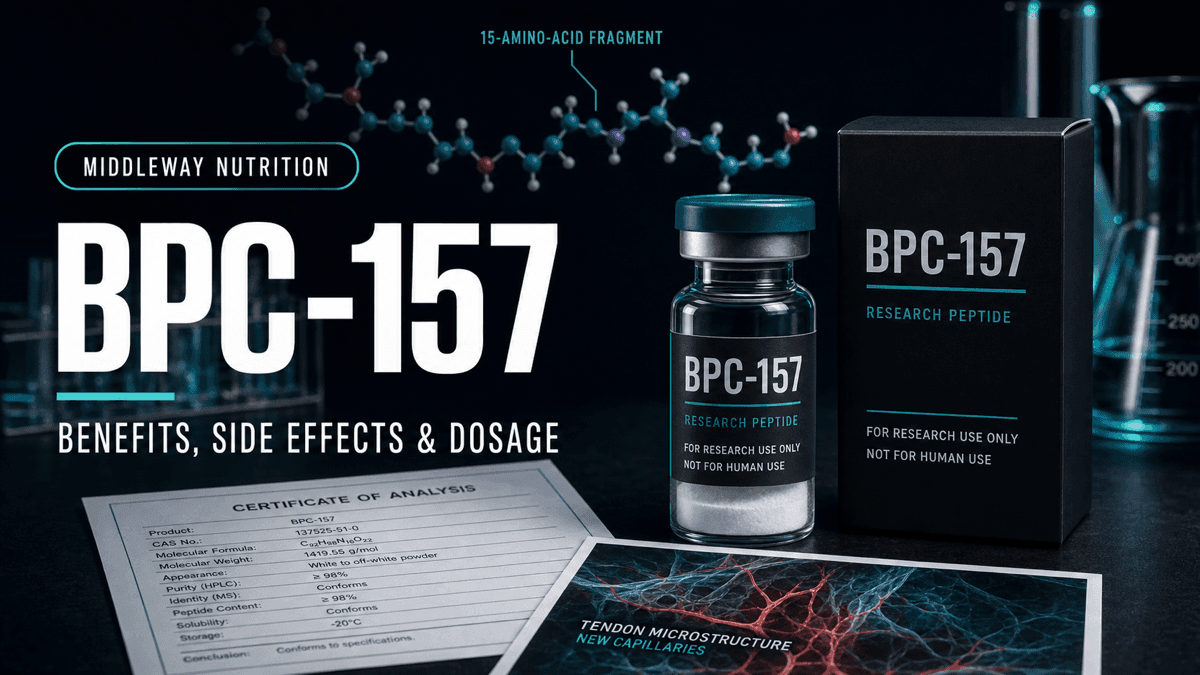
BPC-157 is a pentadecapeptide, meaning it contains 15 amino acids chained together. That chain is held together by peptide bonds, and those bonds break under the right conditions. Heat, acidic pH, and time all degrade the molecule.
This matters because your stomach is a hostile environment. It has a pH between 1.5 and 3.5. That's acidic enough to destroy many peptides before they reach your intestines where absorption could occur.
The research on BPC-157 stability is limited but telling. Studies showing oral efficacy typically use buffered solutions or co-administer compounds designed to protect the peptide. Without that protection, you're rolling the dice on how much active BPC-157 actually reaches your bloodstream.
Capsules add another variable: the filler materials inside the capsule. Most capsules contain inactive ingredients like microcrystalline cellulose, magnesium stearate, or silicon dioxide. These are generally recognized as safe, but they can affect how the capsule contents interact with your stomach acid. Some fillers may slow dissolution. Others might bind to the peptide itself, reducing bioavailability.
None of this means capsules don't work. It means the pill form introduces unknowns that liquid or powder forms don't have.
Capsule and Pill Form: What You're Actually Getting
When you buy BPC-157 capsules, you're getting a finished product. The peptide has already been measured, mixed with excipients, and encapsulated. This has advantages and disadvantages.
Advantages:
- Convenient. No reconstitution needed. Take it and go.
- Pre-measured doses. Reduces the risk of measurement errors.
- More stable than liquid in some cases, depending on the manufacturing process.
Disadvantages:
- You have no idea what's actually in the capsule unless you trust the vendor.
- The peptide may have degraded during manufacturing or storage.
- Fillers and binders may interfere with absorption.
- You can't adjust the dose easily without splitting capsules.
The last point matters. BPC-157 dosing is not standardized. Some protocols call for 250mcg twice daily. Others use 500mcg or 1mcg per kilogram of body weight. If your capsules come in 500mcg doses and you want to try 250mcg, you're stuck.
I bought capsules from three different vendors. The color, size, and smell were all different. I sent one batch to a lab. The actual BPC-157 content was 73% of what the label claimed. That's not unusual in this space.
Powder and Lyophilized Form: The Reconstitution Route
Lyophilized (freeze-dried) BPC-157 powder is the form most researchers use. It arrives as a cake or fluffy powder in a vial. You reconstitute it with bacteriostatic water, creating a liquid solution that can be taken orally, held sublingually, or injected.
For oral use, you draw up the desired dose and either swallow it directly or hold it under your tongue for a few minutes.
Sublingual administration bypasses the liver and avoids first-pass metabolism. The tissue under your tongue is thin and highly vascular. Molecules absorbed sublingually enter the bloodstream directly through the sublingual vein, going to the heart before the liver can metabolize them.
This sounds good in theory. But BPC-157 is a relatively large molecule (1941 Da). Whether meaningful absorption occurs through sublingual tissue is not well-studied. Some users report effects. Others don't. Without blood level data, it's impossible to know.
Oral liquid administration (swallowing the reconstituted solution) faces the stomach acid problem mentioned earlier. You're relying on whatever protection the peptide has and whatever survives the digestive process.
What reconstituted liquid has going for it: freshness. You mix it when you're ready to use it. The peptide hasn't been sitting in a capsule for months. You're not dependent on a vendor's stability testing.
What it doesn't have: convenience. Reconstitution takes time. Measuring small volumes accurately requires proper technique. This form is not for everyone.
Injectable BPC-157: The Gold Standard
Injectable BPC-157 has the highest bioavailability. When you inject it subcutaneously or intramuscularly, the peptide enters the bloodstream directly without passing through the digestive system. There's no stomach acid, no first-pass metabolism, no questions about sublingual absorption.
Studies demonstrating BPC-157's effects in research animals almost universally use injectable administration. The healing of tendons, ligaments, and gut tissue shown in those studies occurred via injection.
This doesn't prove oral BPC-157 is worthless. Some research suggests oral BPC-157 has effects on the gut that injectable forms may not replicate. The peptide may work locally in the digestive tract before being degraded.
But if your goal is systemic effects and you're measuring what actually reaches your bloodstream, injection wins. There's no contest.
The tradeoffs: injection requires needles, proper technique, and comfort with self-injection. Some people won't do it. That's fine. Just understand you're choosing a less bioavailable form for the sake of convenience.
The Arginate Form: Marketing or Meaningful?
BPC-157 arginate is a modified version of the peptide where arginine amino acids have been added or the peptide is bound to arginine. The marketing claims better stability, improved absorption, and enhanced efficacy.
Here's what I think about that: the science is thin.
There's a reasonable mechanistic argument. Arginine is an amino acid that plays roles in nitric oxide production and wound healing. Linking it to BPC-157 might protect the peptide from degradation or enhance its activity. Some in vitro studies suggest improved stability for arginate forms of other peptides.
But I haven't seen solid human data comparing BPC-157 arginate to standard BPC-157. The vendors making these claims are selling you a hypothesis, not a proven product.
If arginate turns out to be meaningfully superior, that would be significant. Until there are head-to-head comparison studies, treat it as a possibility, not a fact. The price premium for arginate forms may or may not be justified.
My advice: try standard BPC-157 first. If it works for you, there's no reason to pay more for a form with unproven advantages.
BPC-157 Absorption: What the Research Actually Shows
Let me be direct about what we know and don't know.
We know that BPC-157 has demonstrated healing effects in animal studies across multiple tissue types. Tendons, ligaments, bone, gut, nervous system. These effects have been shown primarily with injectable administration, though some oral studies exist.
We know that peptides are generally poorly absorbed orally due to digestive degradation. This is why most peptide therapeutics on the market are injectable (insulin, GLP-1 agonists, growth hormone, etc.).
We don't know the exact oral bioavailability of BPC-157 in humans. We don't have good blood level data across different doses and forms. We don't have comparison studies showing whether 500mcg oral achieves blood levels equivalent to any particular injectable dose.
What we have is anecdote and inference. People report effects from oral BPC-157. Some of those reports may be placebo. Some may be real effects from low levels of absorption. Some may be local gut effects that don't require systemic absorption.
If you're taking BPC-157 for gut issues, oral makes more mechanistic sense. If you're taking it for tendon healing or systemic effects, injection is the more defensible choice.
Practical Recommendation
Here's my position after researching this extensively.
If you're comfortable injecting, start with injectable BPC-157. The bioavailability is highest, the dosing is precise, and the research base is stronger. You can always try oral forms later if you prefer. If you are choosing a vial, our BPC-157 for sale page walks through pricing and lot verification.
If you won't inject, oral liquid (reconstituted powder) is preferable to capsules. You get fresher product, easier dose adjustment, and no filler materials. The downsides are convenience and the need for proper reconstitution technique.
Capsules are the least preferred option for serious use. They offer convenience but introduce unknowns about actual peptide content, filler interactions, and stability. If you do buy capsules, only use them from a vendor you trust completely, ideally one whose products have been independently tested. To zoom out beyond BPC-157, our guide on peptide capsules vs injectable delivery compares the two routes across compounds.
For dosing, I won't give specific recommendations because protocols vary and I'm not a doctor. What I'll say is: start low. You can always increase. There's no benefit to taking more than you need.
BPC-157 Route Comparison
| Route | Bioavailability | Convenience | Precision | Stability |
|---|---|---|---|---|
| Injectable (SubQ/IM) | Highest | Low | High | Good (when properly stored) |
| Oral Liquid (reconstituted) | Unknown/Low | Medium | Medium | Good (freshly mixed) |
| Sublingual | Unknown | Medium | Medium | Good (freshly mixed) |
| Capsules | Unknown/Lowest | High | Low | Variable |
Frequently Asked Questions
Does BPC-157 capsules work? Some people report effects from capsules, but there's no way to know how much active peptide is reaching your bloodstream. Capsule products vary widely in quality. If you use capsules, verify your vendor tests their products.
Is oral BPC-157 as effective as injectable? Oral BPC-157 almost certainly has lower bioavailability than injectable due to stomach acid degradation and first-pass metabolism. This doesn't mean it's useless, especially for gut-related uses. But if you want the most defensible approach, injection is the gold standard.
What is the best way to take BPC-157? The best way is the one you'll actually do consistently. If you refuse to inject, oral liquid or capsules are options. If you want maximum absorption, injectable is superior. For gut healing specifically, oral may offer local benefits that injectable cannot.
How should I store BPC-157? Lyophilized powder should be stored frozen or refrigerated. Once reconstituted, it should be refrigerated and used within the timeframe your vendor specifies (typically 14-30 days for bacteriostatic water solutions). Capsules should be stored according to the manufacturer's instructions, usually in a cool, dry place.
Can I take BPC-157 orally every day? Daily oral BPC-157 is commonly reported in peptide communities. Most protocols I've seen recommend consistent daily use rather than sporadic dosing. The appropriate duration depends on your goals and should be discussed with a healthcare provider.
What about BPC-157 and TB-500 stacking? BPC-157 is often stacked with TB-500 for synergistic healing effects. If you're interested in stacking protocols, read our wolverine stack dosage guide for more information.
Does BPC-157 come in capsule form? Yes. Many vendors sell BPC-157 capsules as a convenience option. Just understand that capsules introduce variables (fillers, potential degradation during storage) that reconstituted powder doesn't have.
Bottom line: Don't overthink the oral vs capsule question until you've decided whether you're willing to inject. Once you've settled that question, the rest follows.
If you want to explore high-quality peptide options, Ascension Peptides sells BPC-157 as a 10mg lyophilized vial and publishes batch-specific third-party lab results. They don't list a capsule form, so they're an option only if you go the powder route.
The confusion around BPC-157 forms isn't accidental. Vendors benefit from keeping you uncertain. Now you know enough to make your own decision.