This Nupex Peptide Review reaches a narrow conclusion: as of mid-2026 there is not enough publicly available, batch-specific analytical documentation on the company's pre-mixed BPC-157 and TB-500 vial to recommend it for research use. That is the whole finding of the Nupex Peptide Review, and it is a statement about paperwork rather than about the company's intentions. Nupex may well be shipping exactly what the label says. Buyers simply have no independent way to confirm it, and in a market with no regulator checking anyone's arithmetic, that gap is the entire decision.
Both compounds in the blend are sold for laboratory research only. Neither BPC-157 nor TB-500 is an approved drug in the United States, the UK or the EU, and nothing below should be read as a protocol.
Why a pre-mixed vial is attractive
The appeal is real and worth stating fairly. Researchers who run BPC-157 and TB-500 together currently reconstitute two vials, keep track of two concentrations, and draw two volumes. A single vial collapses that into one reconstitution and one draw. It also, in principle, reduces the number of times a stopper gets pierced, which matters for sterility over a multi-week protocol.
The pairing itself is not arbitrary. The two peptides are studied along different repair pathways: BPC-157 is investigated mainly for angiogenesis and growth factor signalling, while TB-500 is a synthetic fragment related to thymosin beta-4 and is studied for actin binding and cell migration. Combining them is a reasonable research idea, not a marketing invention.
Nupex Peptide Review: what can and cannot be verified
Here is the honest split between what a prospective buyer can check for themselves and what they cannot.
| Question a buyer should ask | Verifiable from public sources? |
|---|---|
| Is there a named, independent testing lab? | Not clearly published |
| Is there a batch or lot number printed on the vial that maps to a document? | Not demonstrated publicly |
| Is HPLC purity reported for each peptide in the blend separately? | No |
| Is mass spectrometry identity confirmation available for the mixture? | No |
| Is the stated ratio of the two peptides independently confirmed? | No |
| Does the company have a multi-year, checkable community record? | Limited |
None of those rows is an accusation. Several vendors that eventually turned out to be perfectly good started with exactly this profile. But a blend raises the documentation bar rather than lowering it, and that is the part buyers tend to miss.
The specific problem with blends
With a single-compound vial, one HPLC trace answers most of the question. With two peptides in one container you need more:
- Ratio confirmation. A vial advertised as 5 mg of one peptide and 5 mg of the other could in practice be 7 and 3, and nothing about the reconstituted solution would look different. Only quantitative analysis of the mixture catches that.
- Separate purity figures. An overall purity number for a blend can hide a clean component sitting next to a poor one.
- Co-formulation stability. Stability data for each peptide alone does not transfer automatically to the pair sitting in the same buffer. Peptides in shared solution can behave differently from peptides in separate vials, and published stability work on this specific combination is thin.
- Harder independent retesting. Sending a mixture to a third-party lab is more expensive and more specialised than sending a single compound, so buyers are less likely to check.
Fixed ratios remove control
There is also a design cost. Anyone running a structured protocol usually wants to vary one input at a time. A fixed blend makes that impossible: to change the BPC-157 amount you also change the TB-500 amount. For a casual buyer that does not matter. For anyone trying to attribute an observed effect to a specific compound, it is disqualifying.
What community discussion actually shows
Nupex comes up periodically in fitness and injury-recovery forums, and the pattern of those threads is worth reading carefully. Most posts are people asking whether anyone has used the product. Replies are mostly "never heard of them", with a small number of positive first-hand accounts.
That is a curiosity signal, not a quality signal. Subjective reports are a poor instrument for purity in particular, because underdosed and even mislabelled material has repeatedly produced enthusiastic user reports. Expectation, training changes, natural recovery and regression to the mean all push in the same direction. Analytical data exists precisely because the human read on this is unreliable.
An established vendor with years of archived batch documents gives you something a new vendor cannot yet give you: a record you can audit backwards.
Where to buy BPC-157 and TB-500 with usable documentation
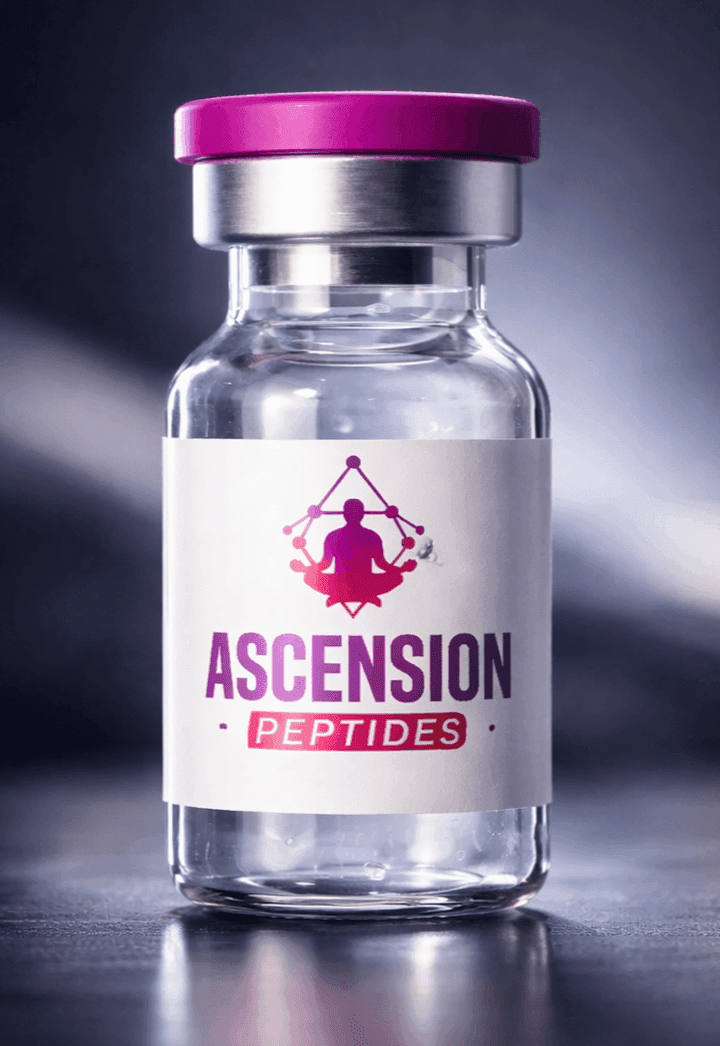
For buyers who want both compounds, we recommend Ascension Peptides and suggest ordering the two peptides separately rather than as a mixture. Every Ascension batch is independently tested by a third-party lab, and the certificates cover HPLC purity (pass mark >98%), LC-MS identity, net content per vial, endotoxin, a rapid sterility screen and heavy metals. The 85 batch-specific certificates sit in a public library, so you can match the lot on the vial in your hand. Each compound is listed on its own, so you keep control of the ratio: BPC-157 10 mg is $49.00 and TB-500 5 mg is $54.00.
Two vials instead of one is a small inconvenience. What you get for it is a purity figure per compound, an identity confirmation per compound, and the ability to change one variable without touching the other.
If you are comparing sources more broadly, our best peptide vendors breakdown sets out the criteria we apply, and the where to buy BPC-157 page covers pricing and COA checks for that compound specifically.
How to vet any peptide vendor in ten minutes
Apply this to Nupex or to anyone else:
- Find a COA on the product page without contacting support. If you have to ask, that is already an answer.
- Check that the COA names an external lab, not an in-house "quality department".
- Match the lot number on the document to the lot number on the vial you received. An unmatched document proves nothing about your vial.
- Look for both HPLC purity and mass spectrometry identity. Purity without identity confirms that something is 98% pure, not that it is the right molecule.
- Check the document date. A COA from three years ago does not describe this year's synthesis.
- For any blend, insist on per-component figures.
Vendors that clear all six are not rare. That is why a vendor who clears fewer does not need the benefit of the doubt.
The verdict
"Legit or not" is the wrong question, because it invites a yes or no where the evidence supports neither. The answerable version is whether the documentation is sufficient for research sourcing, and today it is not. If Nupex publishes named-lab, lot-matched, per-component analysis, this assessment changes. Until then, buying the blend means accepting an unverified ratio of two unverified purities, which is a lot of unknowns to carry into work whose entire point is controlling variables.
For background on the compounds themselves rather than the vendor, see our BPC-157 guide and TB-500 guide.
FAQ
Is Nupex a scam?
There is no evidence that Nupex is fraudulent, and we are not claiming that. The problem is narrower: the analytical documentation needed to confirm what is in the vial is not publicly available in a form buyers can check. Absence of proof is not proof of a problem, but it is a reason to buy elsewhere.
Are pre-blended BPC-157 and TB-500 vials worse than separate vials?
Not inherently, but they are harder to verify and harder to use precisely. A blend requires per-component purity and ratio confirmation, which few vendors publish, and it fixes the dose relationship between the two peptides so you cannot adjust one alone.
What should a peptide COA actually contain?
The name of an independent laboratory, the lot number matching your vial, an HPLC purity percentage, mass spectrometry identity confirmation, and a test date. For a blend, each peptide should appear with its own purity figure and its measured quantity.
Can I send peptides for independent testing myself?
Yes. Several analytical labs accept consumer samples and will run HPLC and mass spectrometry. It costs money and takes weeks, and testing a mixture is more involved than testing a single compound, which is another practical argument for buying the two peptides separately.
Is BPC-157 legal to buy?
BPC-157 is sold in most countries as a research chemical, not as a medicine. It is not FDA-approved, and in 2023 the FDA placed it in a category of substances it does not permit in compounded preparations. Rules differ by country and change over time, so check your own jurisdiction before ordering.