The Wolverine Stack pairs BPC-157 with TB-500 in a single vial, and it has quietly become one of the most-searched recovery blends in the research-peptide market. Almost every vendor selling it leans on the same comic-book name and the same vague "tissue repair" copy. Very few of them show you the one document that actually matters.
If you have been searching where to buy Wolverine Stack, this guide skips the hype and gets to the part that protects your money: who actually sells a properly tested blend, how to read the certificate of analysis, what a fair price looks like in 2026, and the red flags that separate a legitimate vendor from a relabeled mystery vial. The Wolverine Stack is sold strictly as a research compound and is not an FDA-approved drug, so vetting the source is entirely on you.
Key Takeaways
- The Wolverine Stack is BPC-157 + TB-500 sold for research use only. It is not FDA-approved and there is no prescription or pharmacy version of the blend
- Ascension Peptides is our top-rated source: every batch independently tested by a third-party lab, certificates showing >98% HPLC purity with LC-MS identity, and a public library of batch-specific certificates
- Demand a batch-specific COA that matches your vial's lot number, with HPLC purity at ≥98% and mass-spec identity confirmation for both peptides
- A 20mg blend (10mg + 10mg) usually runs $85–$120 from quality vendors. Suspiciously cheap listings almost always cut testing
- Both peptides are studied mostly in animal models. There are no large human trials, so treat any human-dosing chart you see online as unverified
What the Wolverine Stack Actually Is
The "Wolverine Stack" is a marketing name, not a medical product. It combines two research peptides that vendors bundle because their proposed mechanisms overlap.
BPC-157 (Body Protection Compound-157) is a synthetic 15-amino-acid sequence derived from a protein found in gastric juice. In animal and in-vitro research it is studied for angiogenesis (new blood-vessel formation), tendon and ligament repair models, and gastrointestinal mucosal protection.
TB-500 is a synthetic fragment of Thymosin Beta-4, a 43-amino-acid peptide that acts as a regulator of actin, a protein central to cell movement. Research interest centers on cell migration, wound models, and soft-tissue repair.
The honest framing matters here: the bulk of the evidence for both compounds comes from rodent studies and cell cultures. There are no large, published human clinical trials for either peptide, and none for the combination. Anyone promising a guaranteed recovery outcome is selling a story, not data. If you want the deeper science background, our explainer on what the Wolverine Stack is goes through the mechanisms without the hype.
Where to Buy Wolverine Stack in 2026
There is no pharmacy counter, no insurance pathway, and no compounded prescription version of this specific blend. In practice, every realistic way to buy the Wolverine Stack runs through online research-peptide vendors that sell it "for laboratory and research use only."
That leaves you with three tiers of seller:
- Top-tier research vendors publish batch-specific COAs from named third-party labs, hold real inventory, ship domestically, and never give human-dosing instructions. This is the only tier worth your money.
- Mid-tier vendors advertise "lab tested" or post a generic, undated certificate covering the product line rather than your lot. Quality is a coin flip.
- Bottom-tier sellers dump cheap blends with no verifiable COA, no traceable lab, and aggressive countdown-timer marketing. Avoid entirely.
The whole "where to buy Wolverine Stack" question really collapses into one decision: which vendor genuinely documents what is in the vial. Everything else is secondary.
Best Place to Buy the Wolverine Stack: Ascension Peptides
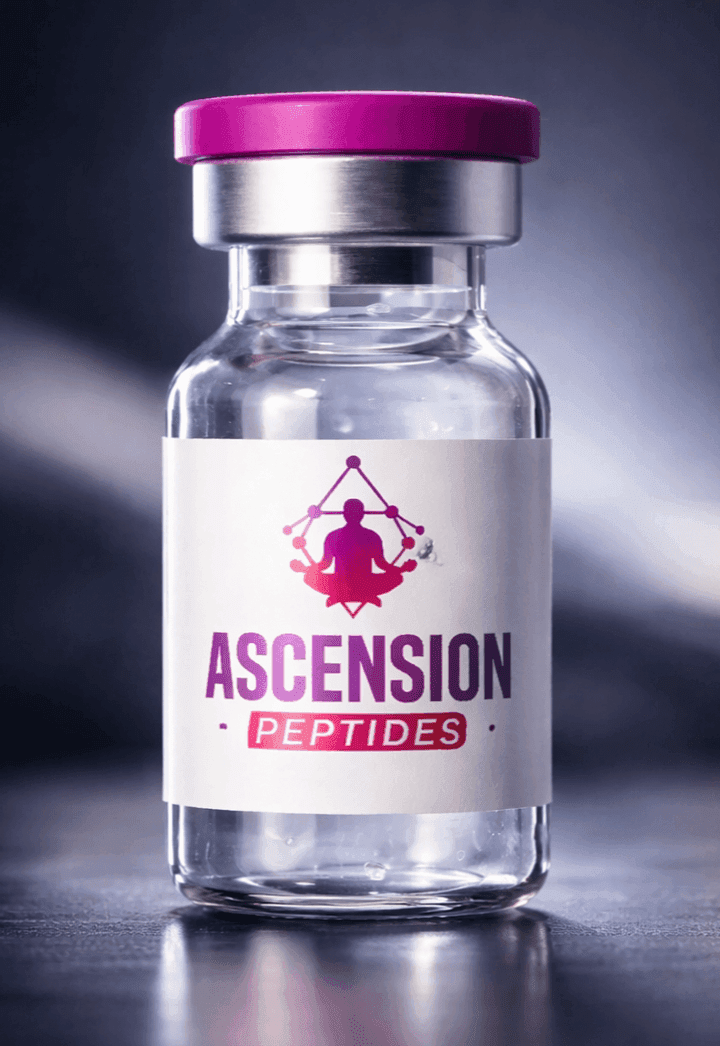
Ascension Peptides is the vendor we recommend for the Wolverine Stack — not because of a flashy name, but because they handle the unglamorous parts correctly.
Batch certificates in public. Ascension publishes 85 batch-specific certificates in a public COA library. No shared-drive hunting, no recycled product-level PDF. We checked one of its Kovera Labs reports against the lab's own records, and it matched.
Independently tested batches. Every batch is tested by a third-party lab (currently Kovera Labs), and the certificates cover HPLC purity, LC-MS identity, net content per vial, endotoxin, a rapid sterility screen and heavy metals rather than a single headline number. The pass mark is >98% purity.
Clear shipping terms. Orders ship within the United States only, with free shipping on orders over $250.
Fair, transparent pricing. The Wolverine Stack 20mg (BPC-157 10mg + TB-500 10mg) runs $90.00 in USD, and buying 3, 5 or 10 units saves 3%, 5% or 10%. New customers get 50% off with code PEPTIDEDECK. All sales are final, though damaged or incorrect items are replaced if reported quickly. You can see current stock and pricing on the Ascension Peptides site.
How to Verify Wolverine Stack Quality (COA Deep-Dive)
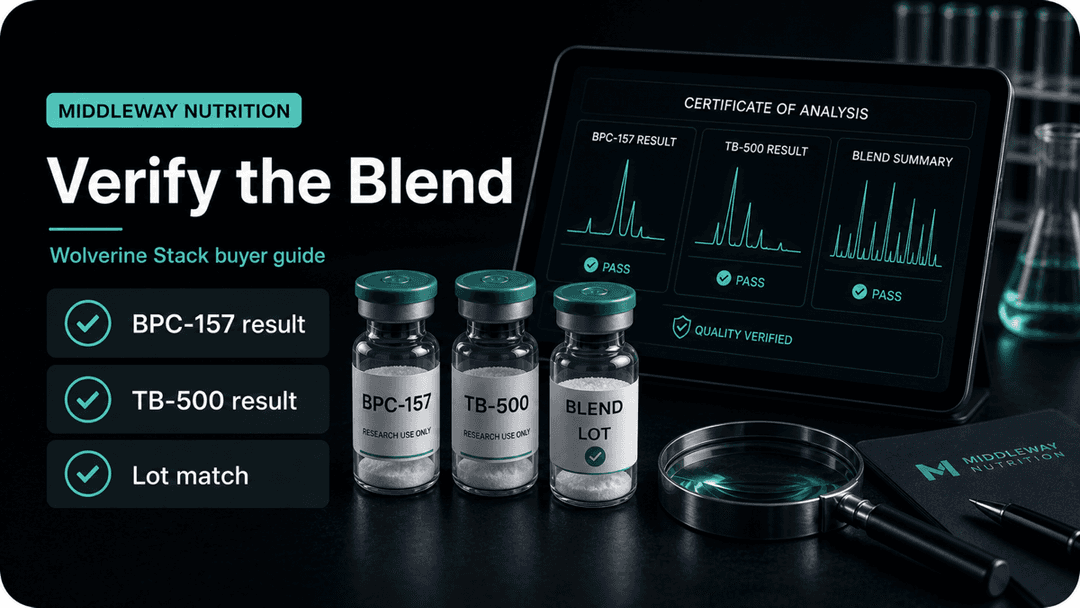
A blend has two compounds, so it has twice the room for something to go wrong. Read the certificate of analysis before you read the price.
Batch-specific vs. product-level COAs
A product-level COA is one certificate stamped across an entire product line. It may have been run months ago on a different synthesis batch. Some vendors reuse the same PDF indefinitely.
A batch-specific COA references the exact lot number printed on your vial, with a recent testing date. That is the only document that tells you anything about the product in your hand. When it arrives, the lot on the vial should match the lot on the COA.
What to look for in the numbers
- HPLC purity ≥98% for each peptide. 95% is borderline; lower is a red flag. A blend COA should report BPC-157 and TB-500 separately, not as one merged figure.
- Mass spectrometry identity. HPLC tells you how pure the sample is; mass spec confirms it is actually the right molecule. You want both, because a sample can be "highly pure" of the wrong thing.
- A named, verifiable lab. Janoshik, Kovera Labs, MZ Biolabs, and Colmaric are examples of labs that test peptides and can be looked up. If the "lab" has no web presence, treat the COA as unverified.
- A recent date and a real chromatogram. A flat "99%" with no chart attached is not evidence.
What the Wolverine Stack Costs in 2026
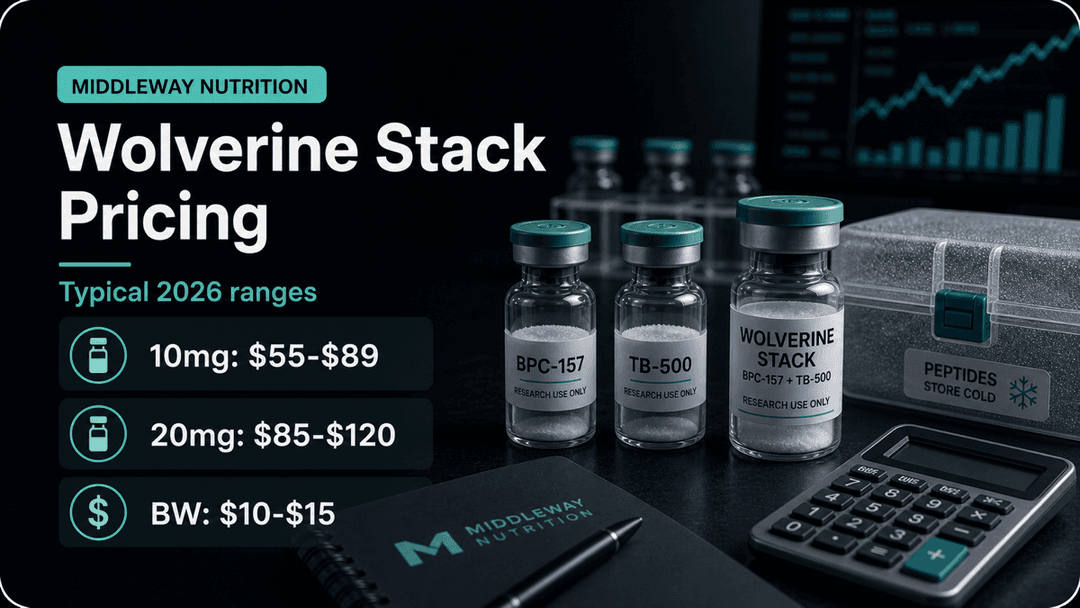
Pricing varies by total milligrams and vendor tier. Across the vendors we surveyed, a few patterns held.
- 10mg blend (5mg + 5mg): roughly $55–$89. The lowest listings often skip independent testing.
- 20mg blend (10mg + 10mg): roughly $85–$120 from documented vendors, up to ~$180 at premium pricing. This is the most common purchase size.
- Bulk packs (buy 3/5/10): usually drop the per-vial cost 10–25%, but only worth it after you have verified a single vial's COA first.
Remember the blend is shipped as a lyophilized (freeze-dried) powder. You will also need bacteriostatic water for reconstitution, which most vendors sell separately for $10–$15. Factor that in when comparing totals.
A vial that is dramatically cheaper than the field is not a deal; it is a question. Independent testing costs real money, and skipping it is the easiest corner to cut. Buying the two peptides separately is usually cheaper than a pre-made blend, and a buy the Wolverine Stack research peptides guide covers how to price that comparison properly.
Red Flags to Avoid
- No COA, or a generic one only. No batch-specific certificate, no sale. This is the single most important filter.
- A merged purity number. A blend that reports one combined "99%" instead of separate BPC-157 and TB-500 figures is hiding which peptide (if either) actually tested clean.
- Human-dosing instructions on the sales page. A vendor that calls it a "research chemical" while telling you how many micrograms to inject is talking out of both sides of its mouth.
- Prices far below the field. A $30 "20mg" blend almost always means a testing shortcut, an underdosed vial, or both.
- No reputation anywhere. Check community boards like r/Peptides. A vendor with zero footprint, good or bad, deserves caution.
- Fake scarcity. Countdown timers and "today only" pressure tactics correlate strongly with low-quality operations.
How to Get the Wolverine Stack
For the secondary question a lot of people are really asking, here is the practical path.
You do not need a prescription, because the Wolverine Stack is sold as a research compound rather than an approved medication. You get it by ordering online from a vetted vendor that documents purity, then verifying the COA when it arrives.
- Pick a documented vendor. Start with a source that ties a certificate to the batch in your hand and shows a clear stock status, like Ascension Peptides.
- Choose your size. The 20mg blend (10mg + 10mg) is the standard; a 10mg blend is a smaller starting point.
- Add bacteriostatic water. The vial ships as dry powder and is not ready to use without it.
- Pay by card when you can. Credit cards offer chargeback protection if a fraudulent product shows up. Crypto offers privacy but no recourse.
- Verify on arrival. Match the vial's lot number to the COA before anything else.
If you want to understand reconstitution and how research protocols are structured before your order lands, our Wolverine Stack dosage and protocol guide walks through the mechanics. For background on the BPC-157 half specifically, see our notes on BPC-157 capsules and the broader, sober look at where the recovery-peptide evidence gets thin.
Vendor Comparison Table
Top Vendors
Ranked by purity, third-party testing, COA availability, and price.
>98% HPLC (certificate pass mark) · Third-party tested every batch (Kovera Labs)
≥98–99% HPLC · Published COA
≥99% claimed · COA/HPLC/MS stated
>98% · COA on request
≥98% per peptide · COA via shared drive
Prices are approximate and change frequently. Always confirm current pricing and COA availability before ordering.
Related Buying Guides
Use these next if you are comparing adjacent research-peptide sourcing decisions:
Frequently Asked Questions
Where can I buy the Wolverine Stack?
The Wolverine Stack is sold by online research-peptide vendors, not pharmacies. Our top recommendation is Ascension Peptides, which has every batch independently tested by a third-party lab, publishes batch-specific certificates showing >98% HPLC purity, and sells the 20mg stack at $90.00 (new customers get 50% off with code PEPTIDEDECK). Whichever vendor you choose, confirm they provide a lot-matched certificate of analysis before paying.
Is the Wolverine Stack legal to buy?
BPC-157 and TB-500 are not scheduled controlled substances, and they are sold legally as research compounds. They are not FDA-approved drugs, and neither is the blend, so they cannot be legally marketed for human use or therapeutic claims. Buying a research peptide for laboratory use from a domestic vendor carries low legal risk in practice, but you are operating outside the standard pharmaceutical system.
How much does the Wolverine Stack cost?
A 20mg blend (10mg BPC-157 + 10mg TB-500) generally runs $85–$120 from vendors that do real testing, with some premium listings near $180. Smaller 10mg blends start around $55. Add $10–$15 for bacteriostatic water, since the vial ships as a dry powder.
How do I know the Wolverine Stack is real and high purity?
Insist on a batch-specific COA that matches the lot number on your vial. It should show HPLC purity of ≥98% for each peptide reported separately, mass-spec identity confirmation, a recent testing date, and a named lab you can verify online (for example Janoshik, Kovera Labs, or MZ Biolabs). A single merged purity number or an undated generic certificate is a red flag.
Do I need a prescription for the Wolverine Stack?
No. Because it is sold as a research compound rather than an approved medication, there is no prescription pathway, and no compounding pharmacy offers this exact blend. You order it online from a vetted vendor. The trade-off is that no clinician is overseeing quality or use, so verification falls entirely on you.
Is the Wolverine Stack FDA-approved?
No. Neither BPC-157, TB-500, nor the combined Wolverine Stack is approved by the FDA for any human use. The research behind both peptides is largely from animal and cell-culture studies, with no large human clinical trials, so any human-recovery claims should be treated with skepticism.
Medical Disclaimer: This article is for informational purposes only and is not medical advice. The Wolverine Stack (BPC-157 + TB-500) is not FDA-approved and is sold for research use only. It is not intended to diagnose, treat, cure, or prevent any disease. The evidence for both peptides comes mainly from preclinical animal and laboratory studies. Always consult a qualified healthcare provider before considering any new compound, and understand that purchasing and using research peptides carries legal and health risks that vary by jurisdiction.