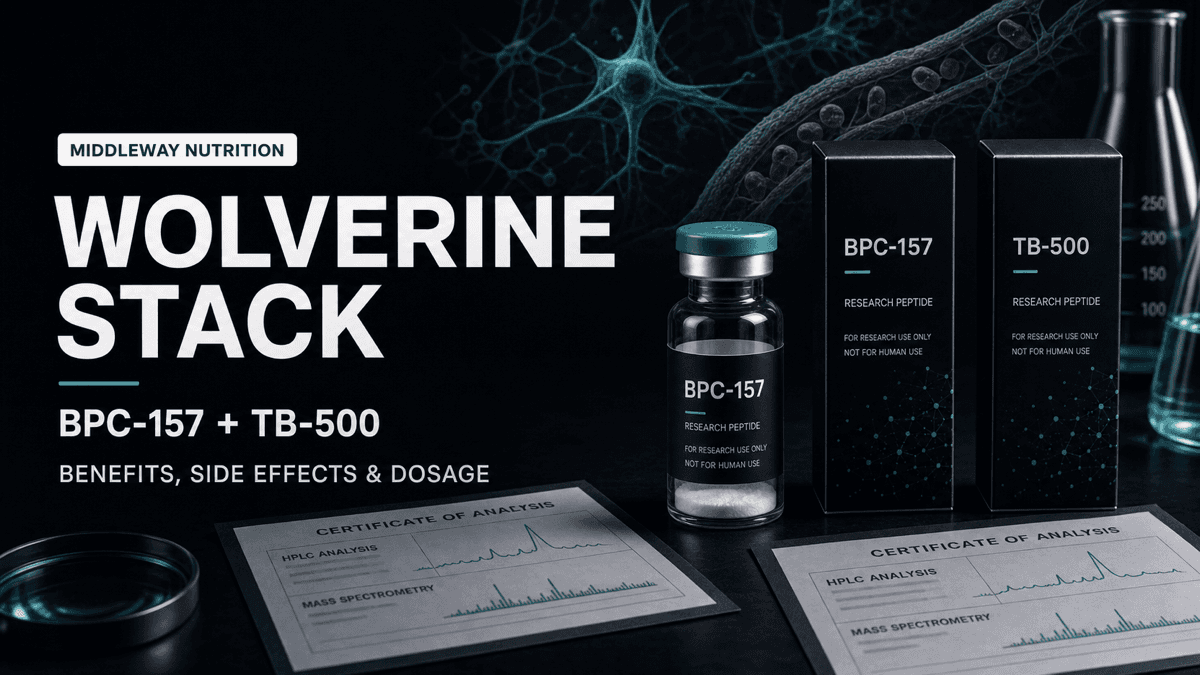
The Wolverine Stack is a two-peptide blend rather than a single compound, so its benefits, side effects, and dosage all split in two: BPC-157 and TB-500 have separate profiles that get merged far too often. One is dosed in micrograms daily, the other in milligrams once or twice a week, so any write-up giving a single number for "the stack" has already lost the thread. This guide keeps the components apart and says plainly which claims rest on animal data and which rest on forum reports.
- The Wolverine Stack is a nickname, not a formulation. It refers to BPC-157 and TB-500 used together, sold as two vials or a pre-paired bundle, and named after the Marvel character rather than anything in the literature.
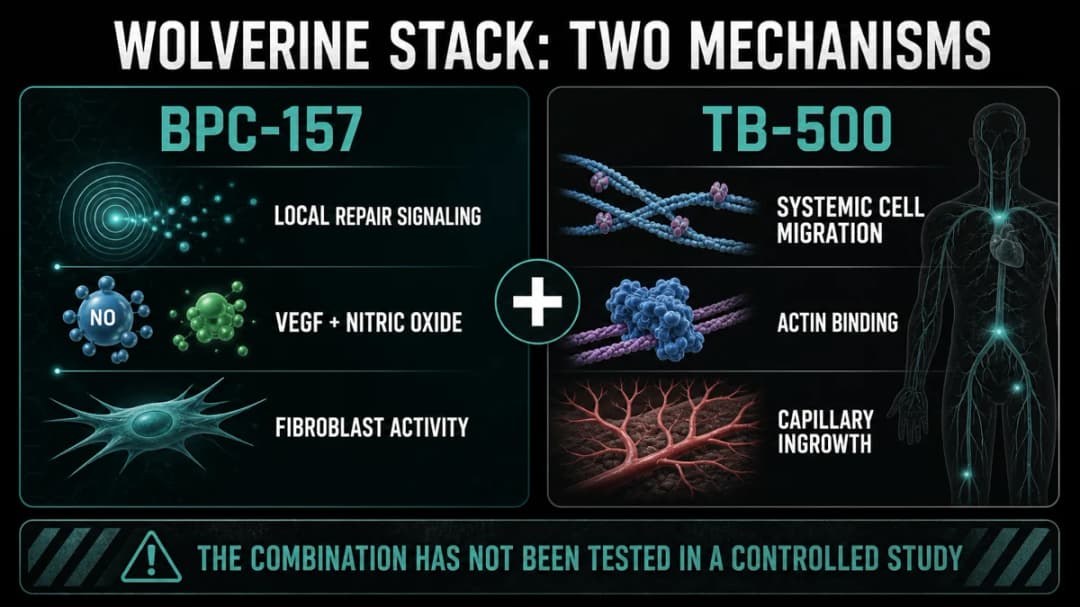
- The rationale for combining them is that their mechanisms barely overlap. BPC-157 is studied mainly for repair near the site of injury, while TB-500 acts systemically by upregulating actin and driving cell migration.
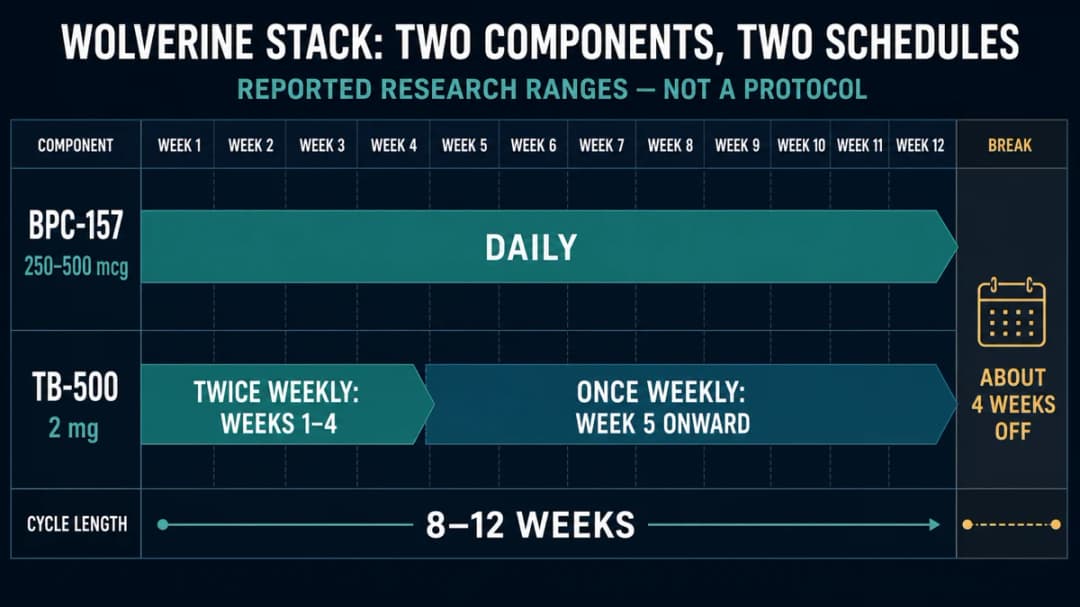
- Reported research ranges cluster around 250 to 500 mcg of BPC-157 daily, with TB-500 at 2 mg twice weekly for roughly four weeks and then 2 mg weekly. Cycles are typically discussed as 8 to 12 weeks followed by a break.
- Documented tolerability issues are mild and mostly local: injection site soreness, occasional nausea attributed to higher BPC-157 doses, and short-lived fatigue or headache during the TB-500 loading period.
- No controlled study has ever tested the combination. Neither peptide is an approved drug, TB-500 is banned in tested sport, and buying two compounds means verifying two certificates rather than one.
- The cancer question has a genuine basis on the TB-500 side. Thymosin beta-4 overexpression is implicated in tumor cell invasion and metastasis in published oncology work, though that research manipulated tumor cells' own genes rather than injecting TB-500, which makes it a reason for caution rather than evidence of harm.
What Is Actually in the Vials
There is no such thing as a Wolverine Stack molecule, and no single Wolverine peptide sitting behind the name. The term describes a pairing, and what arrives is either two separate lyophilized vials or a bundle priced as a unit. A common configuration is 10 mg of BPC-157 alongside 10 mg of TB-500, though 5 mg vials of either are equally routine. Check that figure first, because the milligram amount on the label drives every calculation you make later.
BPC-157 is a synthetic 15 amino acid sequence taken from a larger protective protein identified in gastric juice. Most of the published work on it comes out of a single research group in Zagreb, which is worth knowing: a large citation count concentrated in one lab is a weaker signal than the same count spread across independent groups. Studied mechanisms include VEGF upregulation and the angiogenesis that follows, nitric oxide pathway modulation, and fibroblast activation. Animal models have covered tendon, ligament, muscle, bone, gut mucosa, and peripheral nerve. Its half-life is short, estimated at a few hours, which is the practical reason daily dosing appears in almost every reported protocol. Our BPC-157 peptide guide goes further into what those models do and do not establish.
TB-500 is a synthetic fragment of thymosin beta-4, a small protein that turns up across most human tissues rather than being confined to one organ. The full parent protein runs 43 amino acids; TB-500 reproduces the active region rather than the whole molecule, a distinction vendors sometimes blur. Its central documented action is binding actin and promoting cell migration. Research models also report reduced inflammatory cytokine output, angiogenic effects, progenitor cell recruitment in cardiac injury work, and extracellular matrix remodeling. Estimated half-life is far longer than BPC-157, on the order of two to three days, which is why weekly or twice-weekly schedules appear rather than daily ones. The TB-500 peptide guide covers the thymosin beta-4 literature in more depth.
Both are sold for laboratory research only. Neither has FDA approval, neither has an established human dosing standard, and the combination has never been evaluated as a combination in a controlled setting.
Wolverine Stack Benefits
The honest summary is that the benefits attributed to the Wolverine peptide stack are extrapolated, not demonstrated. Every claim below inherits the evidence grade of its individual component, and the synergy argument itself sits one further step removed from data.
Soft tissue and tendon repair (animal evidence, moderate volume). BPC-157 has been studied across a range of injury models involving tendon, ligament, and the junction where tendon meets bone, a site that recovers unusually slowly because its blood supply is poor. Reported outcomes include faster closure and improved tensile properties. These are rodent results, and translating them to a human Achilles or rotator cuff involves dose-scaling and tissue assumptions nobody has validated.
Systemic recovery and cell migration (animal, plus early human work on the parent protein). TB-500 has the cleaner mechanistic story: actin regulation is well characterized and cell migration is genuinely central to wound repair. Thymosin beta-4 itself has been examined in early-phase human clinical contexts for wound and ocular surface applications, which gives this half of the stack slightly stronger footing. TB-500 does not automatically inherit those results.
Gut and mucosal effects (animal evidence, BPC-157 only). A meaningful share of the BPC-157 literature is gastrointestinal: ulcer, colitis, and fistula models. People who add the stack for joint pain and report gut improvement are describing something the animal data at least anticipates. TB-500 contributes nothing documented here.
Inflammation modulation (mechanistic, both components). BPC-157 works partly through the nitric oxide pathway while TB-500 has been reported to lower pro-inflammatory cytokines. The pathways differ, which is the strongest version of the complementarity argument. It remains an argument.
What the stack has not shown. No study has compared BPC-157 plus TB-500 against either compound alone. That the pair outperforms the parts is a plausible hypothesis built from mechanism, never tested. Community reports of improvement within two to three weeks for acute injuries, and four to eight weeks for chronic ones, are uncontrolled and cannot separate the compounds from the natural healing curve.
Wolverine Stack Side Effects
The side effects reported for the Wolverine peptide stack are mild, and the useful framing is per component, since the two peptides produce different complaints on different timelines.
Attributed to BPC-157:
- Nausea. Uncommon at or below 500 mcg daily and mentioned more often above that. Described as mild, arriving within the first hour after injection, and easing at lower amounts.
- Dizziness. Occasional, most often in the first days of use, brief when it occurs.
- Injection site soreness. The most common complaint here. Mild, resolves within hours, and less frequent when sites are rotated and a fine gauge insulin needle is used.
Attributed to TB-500:
- Fatigue or lethargy. Reported mostly during the first week or two of the higher twice-weekly phase. Mild and generally self-limiting.
- Headache. Occasionally reported and described as dose-related, easing when the twice-weekly amount is reduced.
- Flu-like malaise. Rare, lasting a day or two, and usually tied to the very first injection of a cycle.
Things that do not appear in the reports. Neither compound is androgenic, and no effect on testosterone, estrogen, or cortisol is documented. No dependency or withdrawal pattern has been described, hepatotoxicity and nephrotoxicity are not reported at commonly discussed amounts, and hair loss is not associated with either peptide. Increased urination is not on the list either. A new and persistent change in how often you are going during a cycle is worth raising with a doctor on its own terms rather than filing under stack side effects, because the usual explanations for it sit elsewhere.
Where the data is genuinely thin, and this matters. Everything above comes from short-term animal toxicity work and self-reported user experience. There is no long-term human safety dataset for BPC-157, none for TB-500, and obviously none for the two combined. The concern raised most often is vascular: growing fresh blood supply is exactly what both compounds are studied for, and a tumor that already exists would benefit from the same process. That concern is mechanistic rather than observed, but it is the reason anyone with active or suspected malignancy is routinely excluded from discussions of this stack, and the section below sets out what the published oncology literature does and does not say about it. Pregnancy and breastfeeding are similarly untested. Competitive athletes should note that TB-500 is prohibited under WADA rules, so a stack that looks harmless can still end a season.
Signs that warrant medical attention rather than a dose adjustment: spreading redness, warmth or fever around an injection site, persistent vomiting, or any allergic pattern such as hives, facial swelling, or difficulty breathing.
Does the Wolverine Stack Affect Cancer Risk?
This is the safety question asked most often about the stack, and it deserves a direct answer: nobody knows. Neither peptide has been tested in people with cancer, and nobody has followed users of either compound long enough to detect a change in cancer incidence. What exists is a mechanistic argument, and it is sharper on the TB-500 side than most write-ups admit.
Why the question comes up at all. Both compounds are studied for the two processes a tumor depends on. BPC-157's most cited mechanism is VEGF-driven angiogenesis, and a tumor is generally held to need a blood supply of its own to grow past a millimeter or two. TB-500 promotes cell migration, and metastasis is cell migration. Nothing about either mechanism distinguishes tissue you want repaired from tissue you do not.
What the thymosin beta-4 literature actually shows. This is the part worth reading carefully, because it is published oncology rather than forum speculation. A 2004 Oncogene paper found that forcing thymosin beta-4 expression in SW480 colon carcinoma cells markedly increased their invasiveness, and that Tβ4 messenger RNA ran higher in patients' liver metastases than in their own matched primary colorectal tumors. A 2011 Cancer Letters paper traced the migration effect to the ILK/IQGAP1/Rac1 pathway. A 2021 in vivo CRISPR-Cas9 knockout screen in mouse diffuse-type gastric cancer named Tmsb4x, the thymosin beta-4 gene, among the strongest promoters of metastasis it found.
The qualification matters as much as the finding. Every one of those studies manipulated the cancer cell's own thymosin beta-4 gene. None injected TB-500 into an animal or a person. They establish that this pathway is active in tumor progression; they do not establish that a weekly subcutaneous fragment causes or accelerates cancer. That distinction gets dropped in both directions online, waved away by sellers and reported as settled risk by critics. It is neither. It is a specific reason for caution about a specific pathway, which is more than the usual hand-waving about angiogenesis and less than proof of harm.
What the BPC-157 side argues back. The Zagreb group that produced most of the BPC-157 literature published a 2025 review in Pharmaceuticals written specifically to defend the compound against what it calls speculation of angiogenesis toward tumorigenesis, arguing that BPC-157 opposes rather than causes corneal neovascularization and describing an anti-tumor effect in vivo and in vitro. Read it for what it is: the originating lab answering criticism of its own compound. No independent group has replicated the anti-tumor claim, and no human study has tested the question in either direction.
Where that leaves a decision. Active malignancy, a past cancer, or an unexplained lump nobody has examined yet are the situations in which a theoretical concern stops being theoretical enough to shrug off, and they are why discussions of this stack routinely exclude those cases. If any of it applies, this is a call for the oncologist who knows the history, not for a forum.
Wolverine Stack Pros and Cons
The case for and against, with the evidence grade attached to each line rather than left implied. Nothing in the left column has been established in humans.
| Pros, as argued | Cons, as they actually stand |
|---|---|
| The two mechanisms barely overlap: local repair signaling plus systemic cell migration | No study has ever tested the pair against either compound alone, so the synergy is reasoning, not a result |
| BPC-157 has a broad animal literature spanning tendon, ligament, muscle, bone, gut and nerve | That literature is concentrated in one lab, a weaker signal than the citation count suggests |
| Thymosin beta-4, the parent protein, has reached early-phase human trials | TB-500 is a fragment of it and does not inherit those results |
| Reported side effects are mild, mostly local, and short-lived | There is no long-term human safety data for either compound, and none at all for the combination |
| Neither compound is androgenic or hormonally active | The same thymosin beta-4 pathway is implicated in tumor cell invasion and metastasis |
| Neither compound sits on a controlled substances schedule in most countries | Neither is approved for human use, and TB-500 is banned under WADA rules |
| Two vials, one diluent, and both can go into the same syringe on shared days | Two vials also means two certificates to verify and two chances at a mislabeled product |
| Community reports of faster recovery are numerous and broadly consistent | Injuries resolve on their own, and a 2026 Sports Medicine review flags placebo response and social media amplification as mediators of reported peptide effects |
Wolverine Stack Dosage Chart
The figures below are ranges reported in research discussion and vendor literature, compiled so the two components can be compared side by side. There is no clinically established human dose for either peptide, and nothing here is a protocol or an instruction.
| Component and context | Reported range | Frequency | Typical cycle discussed |
|---|---|---|---|
| BPC-157, conservative start | 250 to 300 mcg | Daily, subcutaneous | First week before any step up |
| BPC-157, commonly cited range | 300 to 500 mcg | Daily, subcutaneous near the target area | 8 to 12 weeks |
| TB-500, higher initial phase | 2 mg (1 to 1.5 mg where tolerability is a concern) | Twice weekly, subcutaneous, any site | Roughly weeks 1 to 4 |
| TB-500, reduced ongoing phase | 2 mg | Once weekly, subcutaneous, any site | Week 5 onward |
| Combined cycle | Both components together | Per component above | 8 to 12 weeks, then about 4 weeks off |
A few points the table cannot carry. The daily-versus-weekly asymmetry is not arbitrary; it tracks the half-life difference, with BPC-157 clearing in hours and TB-500 persisting for days. The BPC-157 site preference follows from the same fact, since a compound studied largely for local effect is discussed as being placed near the tissue in question, with the abdomen as the default. TB-500 carries no such preference in the reported material because it is systemically active.
Total material is worth working out before ordering. At the top of the reported BPC-157 range across eight weeks you need roughly 28 mg, or three 10 mg vials. TB-500 at 2 mg twice weekly for four weeks then weekly for four comes to about 20 mg, or four 5 mg vials. Both figures move with cycle length. Our Wolverine Stack dosage guide works through the scheduling in more detail, including how the daily and twice-weekly components line up across a week.
Reconstitution and Storage Basics
Both peptides arrive as lyophilized powder and are reconstituted with bacteriostatic water. The arithmetic is identical for either: vial contents divided by water added gives concentration per milliliter, and an insulin syringe reads in units where 100 units equals 1 mL.
For common vial sizes: 2 mL of bacteriostatic water into a 10 mg BPC-157 vial gives 5,000 mcg per mL, so a 500 mcg amount is 0.1 mL, or 10 units on the syringe. One milliliter into a 5 mg TB-500 vial also gives 5,000 mcg per mL, making a 2 mg amount 0.4 mL, or 40 units. Because both are water soluble and stable in the same diluent, reported practice is that the two can be drawn into a single syringe on days when both are scheduled, which halves the number of injections.
Handle the powder gently: direct the water down the vial wall rather than onto the pellet, swirl instead of shaking, and allow a few minutes to dissolve. Sealed and reconstituted vials both belong in the fridge. Discard anything cloudy, particulated, or discolored regardless of date.
Stacking Beyond the Two Components
The Wolverine Stack is itself a stack, so the real question is what gets added on top, and the documented answer is: not much. There are no combination studies for BPC-157 and TB-500 together, let alone alongside a third compound.
What does exist is a commercial pattern. The KLOW peptide stack folds both of these peptides in alongside GHK-Cu and KPV, shifting the emphasis toward skin, matrix remodeling, and inflammatory signaling. If your interest extends past tendon and muscle, that blend covers adjacent ground with the same two peptides at its core, which makes running both at once redundant and easy to double-dose by accident. Growth hormone secretagogues come up in the same conversations, but the case for pairing them with either component here is speculation rather than data. Treat every additional compound as a separate risk decision.
How to Verify What You Buy
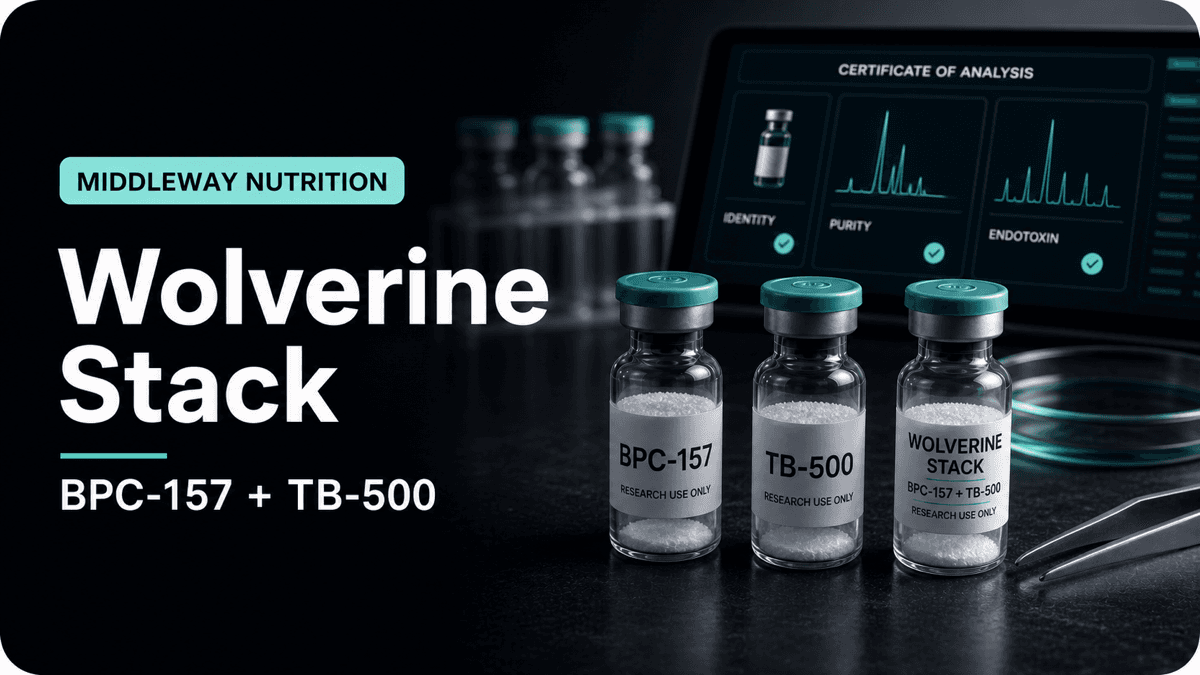
A two-peptide purchase means two chances to receive something mislabeled, so ask for third-party analysis covering each vial individually rather than one sheet gesturing at the bundle, and confirm the certificate identifier matches the vial in your hand. Mass spectrometry establishes that the sequence is what the label claims and HPLC speaks to how much else is in there; neither is a substitute for the other. Our guide to where to buy the Wolverine Stack covers which suppliers publish current documentation and which reuse old paperwork across production runs.
Frequently Asked Questions
What does the Wolverine Stack actually do?
In research models, BPC-157 supports repair near an injury through angiogenesis and growth factor signaling, while TB-500 acts systemically by promoting the cell migration that healing requires. Combining them is meant to cover local and whole-body repair at the same time. That combined effect has been reasoned from mechanism, not measured in any study of the pair.
Is the Wolverine Stack safe?
Short-term tolerability in the available research and in user reports looks unremarkable, with mild injection site soreness, occasional nausea, and brief fatigue being the usual complaints. But there is no long-term human safety data for either compound, none at all for the combination, and the theoretical angiogenesis concern applies to anyone with an undiagnosed malignancy. Neither peptide is approved for human use, and any decision belongs with a qualified clinician.
How much of each component do people report using?
Reported ranges are roughly 250 to 500 mcg of BPC-157 daily and 2 mg of TB-500 twice weekly for about four weeks, dropping to 2 mg weekly after that, over an 8 to 12 week cycle. These are observed ranges rather than a validated protocol, and no regulator or clinical body has established a human dose for either peptide.
Can you stay on the Wolverine Stack continuously, or run it five days a week?
Nothing has been tested, so there is no evidence-based answer here, only convention. Reported practice is to cycle: roughly 8 to 12 weeks on, then about 4 weeks off. The weekday-only pattern some people describe for BPC-157, five days on and two off, is a habit carried over from other compounds rather than anything drawn from this peptide's pharmacology. Its half-life is measured in hours, so a two-day gap is a real washout rather than a token one, which is why the pattern at least does something coherent. The honest reason cycling exists at all is the absence of long-term human safety data. Nobody has run either compound in people for a year and looked at what happened, so indefinite continuous use is an unmeasured risk rather than a known-safe one.
Where does this stack sit legally?
Most countries have never placed either compound on a controlled substances schedule, which is why research chemical suppliers can list them openly. That is not the same as being approved for human use, which neither is. TB-500 is separately banned by WADA, so possession or use creates a real problem for athletes in tested competition. Import rules vary by country and are worth checking before ordering.
What do Wolverine Stack reviews actually tell you?
Less than their volume suggests. Almost every review describes one person, one injury, no control and no blinding, in a situation where the tissue was going to heal anyway, which is exactly what a six-week testimonial cannot separate from the compound. A 2026 review in Sports Medicine covering approved and unapproved peptides in musculoskeletal care singles out the placebo effect as a mediator of reported peptide efficacy and describes how social media amplifies it, while noting that rigorous human safety data for compounds in this category is scarce. Reviews are genuinely useful for one thing: what people report about a vendor, the labeling on the vial and whether the paperwork matched, where the writer is describing a shipment rather than a healing rate.
Does the Wolverine Stack do anything for visceral fat or body composition?
Nothing documented. Searching the published literature for either compound alongside adipose tissue, body fat or obesity turns up no study testing them as fat-loss agents, and neither has an established effect on appetite, insulin sensitivity or lipolysis in humans. TB-500's research record is about actin binding, cell migration and tissue repair rather than energy balance, and BPC-157's is dominated by gut and soft tissue injury models. If body composition shifts over a cycle, the training that became possible once an injury settled down is a more parsimonious explanation than the peptides.
Can someone with type 1 diabetes use the Wolverine Stack?
There is no data to answer that with. The diabetes-adjacent BPC-157 literature is rodent work on diabetic wound and ulcer healing, not glycemic control, and nothing has examined either peptide's effect on insulin requirements, hypoglycemia risk or glucose readings in a person with type 1. TB-500 has no diabetes literature at all, and both compounds are described as modulating inflammatory signaling, which has never been evaluated in anyone managing an autoimmune condition. Two practical points hold regardless of the missing evidence. Someone with T1D is already injecting daily and rotating sites, so a further daily subcutaneous injection has to be planned around insulin rather than competing with it. And impaired wound healing is a well-established feature of poorly controlled diabetes, which makes any injection site infection a larger event than it would be otherwise. This belongs in a conversation with the endocrinologist who already manages the insulin, not on a forum.