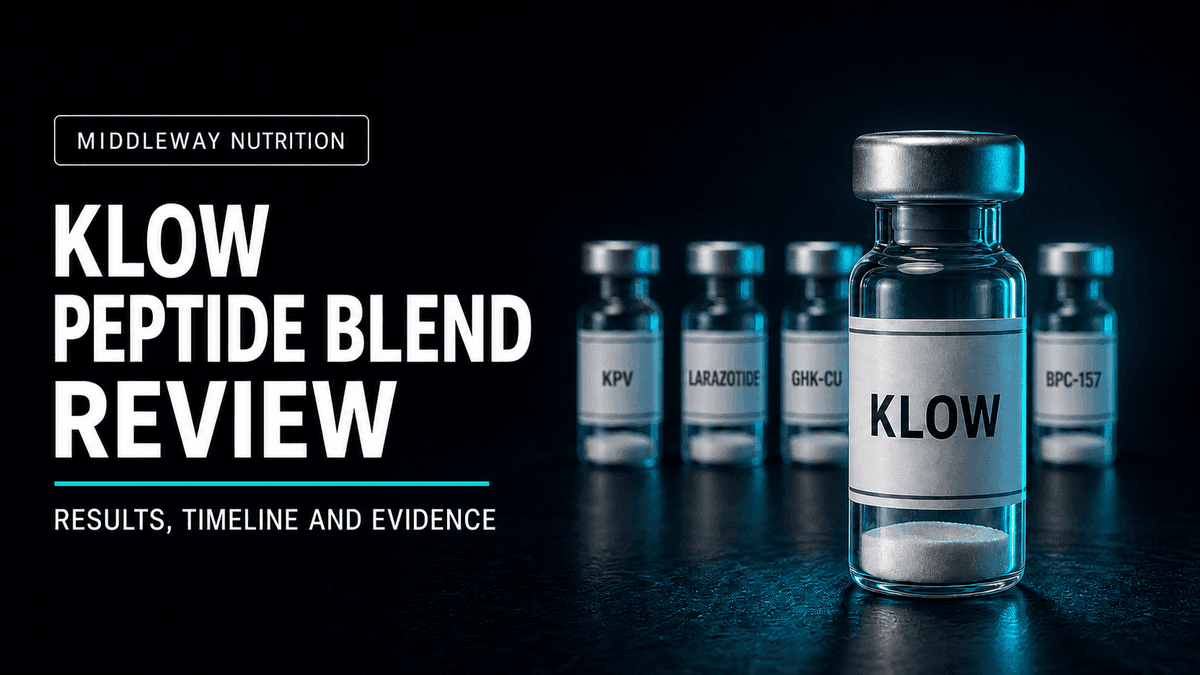
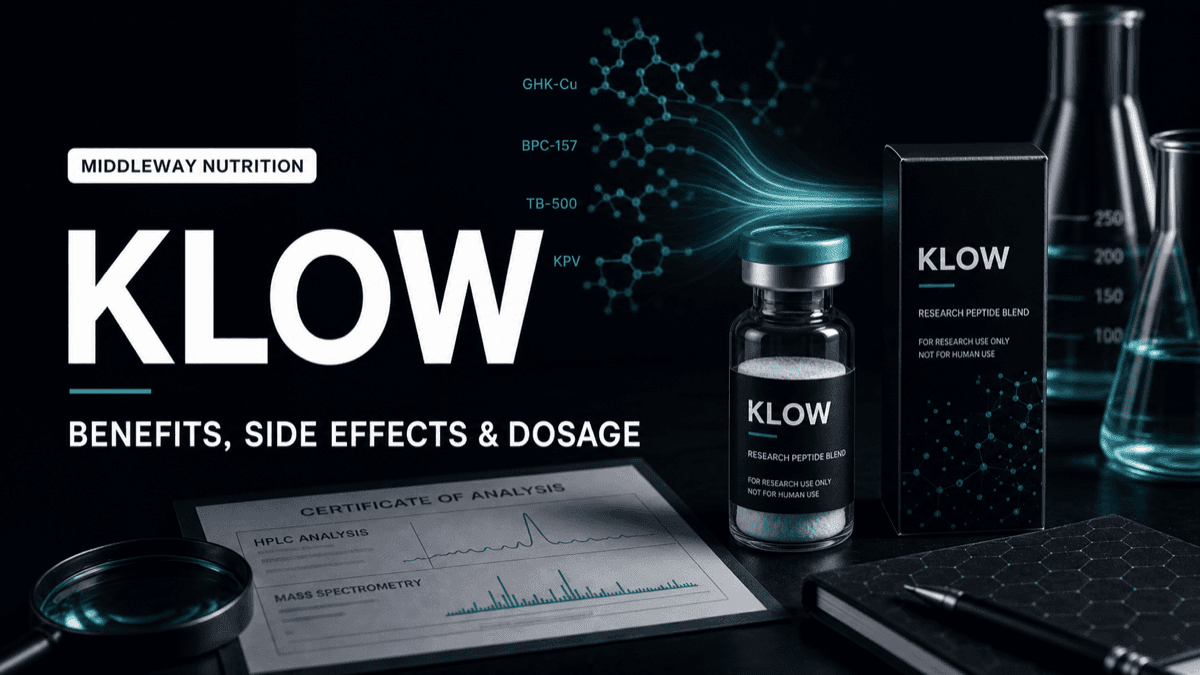
The KLOW peptide stack is a four-part blend, so its benefits, side effects, and dosage belong to four separate compounds rather than one: GHK-Cu, BPC-157, TB-500, and KPV. That distinction matters more than it sounds. Most write-ups treat KLOW as a single molecule with a single profile, which hides the fact that one component is dosed in milligrams, another in micrograms, and a third weekly rather than daily. This guide keeps the four separated, grades the evidence behind each claim, and is upfront about where the research thins into anecdote.
- KLOW is a pre-mixed research blend of four peptides, not a novel compound. Nothing in the vial is unique to KLOW; the product is the ratio and the convenience of one reconstitution instead of four.
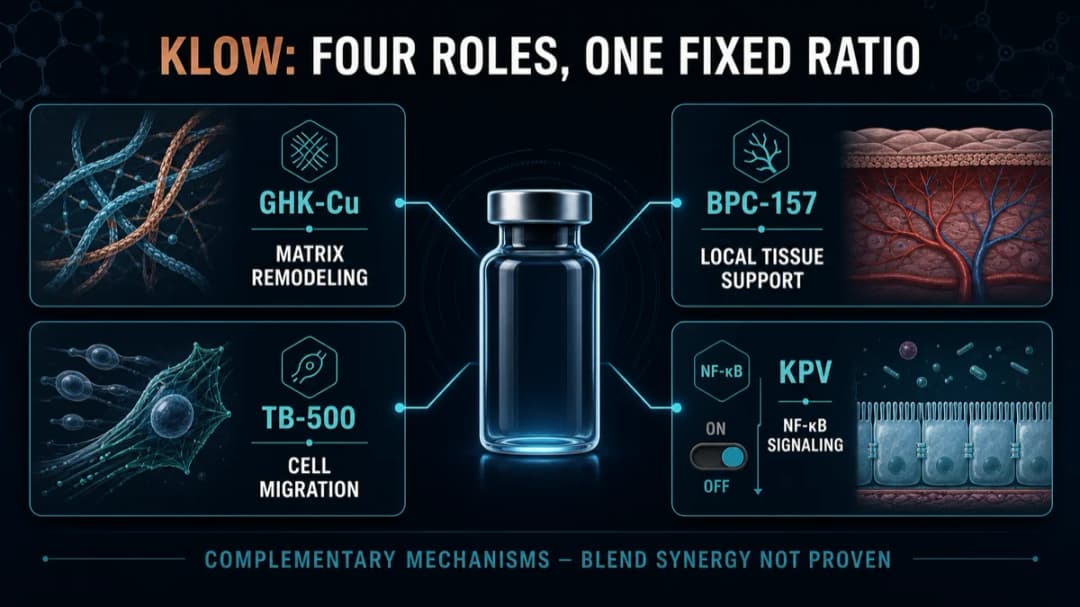
- The four components split cleanly by job: GHK-Cu rebuilds extracellular matrix, BPC-157 handles localized tissue and gut repair, TB-500 mobilizes repair cells systemically, and KPV suppresses inflammatory signaling through NF-kB.
- Reported research ranges run roughly 300 to 500 mcg daily for both BPC-157 and KPV, 1 to 2 mg daily for GHK-Cu (user reports on Reddit run higher, around 2.0 to 2.5 mg), and 2 mg for TB-500 dosed twice weekly then weekly.
- Commonly reported tolerability issues are mostly local and mild: injection site soreness or redness, and some users report transient nausea, dizziness, headache or fatigue. These come from user reports, not controlled studies, and the attribution to a specific component is unverified.
- None of these four peptides is an approved drug. There is no established human dosing standard for any of them, and blends compound the verification problem because a single certificate has to cover four actives.
What KLOW Actually Contains
KLOW is sold as a lyophilized powder containing four peptides in fixed proportion. It is commonly offered as an 80 mg total vial, which places it alongside the closely related three-peptide GLOW blend. If you are weighing the two against each other, the GLOW peptide stack guide covers that formula in detail. The short version: GLOW is heavily weighted toward GHK-Cu, with 50 mg of copper peptide out of a 70 mg vial, making it a skin-first formula. KLOW spreads the load across four actives and adds KPV, which pushes it toward inflammation and recovery rather than cosmetic skin work. Because vendors do occasionally adjust their blends, treat any per-component milligram figure you read, including ours, as something to confirm against the label and analysis on the vial you actually receive.
The name is an assembly instruction rather than a chemistry term. KLOW is the GLOW blend with KPV added, and the vial arithmetic shows it: GLOW as commonly sold is a 70 mg vial holding 50 mg GHK-Cu, 10 mg BPC-157, and 10 mg TB-500, and adding 10 mg of KPV to that produces exactly the 80 mg KLOW vial. Listings render it KLOW 80 or KLOW blend, and it is searched often enough as KLO that the misspelling is worth naming.
The split published across vendor listings for the 80 mg vial is consistent from one supplier to the next:
| Component | Per 80 mg vial | Share of vial | What the letters stand for |
|---|---|---|---|
| GHK-Cu | 50 mg | 62.5% | Glycyl-L-histidyl-L-lysine, copper complex |
| BPC-157 | 10 mg | 12.5% | Body Protection Compound-157 |
| TB-500 | 10 mg | 12.5% | Thymosin beta-4 fragment |
| KPV | 10 mg | 12.5% | Lysine-proline-valine |
Read that share column twice. Nearly two thirds of the powder is copper peptide, and the other three actives split the remaining 30 mg evenly. Vial totals do vary between suppliers, so confirm the split on the label and the certificate rather than assuming this one.
The components, and what each one is:
GHK-Cu is a copper-bound tripeptide, glycyl-L-histidyl-L-lysine complexed with copper. It occurs naturally in human plasma and declines substantially with age. Its research literature is the deepest of the four and centers on extracellular matrix remodeling: collagen and glycosaminoglycan production, fibroblast activity, and broad shifts in gene expression tied to repair and antioxidant pathways. Our standalone GHK-Cu guide goes deeper on the dermatological and hair follicle work.
BPC-157 is a 15 amino acid sequence derived from a protein found in gastric juice. Its studied mechanisms include nitric oxide pathway modulation, VEGF-driven angiogenesis, and fibroblast activation. It is the most heavily cited of the four in soft tissue and gut mucosal repair models. The BPC-157 guide breaks down what the animal data does and does not establish.
TB-500 is sold as a synthetic fragment of thymosin beta-4; analytical work identified the product as the acetylated Ac-LKKTETQ fragment (residues 17 to 23) of the full protein (PMID 22962027). The actin upregulation and cell migration findings, and the human safety data, belong to full-length thymosin beta-4, not to this short fragment, so they should not be assumed to carry over to TB-500. The systemic, cell-migration profile attributed to it is therefore an inference from the parent protein, in contrast to BPC-157, which tends to be studied for effects near the site of injury.
KPV is a tripeptide, lysine-proline-valine, cleaved from the tail end of alpha-melanocyte stimulating hormone. It inhibits NF-kB signaling, and in research models it reduces production of inflammatory cytokines and supports intestinal mucosal barrier function. It also has a smaller body of skin research covering UV-induced inflammation and keratinocyte behavior.
All four are supplied for laboratory research use. None is approved by the FDA for human treatment, and nothing below is a protocol to follow.
KLOW Benefits
The honest framing is that KLOW benefits are the summed benefits of four separately studied peptides, and the evidence quality is uneven across them. Here is the grading as we read it.
Best supported, and largely preclinical: soft tissue repair. BPC-157 has substantial animal literature covering tendon and ligament repair alongside muscle recovery, and the animal work on TB-500 is largely work on full-length thymosin beta-4 rather than on the Ac-LKKTETQ fragment actually sold, and the pairing predates KLOW by years as the informal Wolverine combination. What is missing is controlled human trial data. Reports of faster recovery from stubborn shoulder, knee, and Achilles complaints within two to four weeks are consistent across user communities, but community consistency is not the same as clinical evidence, and the placebo-prone nature of self-assessed injury recovery is worth naming.
Best supported in humans: skin and collagen effects from GHK-Cu. This is the one component with meaningful human dermatological research behind it, largely topical. Collagen type I and III stimulation, elastin synthesis, glycosaminoglycan production, and fibroblast proliferation are all reasonably documented. Reported timelines for visible texture and tone change tend to land in the three to six week window. Hair follicle support has real data behind it as well, though it is slower to appear, with most reports placing changes around week eight or later.
Mechanistically strong, clinically unproven: inflammation and gut barrier effects from KPV, reinforced by BPC-157. NF-kB inhibition is a well characterized mechanism and KPV's effect on intestinal mucosa is documented in research models. Users commonly report that gut discomfort settles within the first one to three weeks, before any structural healing shows up. That ordering is plausible given the mechanisms, but it rests on self-report.
Weakest evidence: systemic anti-aging and cardiovascular claims. TB-500 has cardiac tissue research attached to it only through the full thymosin beta-4 protein, and GHK-Cu's gene expression work gets stretched into sweeping longevity claims that the underlying studies do not support. Treat these as interesting mechanism, not established outcome.
Summarized against the components that actually drive them:
| Reported benefit | Driven by | Evidence behind it | Reported timeline |
|---|---|---|---|
| Tendon, ligament, and soft tissue recovery | BPC-157 + TB-500 | Substantial animal literature (for TB-500, mostly on the parent protein), no controlled human trials | 2 to 4 weeks in user reports |
| Skin texture, tone, and collagen | GHK-Cu | Human dermatological research, largely topical | 3 to 6 weeks |
| Hair follicle support | GHK-Cu | Real data, thinner than the skin work | Week 8 or later |
| Gut comfort and inflammatory signaling | KPV + BPC-157 | Well characterized mechanism, research models, self-reported in humans | 1 to 3 weeks |
| Systemic anti-aging and cardiovascular | GHK-Cu, TB-500 | Mechanism stretched past what the studies show | Not established |
| One vial instead of four | The blend format itself | Logistics, not pharmacology | Immediate |
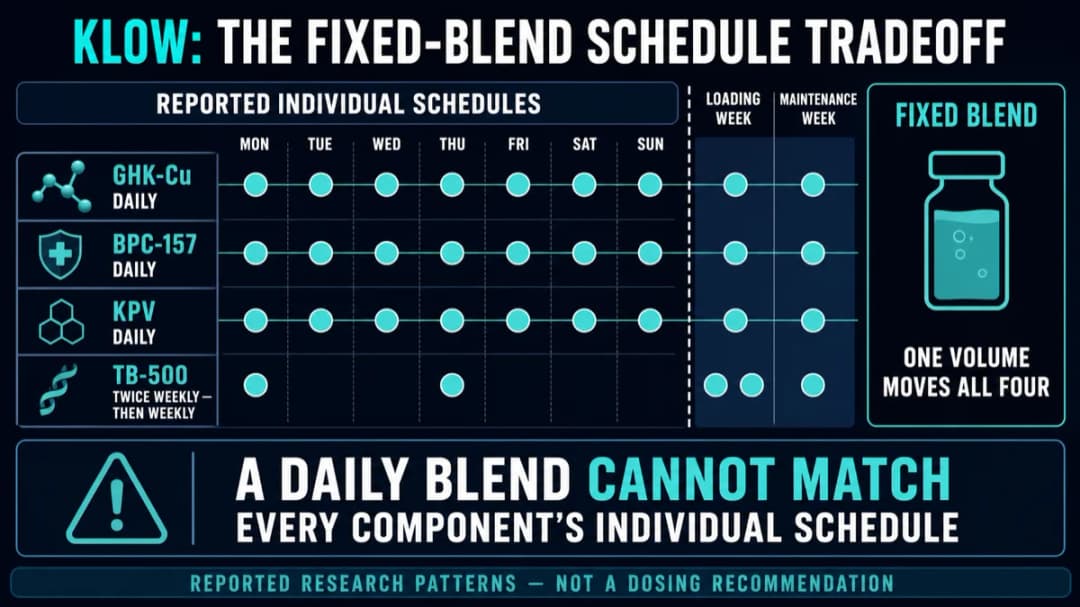
One genuine, non-biological benefit deserves a mention because it is the actual reason most people choose a blend: consolidation. Running these four separately means four vials, four reconstitutions, and four schedules to track. KLOW reduces that to one vial at a fixed ratio. That is a logistics advantage, not a pharmacological one, and it comes with the tradeoff that you cannot adjust one component without moving all four.
KLOW Side Effects
Reported KLOW side effects are mostly mild, mostly local, and mostly attributable to a specific component rather than the blend as a whole. The blend has never been studied, so nothing is known about how the four peptides interact when combined; their mechanisms overlap rather than obviously conflict, but that is an inference and not evidence of safety.
Commonly reported by users (the component attributions below are not from controlled studies):
- Injection site reactions. Soreness, transient redness, and mild tingling. GHK-Cu is the usual source of redness at the site, typically resolving within hours. Across all four components, this is what gets raised most often.
- Mild nausea. Users often attribute it to BPC-157 and to higher doses; this is unverified.
- Brief dizziness shortly after injection. Reported by some users, usually short-lived; the cause is unverified.
- Fatigue in the first one to two weeks. Reported by some users and attributed to TB-500, usually settling as use continues; unverified.
- Transient headache. Also reported by some users; unverified.
- Temporary skin darkening. A GHK-Cu effect from copper's interaction with melanin, reported mainly with concentrated topical application rather than injection. Cosmetic and reversible.
KPV is the best tolerated of the four in reported use, with side effects described as rare beyond minor local reactions.
Where the data is genuinely thin, and worth stating plainly: there are no long-term human safety studies on any of these four compounds, and none at all on the blend as a formulated product. Everything above is drawn from short-duration research models and user reports. Absence of reported harm over eight to twelve week windows is not evidence of long-term safety.
Situations that warrant particular caution include active malignancy, since both GHK-Cu and BPC-157 have angiogenic activity and promoting new blood vessel growth is theoretically undesirable there; any disorder of copper metabolism such as Wilson's disease, because of the copper load in GHK-Cu; and pregnancy or breastfeeding, where no data exists. Competitive athletes should note that TB-500 appears on the WADA prohibited list. Signs that warrant prompt medical attention rather than dose adjustment are spreading redness or warmth with fever at an injection site, which suggests infection, and any allergic response involving hives, swelling, or breathing difficulty.
KLOW Dosage Chart
There is no human dosing standard for any KLOW component. The figures below are the ranges reported in research settings and vendor documentation, presented so you can read a label and understand what the numbers refer to. They are not instructions, and the fixed blend ratio means you are dosing all four together by volume rather than tuning any one of them.
| Component | Reported range | Frequency | Typical cycle context |
|---|---|---|---|
| BPC-157 | 300 to 500 mcg | Once daily | 8 to 12 weeks, then a break |
| KPV | 300 to 500 mcg | Once daily | 8 to 12 weeks, often alongside BPC-157 |
| GHK-Cu (Reddit users report 2.0 to 2.5 mg) | 1 to 2 mg | Once daily | 8 to 12 weeks, subcutaneous or topical |
| TB-500 | 2 mg | Twice weekly loading, then once weekly | Loading roughly the first 4 weeks, then maintenance |
| Blend as dosed | One combined daily volume | Once daily, some protocols drop to 5 days per week after week 4 | 8 to 12 weeks on, roughly 4 weeks off |
Two things about that table are worth flagging. First, TB-500's schedule does not match the rest. It is reported at twice weekly during loading and weekly afterward, while the other three are daily. A blend injected once daily therefore cannot deliver all four on their individually reported schedules at once, which is the structural compromise inherent to any fixed-ratio product. Some protocols address this by adding standalone TB-500 during a loading phase, which reintroduces the complexity the blend was meant to remove.
Second, route differs by component. topical research exists for GHK-Cu as well as for KPV, while BPC-157 and TB-500 are studied subcutaneously. Reported KLOW protocols are predominantly subcutaneous.
Cycle length in reported use clusters at eight to twelve weeks, with roughly four weeks off before repeating.
Because the ratio is fixed, volume is the only variable you actually control, and the arithmetic is worth doing before you read anyone's protocol. Two reconstitution conventions circulate for the 80 mg vial, and they land in the same place:
| Reconstitution | Blend concentration | Volume per dose | GHK-Cu | BPC-157 | TB-500 | KPV |
|---|---|---|---|---|---|---|
| 2 mL bacteriostatic water | 40 mg/mL | 10 units (0.1 mL) | 2.5 mg | 500 mcg | 500 mcg | 500 mcg |
| 3 mL bacteriostatic water | about 26.7 mg/mL | 15 units (0.15 mL) | 2.5 mg | 500 mcg | 500 mcg | 500 mcg |
| 2 mL bacteriostatic water | 40 mg/mL | 5 units (0.05 mL) | 1.25 mg | 250 mcg | 250 mcg | 250 mcg |
Those figures are vendor and community convention, not clinical guidance, and there is no dosing standard anywhere to check them against. What they do is expose the ratio problem in numbers. A volume that puts BPC-157 and KPV at the top of their reported 300 to 500 mcg range simultaneously delivers 2.5 mg of GHK-Cu, above its reported 1 to 2 mg daily range, and 500 mcg of TB-500 every day, roughly 3.5 mg across a week against a reported schedule of 2 mg once or twice weekly. Halve the volume and GHK-Cu and TB-500 move back toward their ranges while BPC-157 and KPV drop below theirs. No single volume satisfies all four. That is not a defect in a particular vendor's vial, it is what a 62.5 / 12.5 / 12.5 / 12.5 ratio does, and it is why circulating protocols reach for workarounds like dosing five days a week instead of seven, or stepping the volume down after a loading phase.
One consequence of the GHK-Cu weighting deserves spelling out. GHK-Cu is roughly 16 percent copper by mass, so a 2.5 mg dose carries somewhere near 0.4 mg of elemental copper. That sits under the 0.9 mg adult daily reference intake and well under the 10 mg tolerable upper intake level, but injection bypasses the intestinal absorption control those oral figures assume. That is the mechanical reason copper metabolism disorders belong on the caution list rather than a vague sense that copper is involved.
Reconstitution and Storage
KLOW ships as a lyophilized powder and requires bacteriostatic water before use. Reported reconstitution volumes center on 2 mL per vial, though the correct volume depends on the total peptide mass in the specific vial, so the vendor's own documentation governs. Add the water slowly against the vial wall rather than directly onto the powder, then swirl gently. Do not shake. The solution should clear within a few minutes; persistent cloudiness or visible particulate after that is a reason to stop and question the product rather than proceed.
Unreconstituted powder is stable at room temperature for shipping and short holds, and belongs in a refrigerator for anything longer. Once reconstituted, it goes in the refrigerator immediately and is generally considered usable for about four weeks. Do not freeze it. Repeated temperature cycling degrades peptides, so a stable spot in the fridge beats the door.
KLOW vs GLOW
The two blends share three of their four peptides, so the decision is narrower than it looks: you are deciding whether 10 mg of KPV is worth the extra active and the extra cost. If you land on the three-peptide version, our guide to where to buy the GLOW peptide stack covers the sourcing side.
| KLOW | GLOW | |
|---|---|---|
| Peptides | GHK-Cu, BPC-157, TB-500, KPV | GHK-Cu, BPC-157, TB-500 |
| Typical vial | 80 mg | 70 mg |
| GHK-Cu load | 50 mg, 62.5% of the vial | 50 mg, 71% of the vial |
| What differs | 10 mg KPV | No KPV |
| Extra mechanism | NF-kB inhibition, intestinal barrier support | None beyond the shared three |
| Reads as | Recovery and inflammation first | Skin and collagen first |
Both are dominated by copper peptide, which is why GLOW gets called a skin formula. At 71 percent of the vial, a GLOW dose is mostly GHK-Cu with a modest amount of repair peptide riding along. KLOW dilutes that slightly and buys an anti-inflammatory tripeptide with its own gut mucosal research behind it. If the target is inflammatory or gut-related, KPV is the whole reason to pay the difference. If the target is skin, hair, or general collagen work, the fourth peptide adds cost without addressing it. The three-peptide version is covered in full in the GLOW peptide stack guide.
No study has compared the two blends against each other, and neither has been evaluated as a formulated product. Everything above is composition arithmetic and component-level research, not head-to-head data.
Stacking
Genuine stacking documentation for KLOW is limited, because KLOW is itself a stack. The four components are already selected to complement each other: KPV suppresses inflammatory signaling, GHK-Cu rebuilds matrix, BPC-157 works on localized tissue and gut lining, and TB-500 moves repair cells to where they are needed. Adding more healing peptides on top produces overlap rather than coverage.
What does get reported is pairing KLOW with growth hormone secretagogues such as CJC-1295 with ipamorelin, on the reasoning that the two act on unrelated pathways. No interaction problems have been described, but no formal study supports the combination either. Running KLOW and GLOW simultaneously makes little sense given that three of their peptides are identical; alternating them across phases is the more common approach. If you are introducing anything alongside KLOW, adding one compound at a time is the only way to attribute an effect or a side effect to its actual source.
How to Verify What You Buy
Blends are harder to verify than single peptides, because one certificate of analysis has to account for four actives and their ratios, and a certificate showing only total peptide mass tells you almost nothing about the split. Ask for third-party analysis that identifies each component separately, and check that the document references the lot you are actually receiving rather than a generic sample. Our where to buy KLOW guide covers which suppliers publish per-component testing, and the KLOW for sale page tracks current pricing and vial sizes against that standard.
Looking for the numbers behind this guide? Our KLOW dosage chart sets label and trial doses beside what Reddit users report taking and our KLOW side effects separates documented effects from what users report.
FAQ
What does the KLOW peptide stack do?
It combines four peptides that act on different parts of the repair process. GHK-Cu drives collagen and extracellular matrix rebuilding, BPC-157 targets localized tissue and gut mucosal repair, TB-500 promotes cell migration to damaged tissue, and KPV suppresses inflammatory signaling. In research terms it is aimed at wound healing, soft tissue recovery, gut barrier function, and skin remodeling, with the strongest human evidence sitting on the GHK-Cu side.
Is the KLOW peptide stack safe?
Reported tolerability over typical eight to twelve week research windows is good, with user-reported side effects mostly limited to injection site reactions, mild nausea, and short-term fatigue (none of it from controlled studies). That said, no component is FDA approved, no long-term human safety data exists, and the blend as a formulated product has never been studied as such. Copper metabolism disorders, active cancer, and pregnancy are specific reasons for caution, and WADA-tested athletes should note TB-500's prohibited status.
How much KLOW is used in research?
Reported ranges are 300 to 500 mcg daily for BPC-157 and KPV each, 1 to 2 mg daily for GHK-Cu, and 2 mg of TB-500 twice weekly during loading then weekly. In a fixed blend these are delivered together by volume, so the per-component amounts follow whatever ratio the manufacturer used. There is no established human dose for any of them.
Does KLOW build muscle?
Not directly. None of the four components is anabolic: there is no growth hormone secretagogue in the blend, no androgen, and nothing shown to raise muscle protein synthesis. The animal literature behind BPC-157 and TB-500 covers repair of injured muscle and tendon in crush and transection models, which is a different question from growing healthy muscle. The plausible route to more muscle is indirect, through recovering faster and losing fewer training weeks to injury, and no human trial has measured whether that converts into lean mass. If added size is the goal, the compounds studied for it are a different class, and KLOW is a repair blend being asked to do a job it was not assembled for.
What do KLOW reviews actually report?
The recurring themes in user reports are joint and tendon complaints easing across roughly two to four weeks, skin texture and tone changes around weeks three to six, and gut symptoms settling inside the first three weeks. The recurring limitation is that none of it is controlled. Reviewers are unblinded, they are self-assessing conditions that often improve on their own, most are running other compounds at the same time, and the vials themselves are not standardized between suppliers. Reviews are genuinely useful for one thing, which is vendor signal: whether the powder dissolves cleanly, whether the certificate matches the lot in hand, whether the fill weight looks right. They cannot establish that a peptide works.
Is KLOW legal?
The individual peptides are legal to buy and possess in the United States when sold and labeled for laboratory research use. They are not approved for human use, cannot legally be marketed as treatments, and are not sold as supplements. Regulatory status varies by country, and TB-500 is banned in sanctioned athletic competition regardless of local legality.