Ozempic side effects are most often digestive, especially when starting treatment or increasing the dose.
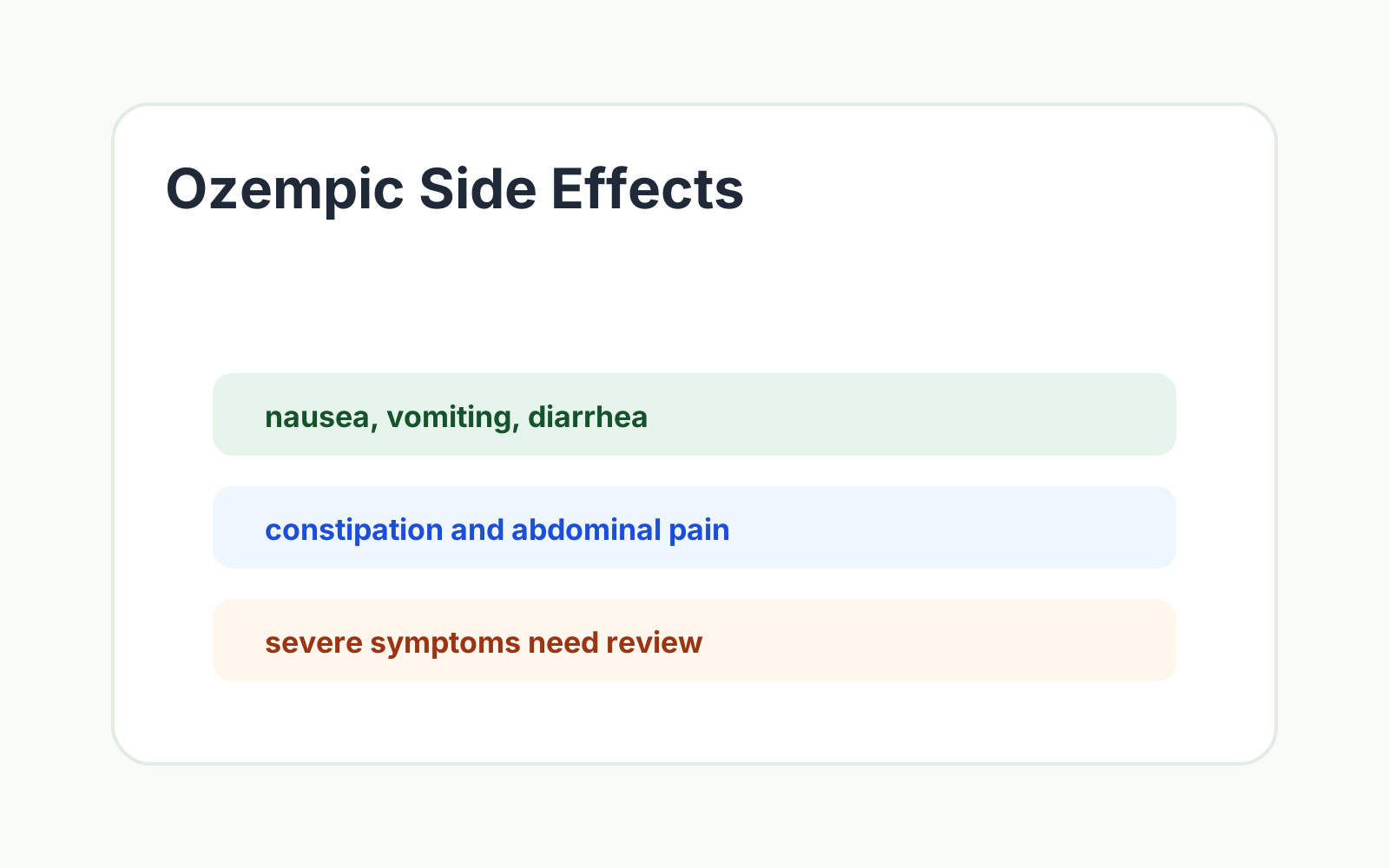
Short answer: the most common Ozempic side effects include nausea, vomiting, diarrhea, abdominal pain, and constipation. In the manufacturer's placebo-controlled trials, nausea was reported by 20.3% of people on the 1 mg dose versus 6.1% on placebo, and most GI reports happened during dose escalation. Serious issues can include pancreatitis, gallbladder disease, dehydration-related kidney injury, low blood sugar when combined with insulin or sulfonylureas, allergic reactions, and diabetic retinopathy complications in people with diabetes history.
This is not a substitute for medical care. Call the prescriber for symptoms that are severe, persistent, or concerning.
Quick Side-Effect Guide
| Side effect | Usually discussed as | When to call |
|---|---|---|
| Nausea | Common | If persistent, worsening, or preventing fluids |
| Vomiting | Common but can become risky | Repeated vomiting or dehydration |
| Diarrhea | Common | Severe, persistent, bloody, or dehydrating |
| Constipation | Common | Severe pain, no bowel movement with vomiting, or worsening |
| Abdominal pain | Common or serious | Severe, persistent, or radiating to the back |
| Vision changes | Diabetes-specific concern | Promptly, especially with retinopathy history |
How Common Are Ozempic Side Effects?
"Common" is doing a lot of work in most articles on this topic, so it helps to look at the actual numbers. The figures below come from the pooled placebo-controlled trials in the official Ozempic prescribing information, reported as the percentage of participants in each group.
| Side effect | Placebo | Ozempic 0.5 mg | Ozempic 1 mg |
|---|---|---|---|
| Nausea | 6.1% | 15.8% | 20.3% |
| Vomiting | 2.3% | 5.0% | 9.2% |
| Diarrhea | 1.9% | 8.5% | 8.8% |
| Abdominal pain | 4.6% | 7.3% | 5.7% |
| Constipation | 1.5% | 5.0% | 3.1% |
| Dyspepsia (indigestion) | 1.9% | 3.5% | 2.7% |
| Eructation (burping) | 0% | 2.7% | 1.1% |
| Gastroesophageal reflux | 0% | 1.9% | 1.5% |
| Flatulence | 0.8% | 0.4% | 1.5% |
Middleway Nutrition takes every rate on this page from that label rather than from secondary coverage, which is why some numbers here are lower than the ones in circulation. The widely quoted 44% nausea figure, for example, belongs to Wegovy 2.4 mg — semaglutide at a weight-loss dose — not to Ozempic, whose highest label figure is 20.3% at 1 mg.


Three things stand out. First, the majority of people in these trials did not report any given side effect, including nausea. Second, nausea and vomiting scale with the dose, while constipation and abdominal pain did not increase from 0.5 mg to 1 mg in this data set. Third, the placebo column is not zero, which is a reminder that some symptoms during treatment turn out to have another cause.
The 2 mg dose was not part of these placebo-controlled comparisons, so a directly comparable percentage for 2 mg is not available from this table.
The label does carry one 2 mg comparison, from a separate 40-week trial of 959 patients taking either 1 mg or 2 mg on top of metformin with or without a sulfonylurea. Measured as any gastrointestinal adverse reaction rather than symptom by symptom, 34% of the 2 mg group reported one versus 30.8% of the 1 mg group. For scale, the same overall measure in the placebo-controlled pool ran 15.3% on placebo, 32.7% on 0.5 mg, and 36.4% on 1 mg. The 1 mg versus 2 mg trial had no placebo arm and no new safety signals were identified in it, so it answers whether 2 mg is worse than 1 mg — slightly, by about three percentage points on the overall measure — without answering how much of either number belongs to the drug.
How many people stop Ozempic because of side effects?
Fewer than most people expect. In the same trials, 3.1% of participants on 0.5 mg and 3.8% on 1 mg discontinued because of gastrointestinal adverse reactions, compared with 0.4% on placebo. Side effects being common is not the same as side effects ending treatment, and the gap between those two numbers is largely where dose pacing and food adjustments do their work.
Why Ozempic Causes GI Symptoms
Ozempic slows gastric emptying and changes appetite signaling. That can make large, greasy, or fast meals harder to tolerate. Symptoms may be more noticeable after dose increases.
Supportive basics often include smaller meals, slower eating, adequate fluids, protein-forward choices, and avoiding high-fat oversized portions. Medication changes should come from the prescriber.
How Long Do Ozempic Side Effects Last?
The label is specific on this point: the majority of reports of nausea, vomiting, and diarrhea occurred during dose escalation. That single sentence explains most of the pattern people describe, because the standard schedule keeps stepping the dose up for months.
| Stage | Typical dose | What people commonly describe |
|---|---|---|
| Weeks 1 to 4 | 0.25 mg (starter, not a treatment dose) | First exposure to delayed gastric emptying; early nausea and fullness |
| Weeks 5 to 8 | 0.5 mg | A second adjustment period; symptoms often settle if the dose holds |
| Weeks 9 and beyond | 1 mg or higher, if escalated | Each increase can restart the adjustment window |
| A stable dose, no recent change | Unchanged | New or worsening symptoms are less easily explained by escalation and deserve review |
The practical read is that side effects tend to track dose changes rather than total time on the medication. Someone who has been on Ozempic for eight months but stepped up two weeks ago is in an adjustment window; someone stable for eight months who suddenly develops severe abdominal pain is not, and that difference matters more than the calendar.
Symptoms that keep escalating, prevent fluids, or arrive long after the last dose change should be evaluated rather than waited out. Dose timing decisions, including holding a dose longer before escalating, belong to the prescriber.
Serious Symptoms
Seek prompt medical guidance for:
- Severe abdominal pain.
- Pain that radiates to the back.
- Repeated vomiting.
- Signs of dehydration.
- Symptoms of gallbladder disease.
- Allergic reaction symptoms.
- Low blood sugar symptoms when using insulin or sulfonylureas.
- New or worsening vision symptoms.
Side Effects People Search For That Are Not on the Common List
Several widely discussed effects sit outside the headline label list, and the distinction between "listed adverse reaction" and "commonly reported experience" is worth keeping straight.
- Sulfur burps. Burping is on the label as eructation, reported by 2.7% at 0.5 mg against 0% on placebo. The sulfur quality people describe is generally linked to food sitting longer in a slower-emptying stomach.
- Fatigue. Frequently reported and often traceable to eating and drinking far less than usual rather than to the drug acting directly. Low intake, dehydration, and inadequate protein are the first things worth checking. See under-eating on GLP-1.
- Hair shedding. Not in the label's trial adverse-reaction table, but alopecia does appear in the postmarketing section of the Ozempic label, where reports arrive voluntarily and no frequency can be calculated from them. At the higher weight-loss dose, semaglutide does carry it as a trial adverse reaction: the Wegovy label lists hair loss in 3% of patients on 2.4 mg versus 1% on placebo. It is also a recognized response to rapid weight loss and reduced intake in general, which is why the pace of loss and protein intake matter more here than the specific medication.
- Facial volume loss, or "Ozempic face." Not a drug effect in any direct sense. It reflects fat loss in the face that accompanies substantial weight loss from any cause, and it shows up in the media far more than in the clinical literature.
- Muscle loss. A consequence of the weight loss itself when protein and resistance training are inadequate, not a listed adverse reaction. See building muscle on GLP-1.
None of these replace the label warnings. They are worth naming because searching for them often returns alarming content that never distinguishes a documented adverse reaction from a downstream effect of losing weight quickly.
Internal Reading Path
FAQ
How long do Ozempic side effects last?
Most nausea, vomiting, and diarrhea in the trials occurred during dose escalation, so symptoms tend to follow dose changes rather than total time on treatment. Persistent or severe symptoms, or new symptoms on a stable dose, need clinician review.
Is nausea normal on Ozempic?
It is the most frequently reported side effect, at 20.3% on the 1 mg dose versus 6.1% on placebo. Common does not mean it should be ignored if it prevents eating, drinking, or daily function.
Can Ozempic cause low blood sugar?
Risk is higher when Ozempic is used with insulin or medications that increase insulin release.
Does the 2 mg dose cause more side effects than 1 mg?
Somewhat. In the 40-week trial that compared them directly, gastrointestinal adverse reactions were reported by 34% of patients on 2 mg and 30.8% on 1 mg, and no new safety signals showed up at the higher dose. There is no placebo-controlled per-symptom table for 2 mg, so the label cannot give a nausea or vomiting percentage for it the way it can for 0.5 mg and 1 mg.
What percentage of people stop Ozempic because of side effects?
In the placebo-controlled trials, 3.1% on 0.5 mg and 3.8% on 1 mg discontinued because of gastrointestinal side effects, versus 0.4% on placebo.
Why This Symptom Can Happen on GLP-1 Treatment
Ozempic side effects usually need to be understood in the context of delayed gastric emptying, appetite suppression, dose escalation, lower food intake, hydration changes, and other medications. GLP-1 and GIP/GLP-1 drugs can change how quickly food moves, how full someone feels, and how much they naturally eat or drink. Those changes can improve weight and glucose outcomes, but they can also create side effects when the dose, meal pattern, or hydration plan is not matched to the person's tolerance.
Symptoms often show up during the first few weeks or after a dose increase. They can also appear after a large meal, high-fat meal, alcohol, dehydration, constipation, or a long gap between meals. The timing is useful because it helps a clinician decide whether the symptom is likely dose-related, food-pattern related, or possibly unrelated to the medication.
First 24 to 48 Hours: What to Track
A useful symptom log does not need to be complicated. Record the dose date, dose strength, meals, fluids, bowel movements, alcohol, caffeine, exercise, and any other medications. Include severity from 1 to 10 and whether the symptom affects eating, drinking, sleeping, work, or exercise.
| Track this | Why it helps |
|---|---|
| Dose timing | Symptoms may peak after injection or escalation |
| Meal size and fat content | Large or greasy meals often worsen GI symptoms |
| Fluid intake | Dehydration can worsen headache, dizziness, constipation, and palpitations |
| Bowel pattern | Constipation can drive bloating, reflux, and abdominal pain |
| Blood sugar, if diabetic | Low or high glucose can mimic other symptoms |
| Red flags | Severe, persistent, or systemic symptoms need care |
Dose Escalation Questions
Many side effects become more disruptive when the dose is increased before the previous dose feels stable. Before moving up, it is reasonable to ask whether symptoms are mild and improving, whether protein and fluids are adequate, whether constipation is controlled, and whether work or daily function is being affected.
Do not adjust the dose independently. The practical question for the prescriber is whether to hold the current dose longer, step down, treat the symptom, review meal timing, or evaluate another cause.
Questions to Bring to the Prescriber or Pharmacist
- Does my current dose and timing match the official label or my prescription?
- Are my symptoms or concerns expected at this stage, or do they suggest changing the plan?
- Should I delay escalation, restart lower, hold steady, or be evaluated before continuing?
- Are any of my other medications increasing risk, especially insulin, sulfonylureas, blood pressure medication, diuretics, or drugs affected by delayed gastric emptying?
- What exact symptoms should make me call urgently or seek same-day care?
- If cost or supply interrupts therapy, what is the safest backup plan?
Bottom Line on Ozempic Side Effects
The practical answer is rarely just one number, food list, or yes-or-no rule. For ozempic side effects, the safest approach is to combine the direct answer with the variables that change it: product type, dose, timing, side effects, storage history, other medications, and the person's medical context. When those variables are unclear, the best next step is to ask the prescriber or pharmacist before acting.
Additional Scenarios Readers Commonly Compare
| Scenario | How to think about it |
|---|---|
| Symptoms started after a dose increase | Treat escalation as a likely contributor and ask whether to hold the dose longer |
| The plan changed because of supply | Confirm whether a restart or lower dose is safer after the gap |
| Advice online conflicts with the label | Use the label, pharmacy, and prescriber as the authority |
| The medication is compounded | Verify concentration, BUD, storage, sterility, and dose instructions directly with the pharmacy |
| The goal is maintenance | Prioritize sustainable intake, resistance training, monitoring, and follow-up |
More FAQ
Why do different websites give different answers?
Most differences come from assuming different products, concentrations, patient goals, dose histories, or risk tolerance. A chart or tip can be mathematically correct but still wrong for a specific prescription.
What information should I keep in my notes?
Keep the medication name, dose, date taken, pharmacy label, concentration if vial-based, side effects, food and fluid changes, weight trend, and any clinician instructions. This makes follow-up safer and more specific.
When is it better not to troubleshoot at home?
Do not troubleshoot at home when symptoms are severe, rapidly worsening, involve chest pain or fainting, include repeated vomiting or dehydration, suggest allergic reaction, or involve a possible dosing or storage error.
Detailed Reader Scenarios
A stronger page for ozempic side effects needs to answer the situations people actually bring to search. The same keyword can represent a careful planner, someone with active symptoms, someone whose pharmacy instructions are confusing, or someone who is trying to decide whether the issue is urgent. The sections below turn the topic into practical scenarios without replacing medical judgment.
Scenario 1: The symptom is mild and predictable
Mild symptoms that appear after a larger meal, high-fat meal, alcohol, constipation, or a dose increase are often managed by changing the food pattern and discussing whether to hold the dose longer. The key is that the symptom should be improving, not escalating.
Scenario 2: The symptom affects hydration or nutrition
When symptoms reduce fluid intake, protein intake, or the ability to function, they become more than a nuisance. Dehydration can worsen headache, dizziness, constipation, palpitations, and kidney stress. Under-eating can worsen fatigue, hair shedding risk, and muscle loss.
Scenario 3: The symptom is new, severe, or different
Do not assume every symptom is the medication. Severe abdominal pain, chest pain, fainting, neurologic symptoms, allergic symptoms, repeated vomiting, bloody stool, fever, or confusion should be evaluated rather than treated as normal GLP-1 adjustment.
Symptom Pattern Table
| Pattern | More reassuring | More concerning |
|---|---|---|
| Timing | Starts after dose increase and improves | Worsens every day or appears suddenly severe |
| Hydration | Able to drink normally | Dry mouth, very low urine, dizziness, fainting |
| Eating | Small meals tolerated | Cannot keep food down or avoids most food |
| Pain | Mild, brief, food-related | Severe, persistent, radiates, or with fever |
| Function | Annoying but manageable | Interrupts work, sleep, exercise, or diabetes control |
What to Try Only After Red Flags Are Ruled Out
For non-urgent symptoms, the usual foundations are smaller meals, slower eating, lower-fat choices during escalation, steady fluids, gradual fiber, gentle movement, and consistent protein. Medication treatments, dose holds, anti-nausea drugs, laxatives, reflux medication, or dose changes should be discussed with a clinician or pharmacist.
Summary
Most Ozempic side effects are digestive and dose-related, with nausea the most frequent at 20.3% on the 1 mg dose, and most GI symptoms clustering around dose escalation. Fewer than 4% of trial participants stopped treatment because of them. Severe abdominal pain, repeated vomiting, dehydration, allergic reactions, low blood sugar, and vision changes deserve prompt attention regardless of how common they are.
References
- DailyMed: Ozempic (semaglutide) Prescribing Information — U.S. National Library of Medicine — source of the incidence percentages and discontinuation rates cited above, the statement that most nausea, vomiting, and diarrhea occurred during dose escalation, and the warnings for pancreatitis, gallbladder disease, acute kidney injury, hypoglycemia with insulin/sulfonylureas, and diabetic retinopathy complications.
- DailyMed: Wegovy (semaglutide) injection and tablets Prescribing Information — U.S. National Library of Medicine — source of the 44% nausea rate at the 2.4 mg weight-loss dose and the 3% versus 1% hair loss figures cited above, both of which belong to Wegovy rather than Ozempic.
- Collins L, Costello RA. Glucagon-Like Peptide-1 Receptor Agonists. StatPearls, NCBI Bookshelf — supports the mechanism (delayed gastric emptying, increased satiety) and that nausea, vomiting, and diarrhea are the most frequent GI side effects.