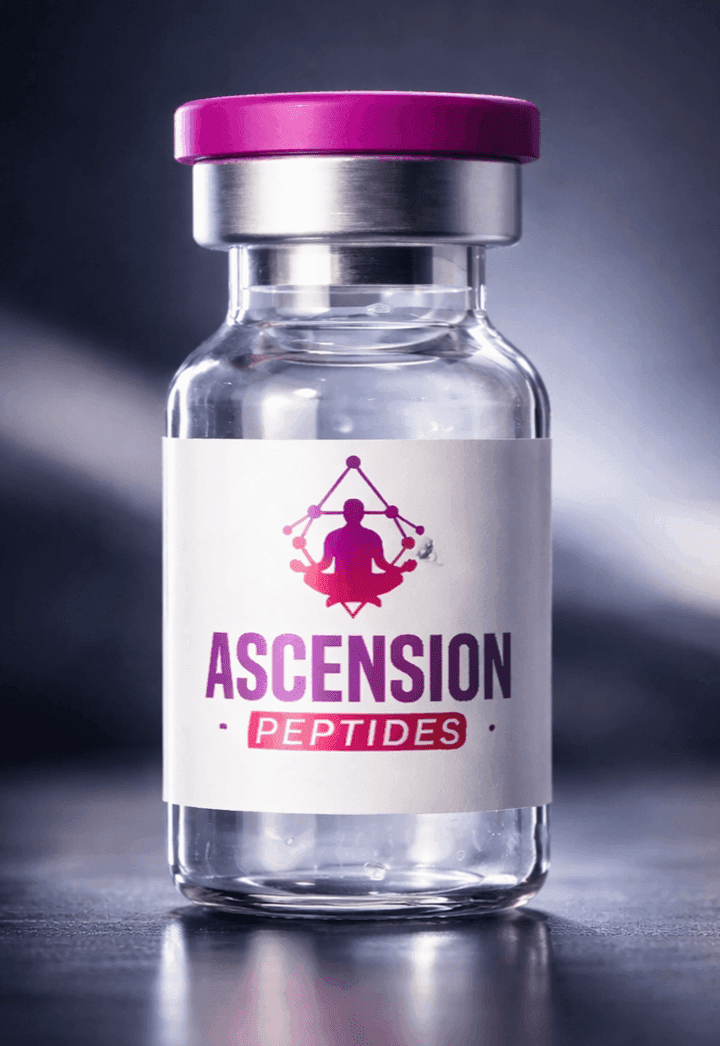

You just got a 10mg vial of retatrutide and now you're staring at it wondering how many doses are actually in there, how to mix it, and what to inject first week. This guide answers all of that — no fluff.
Key Takeaways
- A 10mg vial gives you anywhere from 1 to 10+ doses depending on where you are in your protocol
- Standard starting dose is 2mg per week — don't skip the titration phase
- Reconstitute with 2mL bacteriostatic water for a clean 5mg/mL concentration (easy math)
- Store lyophilized powder at −20°C; once reconstituted, refrigerate at 2–8°C and use within 3–4 weeks
- The 10mg vial runs out fast at higher maintenance doses — plan your supply before you start
- Retatrutide works through three receptor pathways, which is why results outpace anything semaglutide or tirzepatide can do alone
Retatrutide is the first triple-receptor agonist to reach advanced clinical trials, hitting GLP-1, GIP, and glucagon receptors at once. That's a meaningfully different beast from Ozempic or Mounjaro — the mechanism is more aggressive and the data backs it up. The 10mg vial is the most common starting point for individual protocols, and how you handle it determines everything.
Here's exactly how to use a 10 mg vial of retatrutide — "reta", as most people buying it online call it — what dose corresponds to which phase, and how to stretch it efficiently.
What Is Retatrutide 10mg?
The "10mg" on the label — written 10 mg, 10mg or just "10" depending on the vendor — means 10 milligrams of lyophilized (freeze-dried) retatrutide peptide powder inside the vial. That's the total amount in the bottle, not a single dose.
Nobody injects 10mg at once. In clinical trials, weekly doses ranged from 1mg up to 12mg, with patients titrating slowly over months. A single 10mg vial gives you multiple weekly injections depending on your dose level.
The powder form is deliberate — peptides degrade fast in liquid. Freeze-drying makes the compound shelf-stable for months (sometimes over a year at −20°C). Once you add bacteriostatic water, you've got 3–4 weeks to use it before degradation becomes a real concern.
How the Triple Mechanism Actually Works
Retatrutide activates three hormonal pathways that other GLP-1 drugs don't touch simultaneously:
GLP-1 receptors — suppresses appetite, slows gastric emptying, triggers insulin release. This is what semaglutide does. Retatrutide does it too, but it's not even the strongest pathway here.
GIP receptors — retatrutide's most potent binding target (EC50: 0.064 nM vs 0.775 nM for GLP-1). GIP amplifies insulin response and contributes to fat metabolism in ways GLP-1 alone can't match. Tirzepatide combines GLP-1 + GIP. Retatrutide goes further.
Glucagon receptors — the differentiator. Glucagon normally raises blood sugar and drives fat oxidation. At the dose ratios in retatrutide, glucagon receptor activation increases energy expenditure and promotes fat burning directly, while the GLP-1 and GIP effects counterbalance any blood sugar spikes.
The combined result: appetite suppression + improved insulin sensitivity + elevated energy expenditure. That triple hit is why the 48-week weight loss data (up to 24.2%) eclipses what semaglutide or tirzepatide produce.
The Retatrutide Dosage Map: Every mg Increment Explained
People search for specific dose numbers — 5mg, 6mg, 8mg, 10mg — because they want to know where that dose fits in the protocol. Here's the full picture:
| Dose | Phase | What It Represents |
|---|---|---|
| 5mg/week | Moderate | Used in some mid-escalation protocols as a bridge between 4mg and 6mg |
| 6mg/week | Mid-escalation | Less common; used when 8mg feels aggressive and 4mg feels insufficient |
| 8mg/week | Maintenance option | Alternative maintenance dose; strong efficacy, better GI tolerance than 12mg |
| 10mg/week | High-dose maintenance | Rarely used as a weekly dose — 10mg is the standard vial size, not the typical dose |
| 12mg/week | Max trial dose | Highest dose in Phase 2 trials; produced the 24.2% weight loss figure |
| 15mg/week | Experimental | Outside Phase 2 trial parameters; not formally studied at this level |
| 16mg/week | Experimental | No formal Phase 2 data; represents aggressive off-protocol use |
| 20mg/week | Experimental | No clinical data at this dose; higher risk of GI complications |
Note: 10mg is the vial size you're most likely buying — it's not a typical weekly injection amount. Most people never dose 10mg/week. If you're confused by that, you're not alone.
Reconstitution: How to Mix a 10mg Vial
This is where a lot of people make mistakes. The math is simple once you pick your concentration.
Recommended: 2mL bacteriostatic water → 5mg/mL concentration
That gives you:
- Easy math (every 0.2mL = 1mg)
- Comfortable injection volumes at low doses
- A clean reference point for syringe measurements
Step-by-step:
- Wipe both the retatrutide vial and BAC water vial with separate alcohol swabs
- Draw 2mL of bacteriostatic water into a sterile syringe
- Angle the needle against the inside wall of the peptide vial — inject slowly so the water runs down the glass, not directly onto the powder
- Never shake. Swirl gently until fully dissolved (usually 30–60 seconds)
- Label with date and your concentration (5mg/mL)
- Refrigerate at 2–8°C immediately
Use within 3–4 weeks for optimal potency. After that, degradation starts and your dose accuracy drops even if the solution looks fine.
How much water do you add to a 10 mg vial? Anywhere from 1mL to 3mL. The water changes the concentration, never the amount of peptide — 10mg of retatrutide is 10mg whether it's sitting in 1mL or 3mL of liquid. Pick the fill volume that lands your dose on an easy number:
| BAC water added | Concentration | 1mg equals (U-100) | Best for |
|---|---|---|---|
| 1mL | 10mg/mL | 10 units (0.1mL) | 8–10mg doses that would otherwise overflow a 1mL syringe |
| 1.5mL | 6.67mg/mL | 15 units (0.15mL) | 6mg doses in a single draw (0.9mL) |
| 2mL | 5mg/mL | 20 units (0.2mL) | Most people — clean math at 2mg and 4mg |
| 2.5mL | 4mg/mL | 25 units (0.25mL) | If you specifically want a 4mg/mL stock |
| 3mL | 3.33mg/mL | 30 units (0.3mL) | Sub-2mg doses, where small measuring errors matter most |
Shortcut worth memorising for any 10mg vial: units per milligram = 10 × the millilitres you added. Add 2mL and 1mg is 20 units. Add 3mL and 1mg is 30 units. That holds on a U-100 insulin syringe, where 100 units = 1mL.
One physical check before you commit to 3mL or more: look at the glass. The vial has to hold the diluent along with the dissolved powder, and a research peptide vial has limited headroom.
Full reconstitution walkthrough with photos → How to Reconstitute Retatrutide
How Many Doses in a 10mg Vial? (The Table You Actually Need)
This is the question everyone types into Google but nobody answers directly. Here it is:
| Reconstitution Volume | Concentration | 2mg dose | 4mg dose | 6mg dose | 8mg dose | 12mg dose |
|---|---|---|---|---|---|---|
| 1mL BAC water | 10mg/mL | 5 doses | 2.5 doses | 1.7 doses | 1.25 doses | 0.83 doses |
| 2mL BAC water | 5mg/mL | 5 doses | 2.5 doses | 1.7 doses | 1.25 doses | 0.83 doses |
| 3mL BAC water | 3.33mg/mL | 5 doses | 2.5 doses | 1.7 doses | 1.25 doses | 0.83 doses |
The dose count is always the same regardless of concentration — you're drawing more or less liquid, but the same total mg. The concentration only affects how many units on your syringe you draw.
Practical math for planning:
- At 2mg/week (Phase 1): 1 vial = 5 weeks of supply
- At 4mg/week (Phase 2): 1 vial = 2.5 weeks (so 2 vials/month)
- At 8mg/week (maintenance): 1 vial per week minimum
- At 12mg/week (max dose): 1.2 vials per week (stock up)
For the full dosage chart including unit-by-unit syringe measurements: Retatrutide Dosage Chart
How Long Does One 10 mg Vial Last?
The paper answer is one division: 10 ÷ your weekly dose = weeks of supply. The real answer has a second limit — the 3–4 week clock that starts the moment you add water.
| Weekly dose | Doses per 10mg vial | Weeks from one vial (mg math) | Vials for a 4-week block |
|---|---|---|---|
| 1mg | 10 | 10 weeks | 1 |
| 2mg | 5 | 5 weeks | 1 |
| 3mg | 3.3 | 3 weeks, 1mg left over | 2 |
| 4mg | 2.5 | 2 weeks plus a half dose | 2 |
| 6mg | 1.7 | 1 week, 4mg left over | 3 |
| 8mg | 1.25 | 1 week, 2mg left over | 4 |
| 10mg | 1 | 1 week | 4 |
| 12mg | 0.83 | under a week | 5 |
Where the mg math stops being true. At 1mg or 2mg a week the arithmetic promises 10 weeks or 5 weeks out of one bottle, but reconstituted retatrutide is only reliable for about 3–4 weeks refrigerated. Mix the whole 10mg at once and dose 1mg weekly and you will hit the shelf-life wall with roughly 6mg still in the vial. At the low end of the dose range, the calendar is your constraint, not the peptide.
The same logic kills the very long supply figures people calculate. A 0.1mg weekly dose divides out to 100 weeks on paper. It is not a two-year vial: the solution expires long before that, and 0.1mg at 5mg/mL is 2 units on a U-100 syringe, which is at the edge of what anyone can draw accurately. If you want doses under about 0.5mg, reconstitute with 3mL so each milligram spans 30 units instead of 20.
At the other end, from 8mg upward you are opening a new vial almost every week, and at 12mg you need 1.2 vials per week. That is the point where buying larger vials or a multi-pack starts to matter more than the mixing math.
The Titration Schedule: Week-by-Week
Don't skip this. Jumping straight to high doses is how you end up nauseous for two weeks and quitting. Every serious protocol starts slow.
| Week Range | Weekly Dose | What's Happening | Vials Needed |
|---|---|---|---|
| Weeks 1–4 | 2mg | Establishing baseline tolerance; GI side effects minimal | 8mg total — 1 vial |
| Weeks 5–8 | 4mg | Appetite suppression becomes noticeable; fat loss begins | 16mg total — 2 vials |
| Weeks 9–12 | 8mg | Significant effects; some people plateau here and stay | 32mg total — 4 vials |
| Weeks 13+ | 12mg | Max trial dose; sustained weight loss phase | ~1.2 vials/week |
Some people add intermediate steps (stopping at 6mg instead of jumping to 8mg, or holding at 8mg as their maintenance dose). That's fine — the point is gradual escalation, not hitting a specific number by a specific week.
If side effects hit hard at any step, hold at your current dose for an extra 2–4 weeks before escalating. Your GI system adjusts. Pushing through doesn't make it faster — it makes it worse.
See the complete Retatrutide Dosage Protocol for variations based on body weight and prior peptide experience.
Syringe Math: Drawing the Right Amount
At 5mg/mL concentration (2mL BAC water into 10mg vial), using a U-100 insulin syringe:
- 2mg dose = 0.4mL = 40 units
- 4mg dose = 0.8mL = 80 units
- 6mg dose = 1.2mL — exceeds a 1mL syringe; use a larger syringe or split into 2 sites
- 8mg dose = 1.6mL — requires splitting or a larger syringe
- 12mg dose = 2.4mL — typically requires reconstituting a second vial
At higher doses, you'll need to split injections across multiple sites (abdomen, thigh, upper arm) or switch to a larger syringe. Either works — just maintain sterile technique at each site.
Retatrutide 10 mg Dosage Chart: Every Dose in mL and Units
Assumptions baked into this chart, because they change every number in it: one 10mg vial, 2mL of bacteriostatic water, giving 5mg/mL, drawn on a U-100 insulin syringe where 100 units = 1mL. Mix at a different volume and use the 10 × mL shortcut above to recalculate.
| Weekly dose | Volume to draw | U-100 units | Doses per 10mg vial | In the Phase 2 trial? |
|---|---|---|---|---|
| 0.5mg | 0.10mL | 10 | 20 | No |
| 1mg | 0.20mL | 20 | 10 | Yes — lowest trial arm |
| 1.5mg | 0.30mL | 30 | 6.6 | No |
| 2mg | 0.40mL | 40 | 5 | Yes — as a starting dose |
| 3mg | 0.60mL | 60 | 3.3 | No |
| 4mg | 0.80mL | 80 | 2.5 | Yes — trial arm and a starting dose |
| 5mg | 1.00mL | 100 (a full 1mL barrel) | 2 | No |
| 6mg | 1.20mL | 120 — two draws | 1.6 | No |
| 8mg | 1.60mL | 160 — two draws | 1.25 | Yes |
| 10mg | 2.00mL | 200 — the entire vial | 1 | No |
| 12mg | 2.40mL | 240 — more than one vial | 0.83 | Yes — highest trial arm |
That last column matters. The Phase 2 obesity trial ran four weekly arms only — 1mg, 4mg, 8mg and 12mg — with the 12mg group starting at 2mg and the 4mg and 8mg groups starting at 2mg or 4mg. Every other row above (0.5mg, 1.5mg, 3mg, 5mg, 6mg, 10mg) is community convention rather than a studied dose. Retatrutide remains investigational and unapproved, so none of these are dosing instructions — they are the arithmetic for numbers people are already using.
Syringe note. U-100 insulin syringes come in 0.3mL (30 units), 0.5mL (50 units) and 1mL (100 units) barrels. At 5mg/mL anything above 5mg needs the 1mL barrel plus a second draw. If you would rather keep every dose in one draw, reconstitute with 1mL instead: at 10mg/mL, even a 10mg draw fits in a single 1mL syringe, at the cost of much finer measurement at 1–2mg.
Injection Method and Site Rotation
Subcutaneous injection only — into the fatty tissue just under the skin, not into muscle.
Best sites (rotate weekly):
- Abdomen: 2 inches from belly button, alternating left/right
- Outer thigh: mid-thigh, outer edge
- Upper arm: back of the arm, lower portion
Pick the same day each week and inject in the morning or evening — consistency matters more than the specific time. Rotating injection sites prevents lipodystrophy (tissue changes from repeated injection in the same spot).
Needle gauge: 28–31G, 6–8mm length. At 5mg/mL, you're injecting reasonable volumes that don't require the thinnest possible needle, but anything in this range works fine.
Side Effects: What to Expect and When
Most side effects are GI-related and tied to dose escalation. They're not random — they follow a predictable pattern.
Common (especially during first 2–4 weeks at each new dose):
- Nausea (most common, usually peaks 2–4 hours post-injection)
- Mild vomiting in some people at higher doses
- Diarrhea or constipation
- Decreased appetite (this one's intentional — lean into it)
- Fatigue
Less common:
- Injection site redness or irritation
- Headache during the first few weeks
- Heart rate changes (glucagon receptor activation can mildly increase resting heart rate)
How to manage it: Eat smaller meals. Avoid high-fat or spicy food for 24–48 hours post-injection. If nausea is severe, hold your current dose for another 2 weeks before escalating. Anti-nausea medication (ondansetron, promethazine) helps in the short term during titration.
When to stop and seek help: Severe or persistent abdominal pain, especially with vomiting, is a red flag for pancreatitis (rare but documented with GLP-1 agonists). Don't push through that.
10mg vs 20mg Vial: Which Makes More Sense?
If you're planning more than 4 weeks at any meaningful dose, the math usually favors a larger vial or multi-pack.
| Vial Size | Best For | Cost Efficiency |
|---|---|---|
| 10mg | Starting out; testing tolerance; short protocols | Moderate |
| 20mg | Maintenance doses of 8–12mg/week | Better per-mg value |
| Multi-pack (3–5× 10mg) | Full 12–24 week protocols | Usually best total price |
At 12mg/week, a single 10mg vial lasts less than a week. You'll burn through them fast. Many buyers grab 3–5 vials at once for Phase 2/3 of their protocol rather than reordering every week.
Ready to stock up? → Browse Ascension's R-10 (retatrutide, 10 mg)
Storage: Don't Waste What You Paid For
Lyophilized powder (unopened):
- Freeze at −20°C (−4°F)
- Stable for 12–24 months properly stored
- Never leave at room temperature for extended periods
Reconstituted solution (after adding BAC water):
- Refrigerate at 2–8°C (standard fridge, not freezer)
- Use within 3–4 weeks
- Keep away from light — store in original vial or amber glass
- Do not freeze a reconstituted solution — ice crystals damage the peptide structure
One practical tip: if you know you won't use the reconstituted vial within 3 weeks, only mix what you need. You can leave part of the lyophilized powder dry and reconstitute the rest later — though this requires careful aseptic technique to avoid contamination.
Frequently Asked Questions
How many doses are in a 10mg vial of retatrutide? It depends entirely on your weekly dose. At 2mg/week, you get 5 weeks of supply. At 4mg/week, you get 2–3 weeks. At 8mg/week, you need roughly one vial per week. At 12mg/week, you'll need more than one vial per week.
Is 10mg the dose I inject, or the vial size? The vial size. Most people never inject 10mg at once — that would be a very high dose outside normal protocols. You're buying 10mg total, which you dilute and draw from over multiple weeks.
Can I use a 10mg vial for the full titration from 2mg to 12mg? No. By the time you hit 8–12mg/week, a 10mg vial lasts less than two weeks. A full 12-week titration from 2mg to 12mg uses roughly 6–7 vials total.
What's the difference between retatrutide 5mg, 10mg, and 20mg vials? Same compound, different total amounts. A 5mg vial is typically used for shorter protocols or lower doses. 10mg is the most common individual buy. 20mg vials offer better per-mg pricing for people doing longer protocols at higher doses.
Does the order I inject vials matter? Can I mix old and new? Each vial is independent once reconstituted. Don't mix reconstituted solution from different vials — the reconstitution dates differ, so you'd be combining liquids of different ages. Use up one vial's reconstituted solution before opening the next.
How should I store retatrutide if I order a 3-month supply? Keep unused, sealed vials in the freezer at −20°C. Move to the fridge only the vial you've reconstituted and are actively drawing from. This preserves maximum potency across the whole supply.
What happens if I accidentally leave the reconstituted vial at room temperature for a day? A single day at room temperature is unlikely to destroy the peptide completely, but it's not ideal. If it was sealed (not exposed to air), the loss is probably minor. If it happened repeatedly, potency decreases meaningfully. Stick to refrigerated storage.
How much water do you add to a retatrutide 10 mg vial? 2mL of bacteriostatic water is the default, and it gives 5mg/mL — every 1mg is 20 units on a U-100 insulin syringe. 1mL to 3mL all work; less water means a more concentrated solution and fewer units per dose, not more peptide. Bacteriostatic water specifically, not sterile water: the benzyl alcohol in it is what lets you puncture the stopper repeatedly over several weeks.
If I mixed 2mL into a 10 mg vial, how do I dose it? You're at 5mg/mL, so 1mg = 20 units on a U-100 syringe. 2mg = 40 units, 4mg = 80 units, 6mg = 120 units (two draws, or split across two sites), 8mg = 160 units. Write "5mg/mL" and the mixing date on the vial and work off the units column in the chart above rather than re-deriving it every week.
How many doses are in a 10mL vial of reta? Two different tens get confused here. The 10 in "10mg retatrutide" is the mass of peptide in the vial; an mL figure is either the capacity of the glass or the amount of water you added. If you have a standard 10mg vial of reta, the dose count is fixed by mass — 5 doses at 2mg, 2.5 at 4mg, 1.25 at 8mg — and no fill volume changes that. If you genuinely have 10mL of reconstituted solution in front of you, you need the concentration on your own label to work out doses, because 10mL at 1mg/mL is 10mg of peptide while 10mL at 5mg/mL is 50mg.
I have a 10 mg vial — how much do I take the first week? Convention is 2mg for the first four weeks, which is the same starting dose the 12mg arm of the Phase 2 trial escalated from. At 5mg/mL that's 0.4mL, or 40 units on a U-100 syringe, and it uses a fifth of the vial. Nobody takes 10mg in week one — that's the whole bottle in a single injection.
Can I reconstitute a 10 mg vial down to 1mg/mL? Not inside the original vial, in most cases. 10mg at 1mg/mL needs 10mL of bacteriostatic water, so the question is purely whether your glass holds it — check the capacity of the vial in front of you before you plan around it. If yours tops out near 3mL of usable fill, your floor concentration is about 3.33mg/mL and 1mg/mL is off the table. To actually run a 1mg/mL working solution you'd have to dilute a drawn aliquot into a separate sterile vial (1mL of 5mg/mL stock plus 4mL of BAC water gives 5mL at 1mg/mL), and that extra transfer adds a contamination risk most people should avoid. The simpler answer is to keep the vial at 5mg/mL, or mix at 2.5mL if you want a 4mg/mL stock, and measure smaller volumes.
Where to Get Retatrutide 10mg
Quality varies dramatically between suppliers. Look for third-party testing with verifiable COAs (certificates of analysis), batch-level purity testing, and clear peptide sourcing. Cheap vials from unknown sources tend to have lower actual peptide content than labeled — which means your dose math is wrong from the start. If you are still deciding where to source it, our guide to how to get retatrutide covers the routes available.
Ascension Peptides is the supplier we recommend; its 10mg retatrutide vial is listed as R-10 at $80.00 USD. Every batch is independently tested by a third-party lab (currently Kovera Labs) for HPLC purity, LC-MS identity, net content per vial, endotoxin, sterility and heavy metals, and the certificates show >98% purity. All 85 batch-specific certificates sit in a public library. Ascension ships within the US only, with free shipping over $250; all sales are final, though damaged or incorrect items are replaced if reported quickly. If you're planning a serious protocol, don't cut corners on source quality — you're dosing weekly for months.
→ Shop Ascension's R-10 (retatrutide, 10 mg)
The information in this guide is educational and informational only. Consult a licensed healthcare professional before starting any peptide protocol. Individual results vary. This content does not constitute medical advice or a prescription.
References
- Jastreboff AM, et al. Triple–Hormone-Receptor Agonist Retatrutide for Obesity — A Phase 2 Trial. N Engl J Med 2023 (PubMed) — confirms retatrutide is an investigational once-weekly GIP/GLP-1/glucagon triple receptor agonist, weekly dose groups of 1, 4, 8, and 12 mg (with starting doses of 2 or 4 mg in the 4 mg and 8 mg groups and 2 mg in the 12 mg group), and a least-squares mean weight reduction of 24.2% with the 12 mg dose at 48 weeks vs 2.1% with placebo.
- DailyMed: Ozempic (semaglutide) Prescribing Information — U.S. National Library of Medicine — documents that acute pancreatitis has been observed in patients treated with GLP-1 receptor agonists (class effect).
Note: Retatrutide is an investigational drug and is not approved by the FDA.