NAD+ benefits center on cellular energy and repair rather than anything cosmetic, the most reported side effects are flushing and nausea tied to how fast it goes in, and reported dosage varies roughly tenfold depending on the route. That last point is the one most buyers miss, and it is the reason two people following sensible protocols can be using numbers that look like they contradict each other.
One clarification first, because the search results for this compound are full of the error. NAD+ is not a peptide. It is a coenzyme, specifically a dinucleotide, with no amino acid sequence at all. It ends up shelved next to research peptides because the same vendors sell it and the same crowd buys it, not because of any chemical kinship.
Key Takeaways
- NAD+ is nicotinamide adenine dinucleotide, a coenzyme of about 663 g/mol built from two linked nucleotides. It is not a peptide and has no sequence.
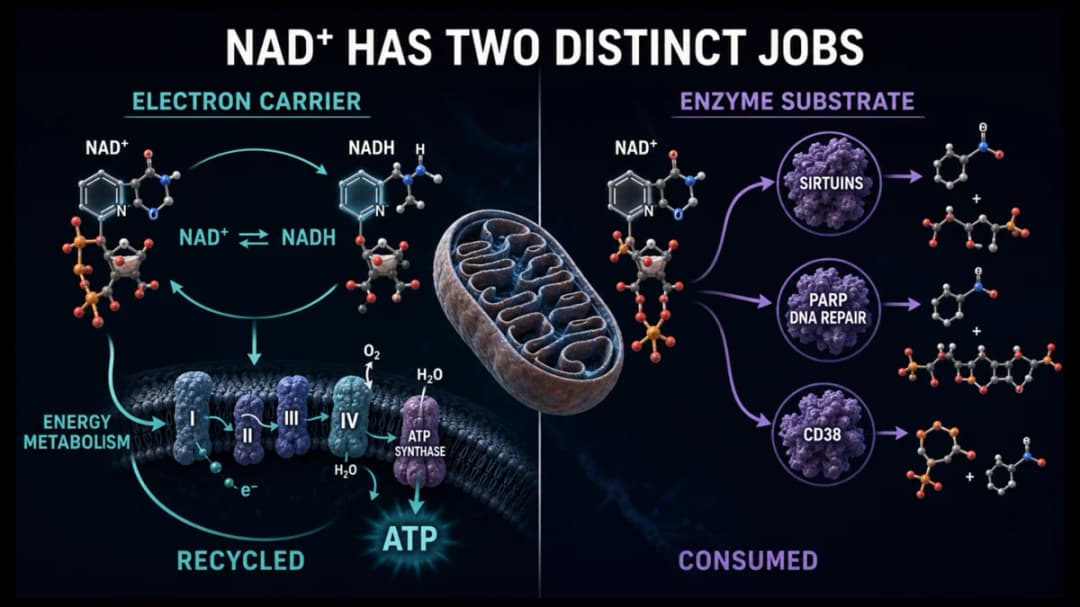
- It does two separate jobs: it shuttles electrons as the NAD+/NADH redox pair, and it is consumed outright as fuel for sirtuins, PARP DNA repair enzymes, and CD38.
- Tissue levels fall with age, which is the entire rationale behind the category. Restoring them is well demonstrated. What that restoration buys you long term is not.
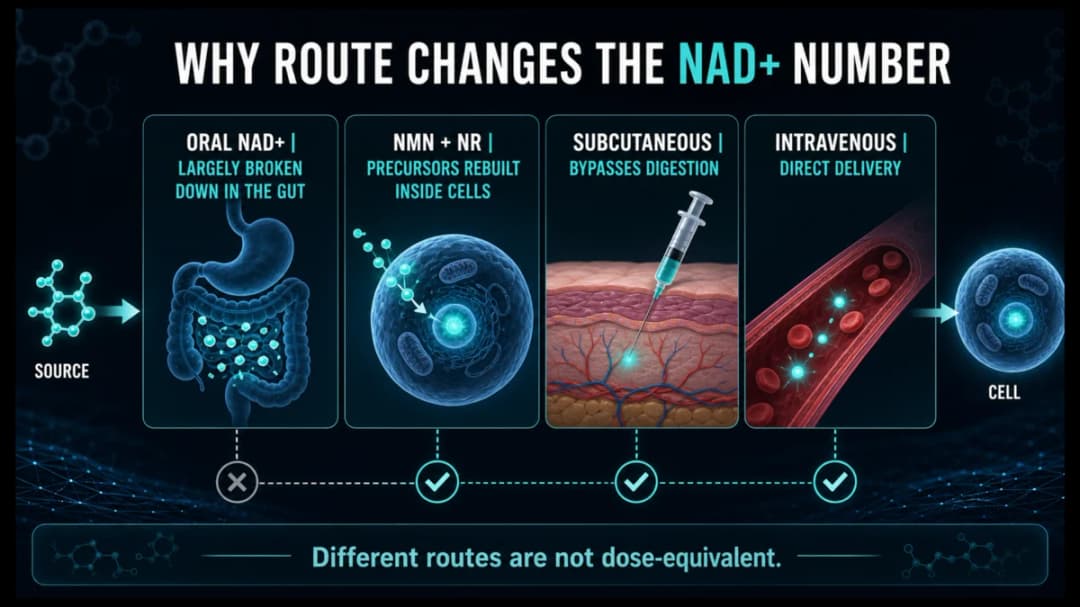
- Intact NAD+ survives digestion poorly, so oral doses run 500 to 1,000 mg while subcutaneous protocols sit at 100 to 200 mg. Same molecule, different math.
- Most acute side effects track infusion or injection speed rather than total dose, and NAD+ interacts with more medication classes than its "it's just a vitamin metabolite" reputation suggests.
What NAD+ Actually Is
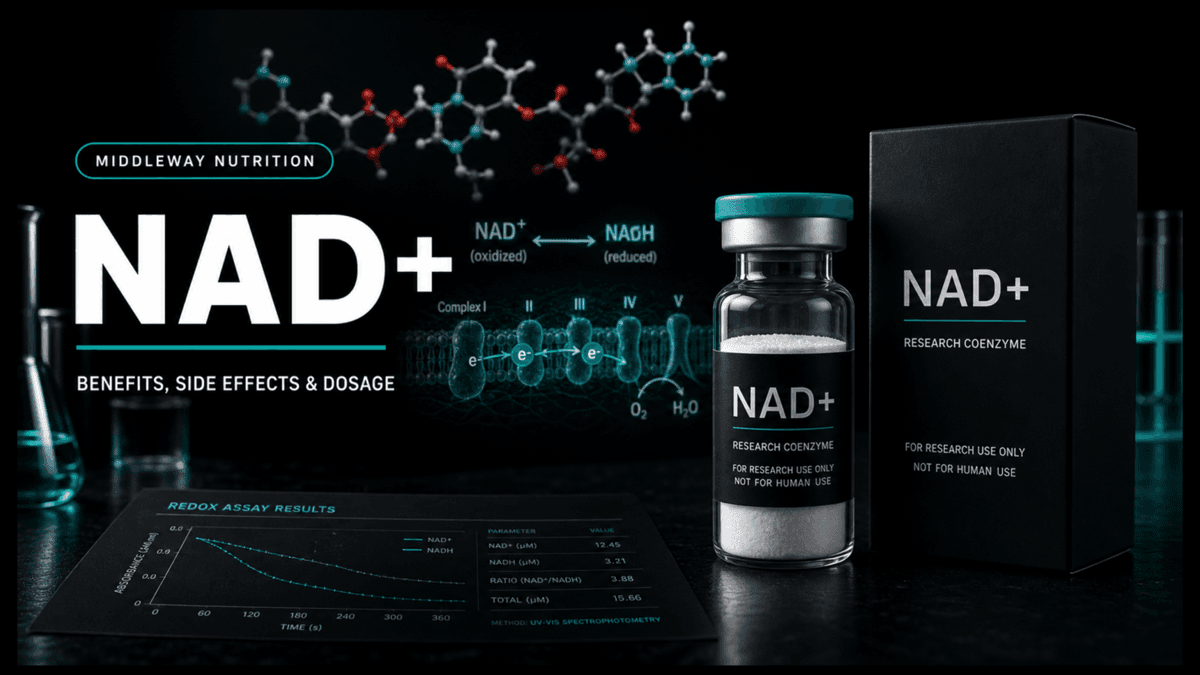
Nicotinamide adenine dinucleotide is two nucleotides joined together: one carries nicotinamide, derived from vitamin B3, the other carries adenine, the same base found in DNA and ATP. Molecular weight is roughly 663 grams per mole, and research-grade material ships as a lyophilized white powder. Its stability, absorption, and side effect profile all follow from being a nucleotide rather than a protein fragment, which is why peptide handling conventions transfer only loosely.
The two roles it plays are worth keeping separate, since conflating them produces most of the bad reasoning here.
As an electron carrier, NAD+ is recycled. It accepts electrons stripped from nutrients during glycolysis and the citric acid cycle, becoming NADH, then hands them to the mitochondrial electron transport chain and reverts to NAD+. A small pool supports enormous throughput because nothing is consumed.
As a substrate, NAD+ is destroyed. Sirtuins cleave it to strip acetyl groups off proteins, PARP enzymes burn through it repairing DNA damage, and CD38 consumes it to make calcium-signaling messengers. Each reaction leaves nicotinamide behind and spends that molecule permanently, so cells rebuild supply through the salvage pathway, which recaptures nicotinamide and reassembles it.
The aging story follows from combining the two. Substrate demand rises as CD38 activity and DNA damage accumulate, while resynthesis does not keep pace. Levels drop across tissues, and since sirtuins and PARPs both depend on adequate supply, that decline plausibly degrades the cell's own maintenance machinery.
NAD+ sold as research material is not an approved drug and has no established human dosing standard. Everything below describes what has been reported, not what anyone should do.
NAD+ Benefits
The evidence base here is stronger than most of the longevity aisle, which makes the overstatement more frustrating rather than less. The mechanism is textbook biochemistry. The human outcome data is thin. Both are true.
| Claimed benefit | Evidence grade | What that grade rests on |
|---|---|---|
| Energy metabolism and mitochondrial function | Strong mechanistically, supported in humans | NAD+ dependency in the electron transport chain is settled biochemistry, and precursor supplementation measurably raises NAD+ in human tissue |
| DNA repair capacity | Strong mechanistically, human evidence not established | PARP1 runs on NAD+ and consumes it heavily, and the age-related decline in availability is measurable |
| Sirtuin activity | Mechanism clear, human outcomes absent | Every sirtuin requires NAD+, but no disease prevention or lifespan effect has been demonstrated in people |
| Cardiovascular and metabolic markers | Moderate | Small precursor studies moved surrogate markers such as arterial stiffness and muscle insulin sensitivity, mostly in metabolically compromised people |
| Muscle function and recovery | Limited to weak | Some small precursor studies report modest gains in older or deconditioned participants, but nicotinamide riboside trials found no muscle recovery or mitochondrial benefit |
| Cognition and inflammation | Moderate | Neurons are metabolically expensive, and CD38 burns NAD+ during inflammation; outcome data is thin |
| Sleep | Emerging | NAD+ oscillates on a 24-hour cycle through SIRT1 regulation of CLOCK and BMAL1 |
| Skin, hair, biological age reversal | Not supported | Cosmetic trial data is close to nonexistent, and nothing supports lifespan extension in humans |
Energy metabolism and mitochondrial function. The best-supported item, because NAD+ dependency in the electron transport chain is settled biochemistry rather than a hypothesis. Precursor supplementation has been shown to raise measurable NAD+ levels in human tissue, which is the step the rest of the argument rests on. Evidence grade: strong mechanistically, supported in humans.
DNA repair capacity. PARP1, the primary responder to routine DNA damage, runs on NAD+ and consumes large quantities when active, so lower availability slows repair. The enzyme dependency is well documented and the age-related decline in availability is measurable. We did not find a human trial showing that raising NAD+ improves DNA repair, so the human support is unestablished. Evidence grade: strong mechanistically, human evidence not established.
Sirtuin activity. Every sirtuin requires NAD+. SIRT1 is tied to metabolic regulation and inflammation, SIRT3 to mitochondrial function, SIRT6 to genome stability, and raising NAD+ raises their activity. What has not been shown is that this translates into disease prevention or extended life in people. Evidence grade: mechanism clear, human outcomes absent.
Cardiovascular and metabolic markers. Vascular tissue and insulin-responsive tissue both depend on NAD+ for the mitochondrial work they do, and small precursor studies have reported movement in surrogate markers such as arterial stiffness and muscle insulin sensitivity. The samples are small, the populations narrow, and the endpoints are markers rather than outcomes. What effect exists appears concentrated in metabolically compromised people rather than healthy ones. Evidence grade: moderate.
Muscle function and recovery. Muscle satellite cells depend on NAD+ for regenerative capacity, and the tissue is among the most mitochondria-dense in the body, so a supply decline shows up there early. Some small precursor studies have reported modest gains in aerobic measures and functional strength in older or deconditioned participants, but nicotinamide riboside trials found no improvement in muscle recovery or mitochondrial function, so we rate this limited to weak rather than moderate. Evidence grade: limited to weak. This is where NAD+ complements MOTS-c and SS-31, which reach mitochondrial function through entirely different routes.
Cognition, inflammation, and sleep. Three areas where the mechanism outruns the data. Neurons are metabolically expensive and sensitive to NAD+ decline, which is the basis for the cognitive claims. CD38 rises with inflammation and burns NAD+ aggressively, so restoring supply activates sirtuins that dampen inflammatory signaling. NAD+ also oscillates on a 24-hour cycle through SIRT1-mediated regulation of the clock genes CLOCK and BMAL1, the likely basis for frequent reports of better sleep. Evidence grade: moderate for cognition and inflammation, emerging for sleep.
Skin, hair, and "reversing aging." No. Trial data on cosmetic outcomes is close to nonexistent, and nothing in the literature supports lifespan extension in humans or biological age reversal. Evidence grade: not supported.
The fair summary: NAD+ is a credible tool for maintaining cellular function that would otherwise decline, the healthspan argument holds up better than the lifespan argument, and the gap between rodent results and confirmed human outcomes remains wide.
NAD+ Side Effects
Most NAD+ side effects are mild, transient, and driven by administration speed rather than by the molecule itself. The exceptions are worth knowing because the compound's reputation as a harmless vitamin metabolite causes people to skip due diligence they would not skip elsewhere.
Commonly reported and generally transient. Flushing across the face, neck, and upper chest, most pronounced with niacin and fast intravenous administration. Nausea across every route, worst with high oral doses and rapid infusion. Headache, dizziness, and muscle or calf cramps, all reported across the precursor forms. Fatigue during the first week or two. Injection site burning, close to universal with subcutaneous NAD+ and usually lasting seconds to a few minutes. A jittery feeling after dosing, and insomnia when dosed in the evening.
Less common but consequential. High-dose nicotinamide has been associated with elevated liver enzymes, as has sustained high-dose niacin, while NR and NMN show minimal hepatic effects at standard doses. High precursor intakes have been linked to blood pressure reductions, which matters if you are already on antihypertensives. Rapid intravenous infusion can produce chest pressure that some describe as a deep burning sensation, resolving when the drip slows. Palpitations occur occasionally, again tied to speed. Severe allergic reactions are rare but real.
One quirk worth flagging: nicotinamide at high doses inhibits sirtuins, the very enzymes most people are targeting. It raises NAD+ and undermines the goal at the same time, which makes it a poor primary choice despite being cheap and flush-free.
Where the data is genuinely thin. Long-term safety past a few months is not well characterized for any form. Injectable and intravenous NAD+ have far less published safety work behind them than the oral precursors, and most of what exists comes from clinical practice rather than controlled trials.
Interactions and exclusions. NAD+ touches enough pathways to matter alongside diabetes medications, where improved insulin sensitivity can compound hypoglycemia risk, antihypertensives, blood thinners, cancer treatments, and high-dose antioxidants. On cancer, NAD+ does not initiate malignancy in healthy cells but can in principle support cells that already exist, which is why active treatment is a reason to defer to an oncologist rather than a supplement page. Pregnancy, breastfeeding, active liver disease, and severe kidney disease all sit outside what published data covers.
NAD+ Dosage Chart
The ranges below are mostly vendor and clinic convention, not published protocols. The NAD+ rows (oral, sublingual, nasal, subcutaneous and IV) have no published human efficacy or dose-finding data behind them; injected and sublingual NAD+ in particular have no published human efficacy data. The NMN and NR rows are supplement-style doses, and published trials of those precursors ranged up to roughly 1.2 to 2 g per day, well above the 250 to 500 mg listed. They document what has been used, not what anyone should use. There is no approved human dosing standard for NAD+.
Bioavailability explains the spread. Intact NAD+ taken by mouth is largely broken down in the gut before it can be absorbed, which is why oral numbers look enormous next to injectable ones. Precursors such as NMN and NR survive that trip far better because they are smaller and get rebuilt into NAD+ inside the cell. Subcutaneous injection bypasses digestion almost entirely, and intravenous delivery skips every barrier at once.
| Goal or context | Reported range | Frequency | Typical cycle |
|---|---|---|---|
| Oral NAD+, general use (vendor convention) | 500 to 1,000 mg per day | Daily | Ongoing, sometimes 5 days on and 2 off |
| Oral NMN precursor (supplement convention) | 250 to 500 mg per day | Daily | Ongoing, long term |
| Oral NR precursor (supplement convention) | 250 to 500 mg per day | Daily | Ongoing, long term |
| Sublingual NAD+ (vendor convention) | 100 to 300 mg per day | Daily | Ongoing |
| Nasal spray NAD+ (vendor convention) | 50 to 100 mg per day | Daily | Limited data on duration |
| Subcutaneous, initial tolerance | 50 mg | 3 times weekly | First 2 to 3 sessions |
| Subcutaneous, general wellness | 100 to 150 mg | 3 times weekly | Ongoing blocks |
| Subcutaneous, longevity focus | 200 mg | 3 times weekly | Ongoing blocks |
| Subcutaneous, short intensive | 200 to 300 mg | Daily | 2 to 4 weeks maximum |
| Subcutaneous, maintenance | 100 mg | 2 times weekly | Long term |
| IV wellness infusion | 250 to 500 mg per session | Weekly | Ongoing |
| IV intensive protocol | 500 to 750 mg per session | Twice weekly | 4 to 8 weeks |
| IV clinical high-dose protocol (clinic convention) | 750 to 1,500 mg | Daily | 5 to 10 days, supervised only |
| IV maintenance | 250 mg per session | Monthly | Long term |
Two things the table cannot convey. Infusion rate dominates the reported experience, and the flushing, chest pressure, and racing heartbeat people blame on NAD+ are usually the drip running too fast. And titration is standard across every route, with increases spaced a week or two apart, since body weight influences the starting point far less than delivery route does.
The clinical high-dose protocols in the last rows belong to supervised settings with monitoring. They are listed because they appear in the literature, not because they scale down to anything done at home.
Microdosing NAD+: Why People Split the Dose
Microdosing here means the same weekly total delivered in small daily or near-daily subcutaneous amounts instead of a handful of large injections or one intravenous session. It is not a different compound or a different mechanism, and the reason people do it has nothing to do with getting more out of the molecule.
Read the side effect list again with delivery speed in mind. Flushing, nausea, chest pressure, palpitations and the injection site burn all track how fast NAD+ arrives rather than how much arrives across a week. A 250 to 500 mg intravenous session concentrates an entire week's worth into one window, which is exactly why it generates the most complaints. Splitting the same amount into daily fractions is the most direct way to flatten that curve, and it is why the tolerance rows sit at the top of the dosage chart rather than the bottom.
The arithmetic is the whole argument. A subcutaneous wellness protocol at 100 to 150 mg three times weekly delivers 300 to 450 mg across the week. Spread over seven days that is roughly 43 to 64 mg a day, meaning each injection carries less than half the load of the three-times-weekly version while the weekly total is unchanged.
Volume is the practical constraint at that size. A 1,000 mg vial reconstituted with 2 mL of bacteriostatic water gives 500 mg per mL, which puts a 50 mg dose at 0.1 mL, or 10 units on a 100-unit insulin syringe. That is a small enough volume to measure badly. Reconstituting the same 1,000 mg vial with 4 mL gives 250 mg per mL and puts 50 mg at 0.2 mL, or 20 units, which is easier to draw accurately.
What microdosing does not have is outcome evidence. No trial has compared split dosing against a bolus schedule on any endpoint, so the honest case rests on tolerability and on the reasonable expectation of steadier exposure, not on a demonstrated benefit. There is also a storage tradeoff. NAD+ in solution degrades faster than typical peptides, and a 1,000 mg vial takes 20 days to finish at 50 mg per day, so the material spends roughly three weeks in solution. Aliquoting and freezing rather than leaving one vial open that long is the sensible response.
Reconstitution and Storage
Lyophilized NAD+ is reconstituted with bacteriostatic water much like peptide powders, even though the chemistry differs. The arithmetic on a 1,000 mg vial is simple: 2 mL of diluent gives 500 mg per mL, putting 100 mg at 0.2 mL and 200 mg at 0.4 mL. Add diluent slowly down the vial wall rather than onto the powder, then swirl instead of shaking.
Storage is where NAD+ is less forgiving than most of what shares shelf space with it. Lyophilized material keeps best at around minus 20 degrees Celsius, desiccated and protected from light. In solution it degrades faster than typical peptides, so aliquoting and freezing is the usual approach, and solutions that develop color or cloudiness are discarded.
Two notes recur in reports of subcutaneous use: letting the vial reach room temperature before injecting reduces the sting considerably, and pushing over 20 to 30 seconds produces noticeably less burning.
Stacking
Documentation on NAD+ combinations is thinner than the stack diagrams online suggest, so this section is deliberately short.
The pairing with the clearest rationale is NAD+ or its precursors with trimethylglycine, a methyl donor. Clearing excess nicotinamide requires methylation, so sustained precursor use draws on the methyl pool, and the plateau users often report after the first couple of months is commonly attributed to this. Reported TMG use sits around 500 to 1,000 mg daily.
Within the metabolic group, NAD+ is frequently combined with MOTS-c, which works through AMPK activation, and with SS-31, which targets the inner mitochondrial membrane. 5-Amino-1MQ is the most mechanistically interesting pairing, since it inhibits NNMT, the enzyme that methylates and disposes of nicotinamide, which in principle preserves salvage pathway substrate rather than adding more from outside. Sound on paper, but controlled human data on the combination does not exist.
Combining NAD+ with high-dose antioxidants deserves care rather than enthusiasm, since the shared side effects tend to compound.
How to Verify What You Buy
Because NAD+ degrades faster than most research compounds, handling between synthesis and your door matters as much as the starting material. Ask for third-party analysis tied to your specific lot rather than a generic certificate, and confirm the vendor ships cold. Our NAD+ buying guide covers what separates credible suppliers from the rest, and the NAD+ for sale page tracks current listings and pricing.
Looking for the numbers behind this guide? Our NAD+ dosage chart sets label and trial doses beside what Reddit users report taking and our NAD+ benefits tiers each claimed benefit by the strength of its evidence.
Frequently Asked Questions
What does NAD+ do?
Two distinct things. As the NAD+/NADH redox pair it carries electrons through the reactions that produce cellular energy, and in that role it is recycled continuously. Separately it is consumed as raw material by sirtuins, by the PARP enzymes that repair DNA, and by CD38, so the cell must keep rebuilding supply. Both jobs are essential, and availability drops with age.
Is NAD+ a peptide?
No. NAD+ is a dinucleotide coenzyme of roughly 663 g/mol with no amino acid sequence at all, so none of it is peptide chemistry. It ends up filed under peptides because the same vendors stock it and the same buyers order it. That matters practically, not just semantically: NAD+ degrades faster in solution than a lyophilized peptide, doses run an order of magnitude higher, and the delivery route changes the number far more than body weight does.
Why would you take a NAD+ microdose?
Tolerability, almost entirely. Flushing, nausea, chest pressure and the injection burn track how fast NAD+ goes in rather than the weekly total, so splitting a three-times-weekly 100 to 150 mg protocol into daily fractions of roughly 43 to 64 mg cuts the load per injection by more than half without changing what is delivered across the week. Small subcutaneous doses also replace clinic infusions, which is the difference between a schedule people stay on and one they abandon. No trial has shown that split dosing produces better outcomes than a bolus, so comfort and adherence are the argument, not efficacy.
Is NAD+ safe?
For healthy adults at moderate doses the reported safety profile is favorable, with most effects mild and tied to delivery speed rather than dose size. That is not the same as risk-free. Long-term data past a few months is limited, high-dose nicotinamide and niacin carry dose-dependent liver considerations, and NAD+ interacts with diabetes drugs, blood thinners, antihypertensives, and cancer treatments. Injectable and intravenous forms have the least published safety work behind them.
How much NAD+ is typically used?
Almost entirely a question of route. Reported oral NAD+ use runs 500 to 1,000 mg daily, oral NMN and NR sit at 250 to 500 mg daily, subcutaneous protocols cluster at 100 to 200 mg three times weekly, and intravenous sessions are commonly 250 to 750 mg. Those are documented ranges, not recommendations.
Is NAD+ legal?
NAD+ is not a controlled substance. Oral precursors such as NR and NMN are widely sold as supplements, though regulatory treatment of NMN has shifted in some markets. Injectable NAD+ from research chemical suppliers is sold for laboratory research only and is not approved for human administration, while intravenous NAD+ is given in some clinical settings under practitioner oversight.