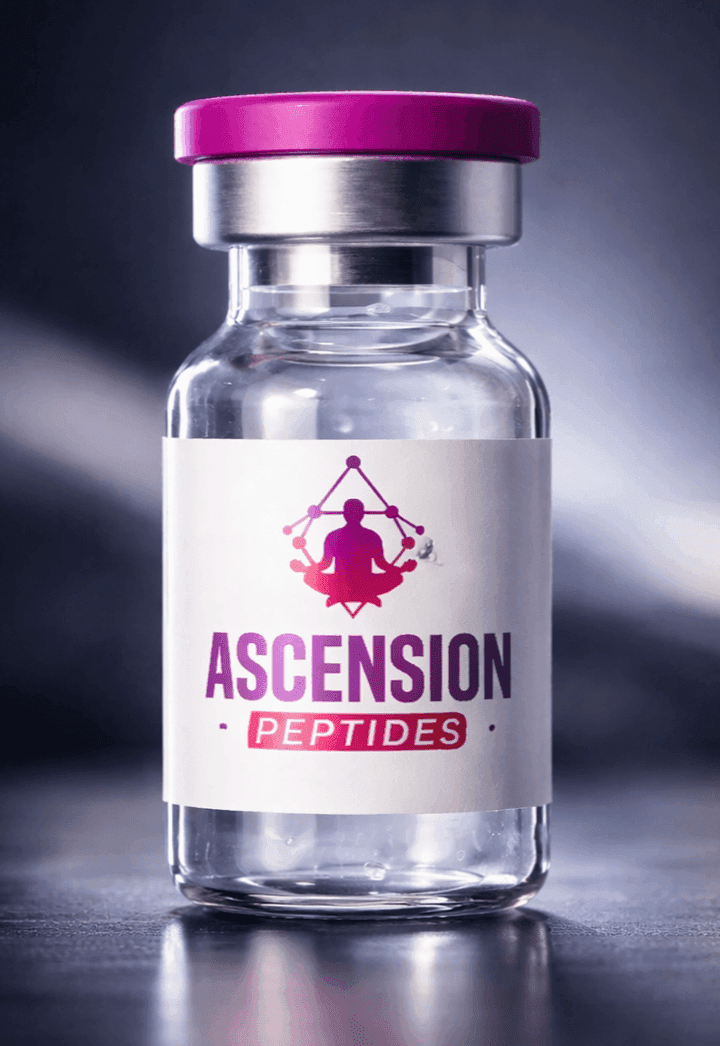

Semax peptide benefits cluster around focus and neuroprotection, the most common side effects are headache and nasal irritation, and dosage runs in micrograms. That last detail causes more trouble than anything else in this category. A 10 mg vial of Semax holds somewhere between fifteen and a hundred research-scale doses depending on the range being modeled, so a reconstitution error of one decimal place is invisible until the effects are wrong.
- Semax is a synthetic heptapeptide, Met-Glu-His-Phe-Pro-Gly-Pro, built by taking a short cognitive fragment of ACTH and capping it with a proline-glycine-proline tail that blocks rapid enzymatic breakdown.
- The engineering goal was to keep the brain effects of the ACTH fragment while removing the adrenal signal, which is why Semax is not described as triggering cortisol release the way the parent hormone does.
- Russia approved it in the 1990s. The labels list cognitive disorders (including after brain injury), asthenic conditions, optic nerve disease and, for the 1% drops, acute ischemic stroke. In the US, Canada and the EU it is neither approved nor scheduled, and it is sold strictly as a research compound.
- The Russian label gives 500 to 5,000 mcg per day for the 0.1% drops; the 100 to 600 mcg per administration, one to three times daily, in blocks of about two weeks that circulate online are community figures. Intranasal delivery is by far the most documented route.
- The best-supported mechanism is BDNF upregulation, with expression reported to rise at both the mRNA and protein level. Most of the human clinical work sits in neurological recovery, not healthy cognitive enhancement.
What Semax Actually Is
Adrenocorticotropic hormone is a 39-amino-acid molecule whose day job is telling the adrenal cortex to make cortisol. Researchers noticed decades ago that a short stretch of it carried behavioral and cognitive activity independent of that hormonal signal. Isolating the fragment was easy. Keeping it intact was not, because free peptide fragments of that length are cleared by peptidases within minutes.
The Institute of Molecular Genetics at the Russian Academy of Sciences solved the stability problem in the 1980s by extending the fragment with a proline-glycine-proline tail. Proline-rich terminals are awkward substrates for the enzymes that would otherwise chew through the chain, so the resulting seven-amino-acid molecule survives long enough to do something. That molecule, Met-Glu-His-Phe-Pro-Gly-Pro, is Semax. The name is a transliteration from Russian rather than a chemical descriptor, so it reaches English mostly by ear, which is why it turns up typed as sea max or symax by people who have only heard it spoken. The label on the vial always reads Semax. Sources vary on whether the starting fragment is best described as ACTH(4-7) or ACTH(4-10), which is a real inconsistency in the literature rather than a typo, but the design principle is the same either way: cognitive fragment plus stabilizing tail.
What survived the edit is a compound with several described actions rather than one clean pharmacology. Semax is reported to raise brain-derived neurotrophic factor and nerve growth factor expression, to modulate rather than flood dopaminergic and serotonergic signaling, to improve cerebral microcirculation, to suppress pro-inflammatory cytokines including IL-1 and IL-6 in neural tissue, and to reduce oxidative stress markers. Conspicuously absent from those descriptions is a cortisol response. That omission is the point of the molecule and the reason it gets used across multi-week blocks rather than as a one-off.
One sourcing note. Vendors also sell N-Acetyl Semax and N-Acetyl Semax amidate, shortened to NA-Semax. These are modified versions with different stability and different reported potency per microgram, not relabels of the base peptide. Buying one while dosing from figures written for the other is a common and avoidable mistake.
Everything below describes what has been reported in published research, Russian clinical practice and supplier documentation. None of it is a protocol for a person to follow.

Semax Benefits
The evidence here splits cleanly into two tiers, and conflating them is how this compound gets oversold.
| Reported benefit | Proposed mechanism | What actually backs it | Evidence tier |
|---|---|---|---|
| Stroke recovery (and cognitive deficits after brain injury) | Lower inflammatory cytokine load in the secondary injury window, better cerebral perfusion, BDNF support for surviving neurons | Russian hospital studies from 1997 onward, the basis of the stroke and cognitive indications on the Russian labels | Human clinical, one country, not replicated in the West |
| Optic nerve pathology | Neuroprotection in the same injury window | Russian ophthalmology work published in Vestnik Oftalmologii | Human clinical, one country |
| Memory and learning | BDNF and NGF upregulation at transcript and protein level | Rodent work; intranasal Semax at 50 and 250 mcg/kg raised BDNF protein in rat basal forebrain by the three-hour mark | Animal plus mechanism |
| Focus and task initiation | Fast intranasal delivery to the CNS, monoamine modulation | User report | Anecdotal |
| Fatigue resistance | Cerebral microcirculation and anti-inflammatory action | User report, plus frequently cited but thinly sourced Russian field use | Anecdotal |
| Mood | Serotonergic and dopaminergic modulation | Inconsistent user report | Weak |
It is worth being blunt about how much literature sits behind that first column. A PubMed search for Semax returns 231 records as of August 2026, and 105 of them are indexed as Russian-language. Four carry PubMed's clinical trial tag. Exactly one is tagged a randomized controlled trial, and it is a 2007 Russian study in patients with motor neuron disease, not a cognition study. The other three cover ischemic stroke and optic nerve disease, and they are Russian-language as well. There is no large Western trial to point to in either direction. That is not evidence the compound does nothing. It does mean the standard most readers assume behind a phrase like clinically studied has not been met here, and that nobody has run the trial that would settle it.
Neuroprotection is where the human clinical data actually sits. Semax has been used in Russian hospital settings since the 1990s in acute ischemic stroke, traumatic brain injury and optic nerve pathology, and that use underlies its approval there (the labels themselves list acute ischemic stroke, cognitive disorders including after brain injury, asthenia and optic nerve disease, rather than acute brain injury treatment). The proposed mechanism is coherent: reduced inflammatory cytokine load during the secondary injury window, better cerebral perfusion, and BDNF-driven support for surviving neurons. The caveat is that this work was produced under Russian regulatory standards and has not been reproduced in large Western trials, so read it as meaningful evidence rather than settled evidence.
Memory and learning have a strong mechanism and weak outcome data. BDNF governs synaptic remodeling and memory consolidation, and Semax is reported to raise its expression at both the transcript and protein level, with the transcript response described as the larger of the two. The gap is that mRNA expression in brain tissue is not the same measurement as a person recalling more of what they studied. Animal work supports improved acquisition and retention; human evidence in healthy adults is thin and mostly anecdotal.
Focus is the most reported subjective effect and the least formally documented. Intranasal delivery reaches the central nervous system quickly, and users commonly describe effects within fifteen to thirty minutes: easier task initiation, less mental drag, attention that holds up under load. No cardiovascular stimulation and no crash are described, which is what separates it from caffeine in user accounts. A meaningful share of people also report noticing very little, which is what you would expect from a compound whose acute effects have never been isolated in a controlled healthy-volunteer trial.
Fatigue resistance sits between the two tiers. The claim is not extra energy but a slower cognitive decline across a long working day, which fits the circulation and anti-inflammatory mechanisms better than any stimulant model. Reports of use in Russian extreme-environment settings are frequently cited but rarely sourced in detail, so treat that as context rather than proof.
Mood effects are secondary and inconsistent. They track the serotonergic and dopaminergic modulation and appear strongest in people whose cognitive problem is stress-driven to begin with. Semax has not been shown to treat depression or anxiety disorders and is not a substitute for prescribed psychiatric medication. Researchers targeting anxiety rather than cognitive drive generally end up at Selank, built from tuftsin for exactly that purpose, and compounds studied for sleep architecture such as DSIP work on unrelated pathways.

Semax Side Effects
Semax has a light adverse-effect profile, and decades of clinical use in one country is worth something. It is not the same as a modern long-term safety database, and the reported effects follow a clear dose-dependent pattern.
Headache is the most reported complaint. Usually mild, usually early in a block, and correlated with starting at the top of the range rather than titrating into it. It also correlates with stacking, because a headache that appears after Semax plus caffeine plus a racetam is not cleanly attributable to any of the three.
Nasal irritation is specific to the intranasal route and essentially expected. Dryness, mild burning and a raw sensation are common with frequent spraying, and sprayer hygiene or existing congestion make it worse. Temporary discoloration of the nasal cavity has also been reported with extended use, resolving after the compound is discontinued.
Fatigue and mental flattening are counterintuitive but real reports. Some subjects describe feeling drained rather than activated, or focused in a rigid, inflexible way. Both show up more at higher doses, and this is the effect most often misread as the compound being inert when the likelier explanation is overshooting.
Irritability and short-lived mood shifts appear at the upper end of the range and alongside other stimulating compounds. Baseline anxiety appears to be a risk factor.
Sleep disruption is a timing problem, not a dosing problem. Late-day administration interferes with sleep onset for many users, and the resulting sleep debt then gets blamed on the peptide the following day.
Elevated blood glucose has been documented in diabetic patients. This is the one effect that is more than a nuisance, and a reason for anyone with diabetes or impaired insulin sensitivity to treat this compound cautiously.
Where the data is genuinely thin: long-term use beyond repeated short blocks, interactions with psychiatric medication that acts on the same monoamine systems, and use during pregnancy or breastfeeding, where there is no safety data at all. Reports of hair or pigmentation changes circulate in user communities but lack any supporting evidence and should be treated as unverified.
Semax Dosage Chart
No human dosing standard exists outside Russian clinical protocols and labels, which were written for stroke, optic nerve disease and cognitive disorders in patients rather than for cognitive support in healthy people. The rlsnet.ru label for Semax 0.1% drops gives 50 mcg per drop, 2 to 3 drops per nostril, a single dose of 200 to 2,000 mcg and a daily dose of 500 to 5,000 mcg for 3 to 5 days (extendable to 14); for optic nerve disease it gives 600 to 900 mcg per day for 7 to 10 days. The medi.ru label for Semax 1% drops gives 500 mcg per drop, with stroke dosing up to 20 mg per day. The 100 to 600 mcg ranges in the table below are community and supplier figures, not label or trial doses. They are not instructions.
| Context | Community-reported range (not a label dose, except where stated) | Frequency | Typical cycle |
|---|---|---|---|
| Initial sensitivity assessment | 100 to 200 mcg per dose | Once daily, morning | 3 to 4 days before adjusting |
| General cognitive support | 200 to 300 mcg per dose | 1 to 2x daily | 10 to 14 days on, 7 to 10 days off |
| Higher reported range | 300 to 600 mcg per dose | 1 to 2x daily | 2 to 4 weeks on, about 2 weeks off |
| Optic nerve disease, Russian label figure | 600 to 900 mcg daily total | Split across 2 to 3 doses | 7 to 10 days (label); general label range is 500 to 5,000 mcg per day |
Three things about that table matter more than the numbers themselves.
First, the spread is not linear in effect. Moving from 100 mcg to 300 mcg is repeatedly described as the difference between noticing nothing and noticing something, while moving from 300 mcg to 600 mcg more often adds side effects than benefit. The higher label figures exist but are not where most reported use sits.
Second, the route changes the number. Intranasal administration dominates because it reaches the central nervous system directly. Subcutaneous use appears in some research contexts but has far less practical documentation, and figures written for one route do not transfer cleanly to the other. Nasal absorption also varies day to day, since congestion and spray technique both affect how much peptide crosses the mucosa.
Third, cycling appears across sources for a reason. Reported sensitivity declines across a continuous block and returns after a break, with cycle lengths converging around ten to twenty days on and a comparable interval off. Timing is consistently described as morning and early afternoon, with dosing inside four to six hours of bed flagged as a sleep problem.
Reconstitution and Storage
Semax ships as a lyophilized powder, most often in 5 mg or 10 mg vials, and needs bacteriostatic water to become a solution. The reconstitution math is where microgram dosing bites people. Two milliliters into a 10 mg vial gives 5,000 mcg per milliliter, which puts a 300 mcg dose at 0.06 mL. That is small enough that a fixed-volume nasal sprayer is a more practical measuring tool than a syringe, which is part of why intranasal formats dominate.
Add the diluent slowly against the inside wall of the vial rather than onto the powder cake, and swirl instead of shaking. Unopened lyophilized vials are stable frozen for long periods. Once reconstituted, the solution belongs at about 4 degrees Celsius and is generally described as usable for twenty to thirty days, less if it is handled frequently or left at room temperature. Cloudiness or visible particulate means the vial is finished. Sourcing matters more than dosing with the Russian nootropic peptides, and a where to buy Semax guide covers what separates a real vendor from a reseller.
Semax Nasal Spray
Almost every reported Semax protocol is intranasal, and the reason is arithmetic as much as pharmacology. A 300 mcg dose drawn from a 10 mg vial reconstituted with 2 mL of bacteriostatic water is 0.06 mL, which means reading six units on a 100-unit insulin syringe and losing a meaningful fraction of the dose to any slip. A fixed-volume nasal pump removes the measuring step entirely. You set the concentration once when you reconstitute, and every actuation after that delivers the same amount.
That only works if the concentration is chosen so the pump's actuation volume lands on a number you actually want. Research-grade nasal pumps are commonly specified at 0.1 mL per actuation, though 0.05 mL units exist. The spec is printed on the pump or its packaging, and it is the one figure worth confirming before adding any water, because everything downstream depends on it. The table below assumes bacteriostatic water as the diluent and a pump delivering its stated volume.
| Vial | Diluent added | Concentration | Per 0.1 mL spray | Per 0.05 mL spray |
|---|---|---|---|---|
| 5 mg | 1 mL | 5,000 mcg/mL | 500 mcg | 250 mcg |
| 5 mg | 2 mL | 2,500 mcg/mL | 250 mcg | 125 mcg |
| 5 mg | 5 mL | 1,000 mcg/mL | 100 mcg | 50 mcg |
| 10 mg | 2 mL | 5,000 mcg/mL | 500 mcg | 250 mcg |
| 10 mg | 4 mL | 2,500 mcg/mL | 250 mcg | 125 mcg |
| 10 mg | 5 mL | 2,000 mcg/mL | 200 mcg | 100 mcg |
Two things fall out of that table. The first is that 2 mL into a 10 mg vial, the fill most often quoted because it suits a syringe, gives 500 mcg per 0.1 mL actuation. That sits above the general cognitive support range in the dosage chart above and cannot be halved, because a fixed pump has one volume. Four milliliters into the same vial gives 250 mcg per spray, which lands inside that range and lets a second spray reach 500 mcg without new arithmetic. The second is a shelf-life problem hiding inside the vial size. A 10 mg vial at 250 mcg per spray holds forty sprays, and reconstituted Semax is often described online as usable for twenty to thirty days refrigerated (unsourced; we found no stability study of reconstituted research material). At one or two sprays a day the solution expires before the vial empties, which argues for the 5 mg vial or a more concentrated fill rather than buying the larger size to save money.
Priming costs volume too. A fresh pump needs several actuations before it throws a full dose, and those come out of the vial unless the sprayer allows priming with plain bacteriostatic water first. Beyond that, technique is the part of intranasal delivery actually under your control: alternate nostrils between doses rather than favoring one, keep the tip away from the septum, and breathe gently rather than sniffing hard, since the target is deposition on the mucosa and not a fast trip down the back of the throat. Nasal irritation and the day-to-day absorption variability described earlier both track how the spray is delivered.
Stacking
The one combination with genuine documentation behind it is Semax with Selank. The rationale is mechanistic rather than merely popular: Semax modulates monoamine and neurotrophic signaling toward activation, Selank works through the GABAergic system toward calm, and the two do not compete for the same receptors. The reported result is focus without the wired edge, typically with Semax earlier in the day. Formal research on the combination is limited.
Beyond that pairing, the documentation thins quickly. BPC-157 is often added on the grounds that it supports neural and gut-brain recovery through unrelated pathways, which is plausible but not demonstrated as a synergy. Omega-3 supplementation is defensible because DHA is a structural component of neuronal membranes and supports the same BDNF signaling Semax acts on. Metabolic peptides like MOTS-c target mitochondrial endpoints rather than cognitive ones, so pairing them means running separate goals in parallel, not combining mechanisms. Anything beyond these is user practice, not evidence.
How to Verify What You Buy
Semax is dosed in micrograms, which means an underfilled or degraded vial is impossible to detect by effect alone. Ask for a third-party certificate of analysis matched to the lot you are actually receiving, showing identity by mass spectrometry and purity by HPLC, and confirm the label says Semax rather than N-Acetyl Semax if that is what you intended to buy. Our guide to where to buy Semax covers which suppliers publish per-lot testing and which reuse a single document across batches. If you have already decided to buy, our guide to Semax for sale shows how to check a vial before you pay.
Looking for the numbers behind this guide? Our Semax dosage chart sets label and trial doses beside what Reddit users report taking.
Frequently Asked Questions
What does Semax peptide do?
It is a synthetic ACTH-derived heptapeptide reported to increase BDNF and NGF expression, modulate dopamine and serotonin signaling, improve cerebral blood flow and reduce neuroinflammatory cytokines. The claims attached to those mechanisms are focus, memory support, fatigue resistance and neuroprotection. Only the neuroprotective claim has meaningful human clinical support; the cognitive enhancement claims in healthy adults rest on mechanism and user report.
Is Semax peptide safe?
Reported side effects are mild and mostly dose-related: headache, nasal irritation, fatigue, irritability and sleep disruption with late dosing. Elevated blood glucose has been documented in diabetic patients, and there is no safety data for pregnancy or breastfeeding. Long-term human safety has not been established, and interactions with psychiatric medication acting on the same monoamine systems are poorly characterized.
How much Semax is typically used?
The 100 to 600 mcg per administration, one to three times daily, intranasal figures that circulate are community figures rather than label doses: the Russian label for 0.1% drops gives 500 to 5,000 mcg per day, and the 600 to 900 mcg per day figure is the label's optic nerve dose. Blocks of ten to twenty days with a comparable break are commonly cited. These are not a recommended human dose, and no standardized human protocol exists outside Russian clinical practice.
How long does one dose of Semax last?
Duration is the part nobody has measured properly. No controlled human study has tracked how long the subjective effect of a single administration lasts, so any specific number attached to it is a user report rather than a measurement. What has been measured is the molecule and the response it sets off, and the two run on very different clocks. In rats given Semax intranasally at 50 mcg/kg, brain radioactivity was detectable two minutes after administration, and around 80 percent of what was found in brain tissue was still intact Semax with the rest already metabolites, the tripeptide Pro-Gly-Pro chief among them. The peptide clears fast. The downstream response does not: intranasal Semax raised BDNF protein in the rat basal forebrain at the three-hour mark, and in a rat cerebral ischemia model the transcription of neurotrophin and receptor genes was still elevated at 24 and even 72 hours depending on which gene was measured. That gap is the likeliest reason reported protocols repeat one to three times daily rather than dosing once and waiting. The acute effect is short. Whatever is building underneath it is not on the same schedule.
Can you drink coffee or tea while using Semax?
There is no published interaction study between Semax and caffeine, and because the route is intranasal, tea and coffee are not competing with it for absorption the way they would with an oral compound. The real issue is attribution rather than chemistry. Headache and irritability are the two most reported Semax complaints, and both are also ordinary caffeine effects, so running them together on the same morning makes it impossible to tell which one you are reacting to. If you are assessing a new vial, hold caffeine steady rather than changing two variables at once. The same logic covers timing: Semax inside four to six hours of bed is already flagged as a sleep-onset problem, and an afternoon tea on top of it does not help the diagnosis or the sleep.
How long is a typical Semax cycle?
Reported cycles converge on roughly ten to twenty days on with a comparable break, and the shorter blocks in the chart above pair with the lower doses. The stated reason across sources is that responsiveness declines over a continuous block and returns after time off, though that has not been formally measured in humans. A plan assembled from what is reported runs three to four days at 100 to 200 mcg once each morning to gauge sensitivity, then ten to fourteen days at 200 to 300 mcg, then a week to ten days off before deciding whether to repeat. Every figure in that sequence is a description of published research ranges and supplier documentation, not a schedule to follow. No Russian clinical protocol was ever written for cognitive support in healthy adults, so there is nothing authoritative underneath it.
Is Semax peptide legal?
In Russia it is an approved prescription medication. In the United States, Canada, the United Kingdom and the EU it is neither an approved drug nor a scheduled substance, which places it in a gray zone: legal to buy and possess as a research chemical, not legal to sell for human consumption. Import rules vary, and some jurisdictions restrict it more tightly than others.
Sources
- The efficacy of semax in the treatment of patients at different stages of ischemic stroke — Zhurnal Nevrologii i Psikhiatrii imeni S.S. Korsakova, via PubMed
- Effectiveness of semax in acute period of hemispheric ischemic stroke — Zhurnal Nevrologii i Psikhiatrii imeni S.S. Korsakova, via PubMed
- The study of chronic partial denervation and quality of life in patients with motor neuron disease treated with semax — Zhurnal Nevrologii i Psikhiatrii imeni S.S. Korsakova, via PubMed
- Evaluation of therapeutic effect of new Russian drug semax in optic nerve disease — Vestnik Oftalmologii, via PubMed
- Semax, an analogue of adrenocorticotropin (4-10), binds specifically and increases levels of brain-derived neurotrophic factor protein in rat basal forebrain — Journal of Neurochemistry, via PubMed
- Semax and Pro-Gly-Pro activate the transcription of neurotrophins and their receptor genes after cerebral ischemia — Cellular and Molecular Neurobiology, via PubMed
- Kinetics of Semax penetration into the brain and blood of rats after its intranasal administration — Bioorganicheskaya Khimiya, via PubMed