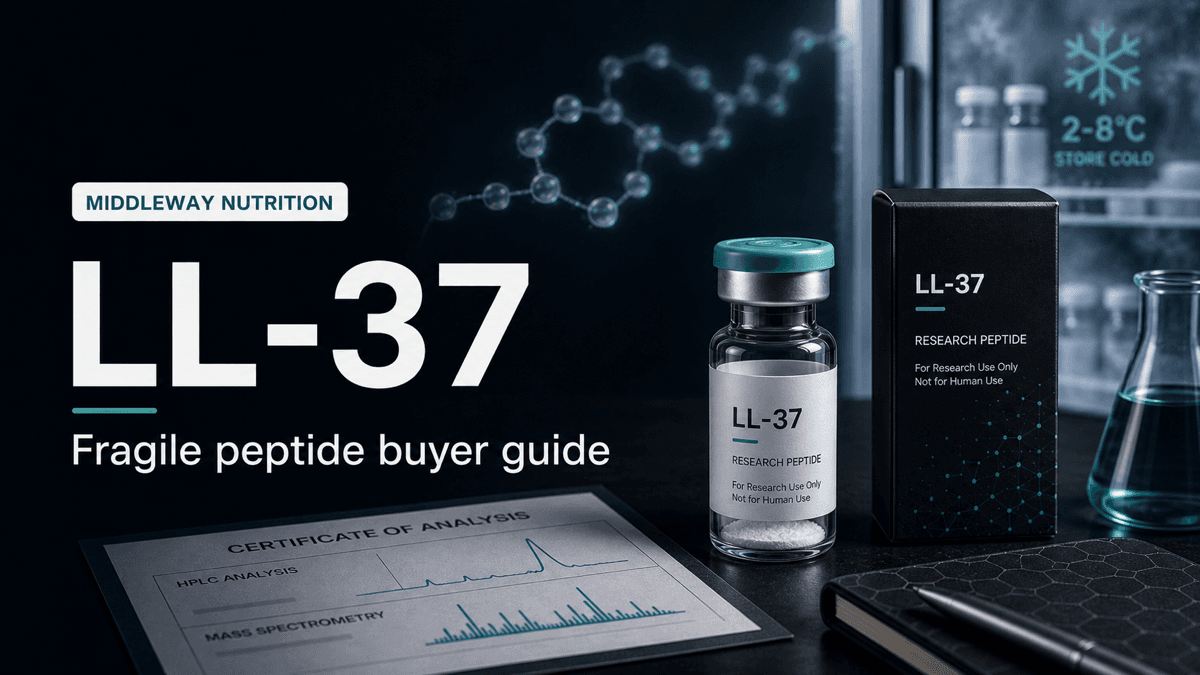
LL-37 is the only cathelicidin antimicrobial peptide the human body makes, and that single fact is why the research-peptide market is flooded with vendors selling it. Most of them are counting on you not knowing the difference between a 99% pure batch and a cheap, half-degraded vial that tests at 80%.
If you've been searching where to buy LL-37, this guide skips the filler. You'll get the realistic sourcing options in 2026, how to read a certificate of analysis without getting fooled, what a fair price actually looks like, and the red flags that separate a serious lab supplier from a dropshipper reselling unverified powder. LL-37 (also listed as CAP-18) is sold strictly as a research compound, so vendor quality is the entire game here.
Key Takeaways
- LL-37 is NOT an FDA-approved drug. It is sold by research-chemical and peptide vendors for laboratory use only, with no legitimate prescription pathway
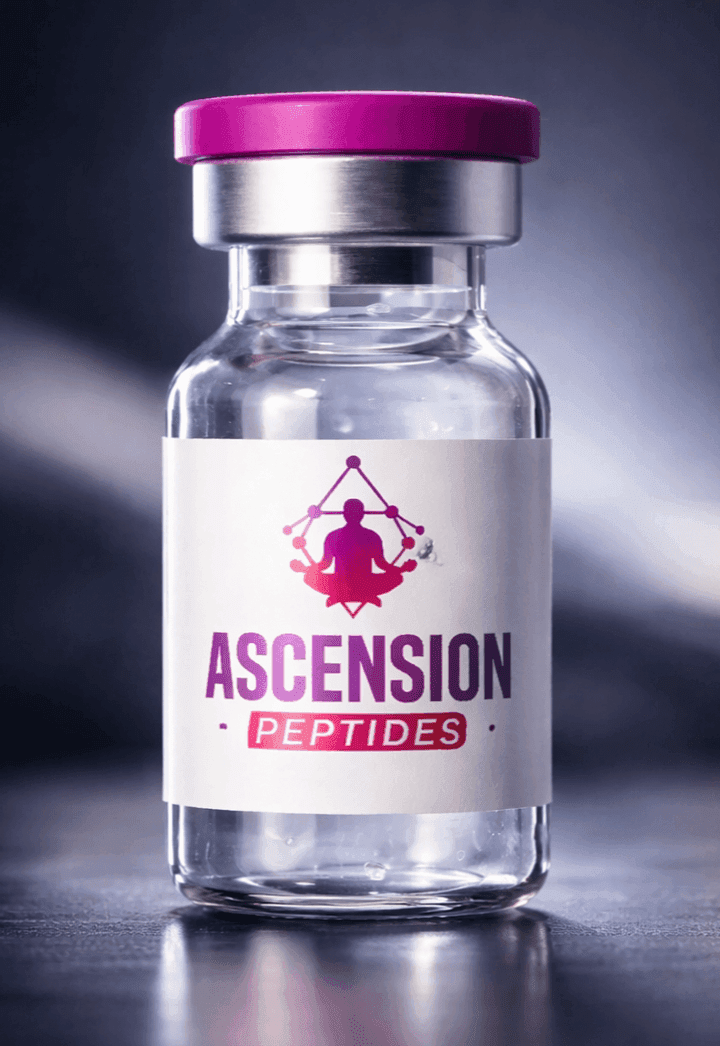
- Our pick is Ascension Peptides: LL-37 10mg at $89.00 USD, third-party testing on every batch, and batch-specific certificates in a public library. Code PEPTIDEDECK takes 50% off for new customers
- Even so, no LL-37 vendor earns blind trust. The sellers in this market range from labs that publish real batch data to resellers showing a generic certificate, so vet each one on its own paperwork
- Always demand a batch-specific COA tied to the lot number on your vial, not a generic product certificate that could be months old
- Price is a weak quality signal. A $40 vial and a $90 vial can both be legitimate, or both be junk. The COA decides it
- LL-37 is a delicate peptide that degrades easily. Storage, reconstitution, and handling matter as much as where you bought it
Buying LL-37 in 2026 comes down to one realistic channel: online research-peptide vendors. There is no pharmacy version, no compounded telehealth route, and no clinical trial enrolling the public for general use. So when people ask where to buy LL-37, the honest answer is that it all hinges on picking a vendor that tests every batch and ships a peptide that matches its label. Here's what you need to know before spending a dollar.
Our Pick for LL-37: Ascension Peptides
Ascension Peptides is where we buy the compounds they stock, and they list LL-37 as a 10mg vial at $89.00 USD, inside the normal 10mg price band. Every batch is independently tested by a third-party lab (currently Kovera Labs) for HPLC purity, LC-MS identity, net content, endotoxin, a rapid sterility screen and heavy metals, with a >98% purity pass mark, and 85 batch-specific certificates sit in a public library. Orders ship within the United States only, free over $250, and all sales are final (damaged or incorrect items are replaced if reported quickly). New customers can use code PEPTIDEDECK for 50% off.
What LL-37 Actually Is
LL-37 is the only known antimicrobial peptide in the human cathelicidin family. Your body produces a precursor protein called hCAP-18, and LL-37 is the 37-amino-acid active fragment cleaved from its C-terminal end. The name comes from its first two residues (two leucines) and its length. You'll also see it sold under the alias CAP-18.
Its molecular formula is C205H340N50O53 with a molecular weight of roughly 4,493 g/mol. It is a cationic, amphipathic peptide, which is the structural reason it interacts with microbial membranes in laboratory models.
In published research, LL-37 has been studied for several distinct mechanisms:
- Antimicrobial activity against gram-positive and gram-negative bacteria, plus antifungal and antiviral models, by disrupting microbial membranes
- Immunomodulation, where it can either amplify or dampen inflammatory signaling depending on the surrounding environment, partly through toll-like receptor pathways
- Wound healing and tissue repair, including epithelial cell proliferation and re-epithelialization in skin models
- Angiogenesis, the formation of new blood vessels, in endothelial cell studies
- Barrier protection in the gastrointestinal tract and airway tissue
It's worth being clear: elevated LL-37 has also been studied as a factor in autoimmune conditions like psoriasis and lupus, so the picture is not uniformly "more is better." This is exactly why it remains a research compound and not a consumer product. None of this is medical advice, and none of it is approved for human use.
If your interest is broadly in tissue repair and recovery peptides, our guides on the Wolverine stack and BPC-157 for gut healing cover the better-known compounds in that category.
Where to Buy LL-37 in 2026
There's no shortcut here, and anyone telling you otherwise is selling something. LL-37 is not stocked by pharmacies, not available through compounding telehealth platforms the way GLP-1 drugs are, and not something you'll find in a supplement shop. Every realistic route runs through online research-peptide suppliers.
Online Research-Peptide Vendors: The Only Real Channel
This is where essentially all LL-37 is bought. A quick search surfaces dozens of vendors, and they fall into roughly three tiers:
- Serious lab suppliers that synthesize or source from verified labs, test every batch with an independent third party, and publish batch-specific COAs you can actually cross-reference
- Middle-tier resellers that show a COA but often a generic, product-level one that may not match your vial
- Dropshippers and scam sites with no verifiable testing, stock photos of certificates, and prices that are either suspiciously low or arbitrarily high
The compound itself is the same molecule everywhere. What you're really buying is the verification: proof that the powder in the vial is LL-37, at the purity claimed, without degradation byproducts. That's the part the where-to-buy question actually turns on, and it's where most buyers get burned.
What About a Prescription or Pharmacy?
There isn't one. LL-37 has no FDA-approved drug form, so no physician can write you a standard prescription for it and no pharmacy compounds it as a routine product. That removes the regulated-quality safety net you'd get with an approved medication and puts the burden of quality control entirely on you and your vendor.
What to Demand From Any LL-37 Vendor
Because there is no regulated channel, the vendor is the quality control. Our pick is above, but judge every seller, ours included, against the same four criteria, in order of how much they matter.
Batch-specific third-party COAs. Not a vague "we test our products" line. A certificate tied to the actual batch, from an independent lab, so you can confirm the lot on your vial matches the certificate rather than trusting a generic document.
Purity that is documented, not asserted. ≥98% by HPLC is the bar. With a 37-residue peptide, the gap between a genuine 98%+ batch and a "99%" claim with no chromatogram behind it is the difference between usable research material and a vial full of truncated fragments.
In-stock consistency. LL-37 supply is patchy across this market. A vendor holding real inventory with clear stock status beats one that takes your money and quietly backorders you for six weeks.
Transparent sourcing and honest pricing. No "pharmaceutical grade" buzzwords with nothing to back them. Published prices, published test results, and a support channel that answers a direct question about a lot number.
For a peptide that degrades as readily as LL-37, a vendor that actually documents what it ships isn't a luxury. It's the whole point. The comparison table further down shows how the vendors currently listing LL-37 measure up against these criteria.
How to Verify LL-37 Quality: The COA Deep-Dive
Most guides say "look for third-party testing" and stop there. Here's what that actually means and how to avoid a forged or recycled certificate.
Batch-Specific vs. Product-Level COAs
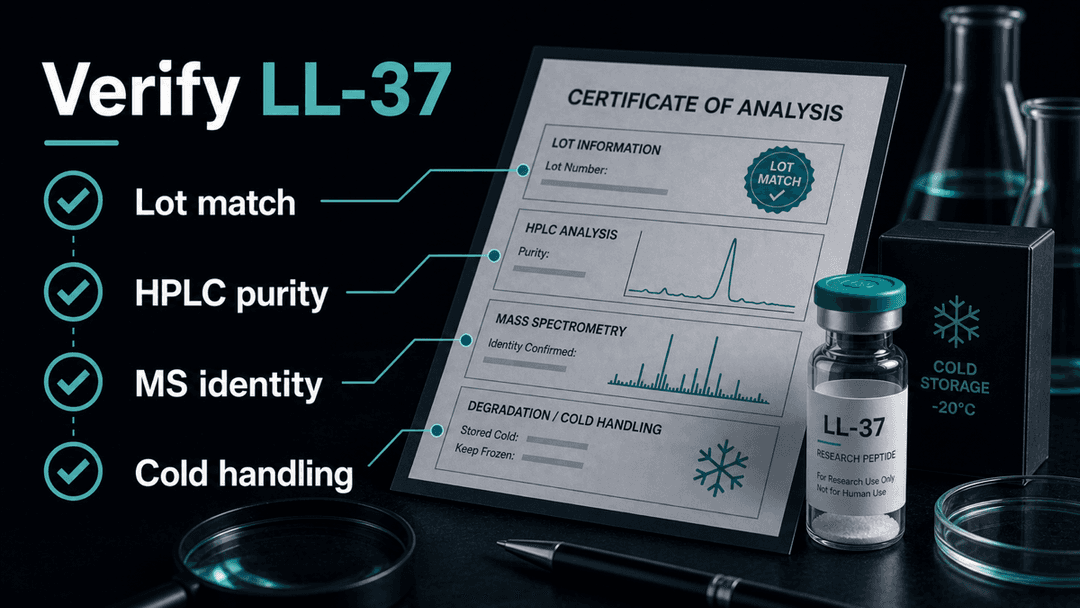
A product-level COA is one certificate that covers an entire product line. It may have been run six months ago on a different synthesis batch, and some vendors reuse the same PDF indefinitely. A batch-specific COA references the exact lot number printed on your vial, with a testing date and results that correspond to what you actually received.
When your order arrives, the lot number on the vial should match the lot on the COA. If a vendor can't produce that, treat it as untested.
HPLC and Mass Spec: What Each One Tells You
HPLC (high-performance liquid chromatography) measures purity, the percentage of the sample that is genuinely LL-37 versus impurities and truncated chains. Aim for ≥98%. Around 95% is borderline; lower is a red flag, and it matters more with longer peptides because synthesis errors accumulate.
Mass spectrometry (MS) confirms identity by matching the molecular weight to LL-37's expected mass of roughly 4,493 g/mol. The strongest COAs include both, because HPLC can show a clean peak of the wrong compound.
Labs like Janoshik and Colmaric Analyticals actively test research peptides and have portals where a certificate ID can be cross-checked. Seeing a verifiable lab name beats an unnamed "in-house lab" every time.
COA Red Flags
- No lot number or batch ID anywhere on the document
- A testing date more than six months old
- A "lab" with no website or verifiable presence
- A purity figure like "99.9%" with no HPLC chromatogram attached
- A PDF that looks edited or lacks lab letterhead
- A certificate that doesn't actually name LL-37 / CAP-18
What Does LL-37 Cost in 2026?
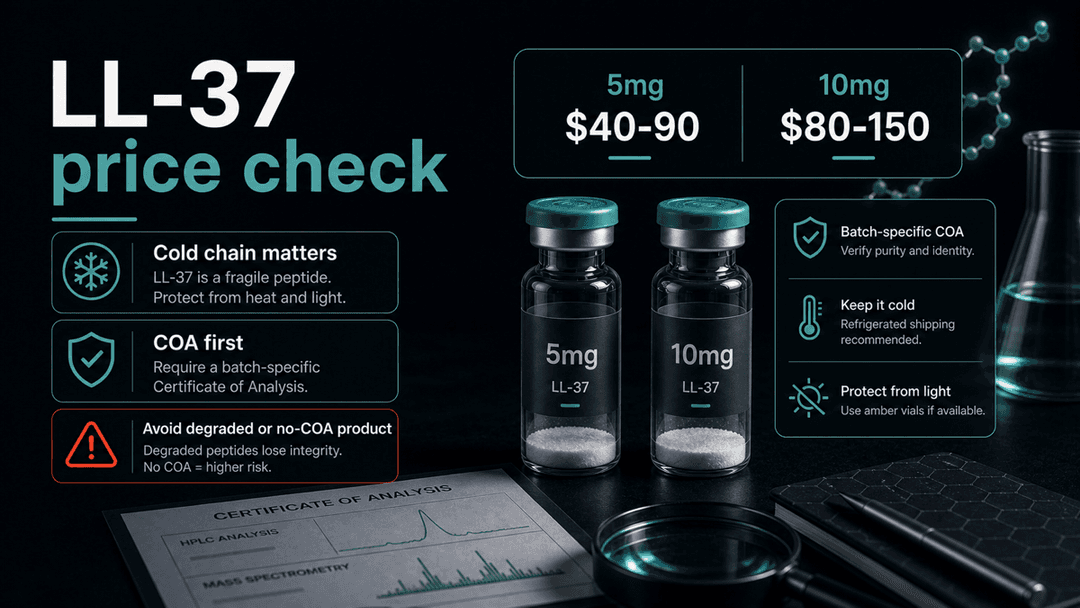
Pricing is fairly consistent across legitimate vendors, which makes wild outliers easy to spot.
5mg vials: roughly $40 to $90. This is the standard research quantity. The low end isn't automatically bad, and the high end isn't automatically premium. The COA is what justifies the number.
10mg vials: roughly $80 to $150, often better value per milligram if the vendor tests properly.
Bulk / multi-vial orders: most vendors apply 5–10% discounts at higher quantities, with free shipping commonly kicking in around the $200–$300 mark.
The thing to internalize: with LL-37, price is a weak quality signal in both directions. A cheap vial may have skipped third-party testing to protect margin; an expensive vial may just be marketing. Spend the small premium that buys a real batch-specific COA and stop optimizing for the last ten dollars. Before comparing vendors it is worth understanding what the peptide does, and a full LL-37 guide covers the antimicrobial research.
Red Flags to Avoid When Buying LL-37
The market is full of bad actors. Some are obvious, some less so.
Vendors that make human-use or medical claims. Any seller telling you how to "dose LL-37 for infections" or marketing it as a treatment, while also calling it a research chemical, is talking out of both sides of its mouth. Legitimate suppliers describe research findings and stop there.
No COA, or generic COA only. Covered above, and it's non-negotiable. No batch-specific certificate, no sale.
Prices that make no sense. A 37-amino-acid peptide costs real money to synthesize and test. A 5mg vial for $15 with free shipping means a corner got cut, usually the testing.
Zero community footprint. Communities like r/Peptides actively vet vendors. A seller with no reputation, positive or negative, anywhere online deserves caution.
Pressure tactics. Countdown timers, fake "limited stock" banners, and aggressive upsells from unknown vendors correlate strongly with lower-quality operations.
How to Get LL-37
If you've decided to source LL-37, the practical process is straightforward because there's only one real channel.
- Pick a vetted vendor. Start with a supplier that publishes batch-specific COAs and tests at ≥98% HPLC. You do not need a prescription for research peptides, but that also means quality control is on you.
- Confirm the COA before checkout. Find the lot-matched certificate, check the HPLC purity and the MS identity, and verify the testing lab is real.
- Choose your payment. Most vendors take credit cards or crypto. Credit cards add chargeback protection if a product arrives misrepresented, which is worth using until you trust a vendor.
- Plan for storage on arrival. LL-37 ships as a lyophilized (freeze-dried) powder. Keep it cold, ideally frozen, until you're ready to use it.
A Note on Reconstitution and Storage
LL-37 is reconstituted with bacteriostatic water before use in research settings. The benzyl alcohol in bacteriostatic water preserves the solution far better than plain sterile water. Lyophilized vials are best stored frozen (around -20°C); once reconstituted, keep the solution refrigerated at 2–8°C and use it within about 30 days, since this peptide degrades relatively quickly. Protect it from light and avoid repeated freeze-thaw cycles. None of this constitutes a human-use protocol; it's standard handling for a sensitive research peptide.
LL-37 Vendor Comparison Table
Top Vendors
Ranked by purity, third-party testing, COA availability, and price.
>98% (COA pass mark) · Third-party tested every batch (Kovera Labs) · US only, free over $250
≥99% · COA shown · Free over $200
>99% · COA shown · Free over $200
>99% · Listed · Free over $300
Listed · Limited info · Standard
Prices are approximate and change frequently. Always verify current pricing and the batch-specific COA before purchasing.
Related Buying Guides
Use these next if you are comparing adjacent research-peptide sourcing decisions:
- Where to buy KPV
- Where to buy Thymosin Alpha-1
- Where to buy ARA-290
- Where to buy BPC-157
- Where to buy VIP
Frequently Asked Questions
Where can I buy LL-37?
LL-37 is sold by online research-peptide vendors for laboratory use only. There's no pharmacy or prescription version. Our top pick is Ascension Peptides, which sells a 10mg vial backed by batch-specific third-party certificates, but apply the same test to each seller: a batch-specific third-party COA, lot-matched to the vial you receive, showing ≥98% HPLC purity. Confirm that before you pay.
Is LL-37 legal to buy?
LL-37 sold as a research compound sits in a legal grey area. The peptide itself is not a scheduled or controlled substance, and buying it for laboratory research from a domestic vendor carries low practical legal risk. It is not approved for human use, however, and reputable vendors sell it strictly as a research chemical that is not for human or animal consumption.
How much does LL-37 cost?
Expect roughly $40 to $90 for a 5mg vial in 2026, and around $80 to $150 for 10mg. Most vendors offer 5–10% discounts on multi-vial orders. Price alone is a poor quality indicator, so prioritize a verifiable batch-specific COA over the lowest sticker price.
Do I need a prescription for LL-37?
No. Because LL-37 has no FDA-approved drug form, it is sold without a prescription as a research compound. The flip side is that you lose the quality assurance a regulated medication carries, so vendor vetting and COA verification are entirely your responsibility.
How do I know my LL-37 is real and high purity?
Demand a batch-specific COA whose lot number matches your vial. It should show ≥98% purity by HPLC and confirm identity by mass spectrometry against LL-37's expected mass of about 4,493 g/mol. Check that the testing lab is real and verifiable, such as Janoshik or Colmaric Analyticals. No lot number or no verifiable lab means treat it as unverified.
Why does LL-37 need to be kept frozen?
LL-37 is a long, sensitive peptide that degrades faster than many smaller compounds. Lyophilized vials are best kept frozen until use, and reconstituted solution should be refrigerated and used within about 30 days. Heat, light, and repeated freeze-thaw cycles all accelerate breakdown, which is one more reason buying from a vendor with proper cold handling matters.
The Bottom Line on Where to Buy LL-37
If you came here to figure out where to buy LL-37, the answer is narrower than for most peptides: online research-peptide vendors are the only real channel, which makes vendor selection the entire decision. There's no regulated fallback, so the COA is your only real protection against an underdosed or degraded vial.
Your framework stays simple: batch-specific COA first, vendor reputation second, price last.
Run that framework yourself on whichever seller you're considering, including the ones in the table above. None of them is a substitute for reading the certificate that came with your specific lot, and a vendor that won't produce one has answered the question for you. Our pick remains Ascension Peptides, with batch-specific third-party certificates published in a public library and code PEPTIDEDECK for 50% off for new customers. Hold them to the same lot-matching test as everyone else. If you're still comparing the broader recovery-peptide landscape first, our GHK-Cu for skin and hair guide is a useful companion read.
Medical Disclaimer: The information in this article is for informational purposes only and does not constitute medical advice. LL-37 is not FDA-approved and is sold for laboratory research use only; it is not intended to diagnose, treat, cure, or prevent any disease, and is not for human or animal consumption. Always consult a qualified healthcare provider before making health decisions. The purchase and use of research peptides carries legal and health risks that vary by jurisdiction and individual circumstances.