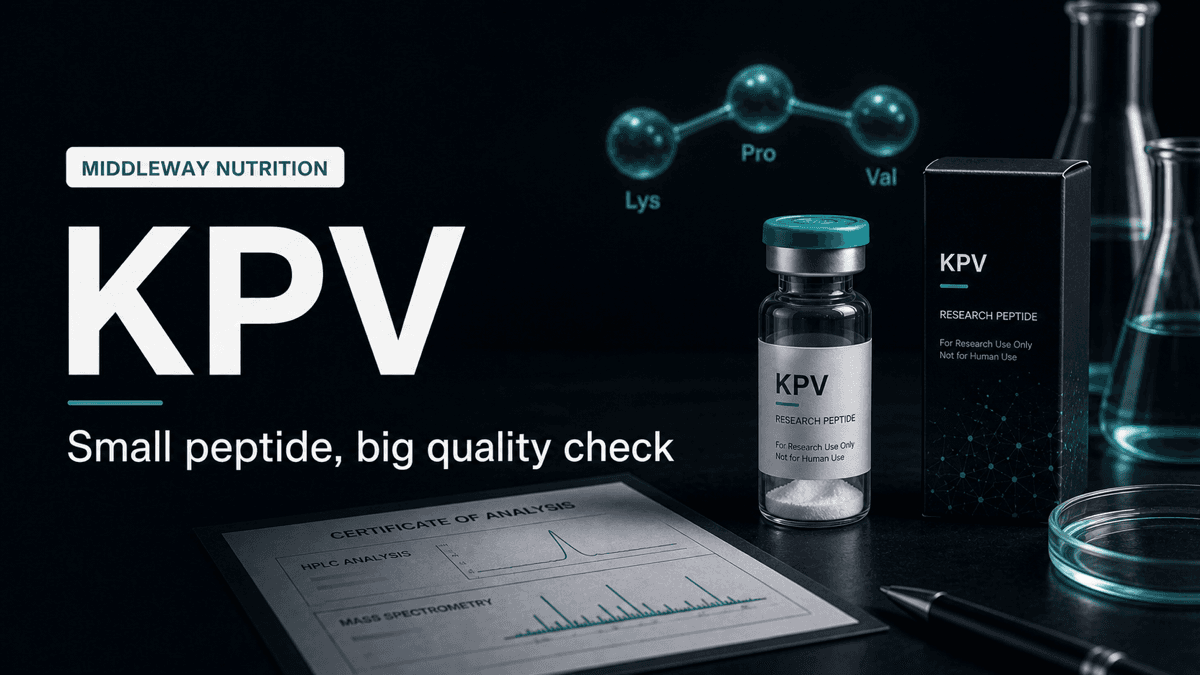
KPV is a three-amino-acid fragment of a hormone your body already makes, and that simplicity is exactly why the market for it is so messy. A peptide this small is cheap to fake, easy to underfill, and almost impossible to eyeball. The vial tells you nothing. The certificate of analysis tells you everything.
If you have been searching where to buy KPV, this guide skips the filler and gets to what actually matters: which vendors test every batch, what a fair price looks like in 2026, how to read a COA without getting fooled, and the red flags that most affiliate-driven buying guides quietly leave out because they would cost a commission. KPV is sold as a research peptide, not an FDA-approved drug, so the burden of verifying quality falls entirely on you.
Key Takeaways
- KPV is NOT an FDA-approved drug. It is sold for research use only, with no prescription pathway and no pharmacy counter option
- Ascension Peptides is our top pick for KPV: a 10mg vial at $50.00, every batch independently tested by a third-party lab, and batch-specific certificates showing >98% HPLC purity. Whoever you buy from, judge them on one thing first: a batch-specific third-party COA, from a lab you can actually look up, matching the lot on your vial
- Always demand a batch-specific COA that matches the lot number on your vial, with purity shown at ≥98% by HPLC
- Expect to pay roughly $38–$55 per vial. A 4mg vial under $20 with free shipping is a warning sign, not a deal
- KPV is studied for anti-inflammatory and gut-related effects, but the human evidence is early and most data is from cell and animal models
What KPV Actually Is
KPV stands for its three amino acids: lysine, proline, and valine. It is the C-terminal tail (residues 11 to 13) of alpha-melanocyte-stimulating hormone (α-MSH), a hormone involved in immune signaling and pigmentation. The interesting part is that this tiny fragment keeps much of the anti-inflammatory activity of the full hormone while shedding the part that drives pigment production.
Most of the published research centers on the gut. A foundational study showed that KPV is taken up by intestinal and immune cells through the PepT1 transporter and reduces inflammation in models of colitis (Dalmasso et al., Gastroenterology 2008). Follow-up work found therapeutic benefit in a murine colitis-associated cancer model (Viennois et al., 2016), and a later study used nanoparticle delivery of KPV to accelerate mucosal healing in ulcerative colitis models (Xiao et al., Molecular Therapy 2017). At a mechanistic level, KPV appears to dampen pro-inflammatory signaling such as NF-κB activation and cytokines like TNF-α and IL-6.
None of that is human clinical proof. It is laboratory and animal data, which is why KPV is sold strictly as a research compound. If you are mainly interested in gut-related peptides, our guide on BPC-157 for gut healing covers a more widely discussed option and where the evidence stands.
Where to Buy KPV in 2026
There is no legitimate retail or pharmacy route for KPV. You will not find it at a supplement shop, and no doctor writes a standard prescription for it. Realistically there is one lane: online research-peptide vendors. The entire decision comes down to which vendor you trust, because quality between them varies enormously for an identical-looking product.
A handful of vendors do the work properly. They source from verified synthesis labs, send every batch to an independent testing lab, publish the resulting COA so you can match it to your vial, and avoid making human-use or medical claims. The rest cut corners somewhere, and with a peptide this cheap to produce, the corner they cut is almost always testing.
KPV typically ships as a lyophilized (freeze-dried) powder in 4mg, 5mg, or 10mg vials. It needs reconstitution before any laboratory handling, and storage matters: keep the sealed vial cool, dry, and out of light. This is also why community reputation counts so much. Forums and subreddits actively vet peptide sellers, and a vendor with no track record, good or bad, deserves caution.
Best Place to Buy KPV: Ascension Peptides
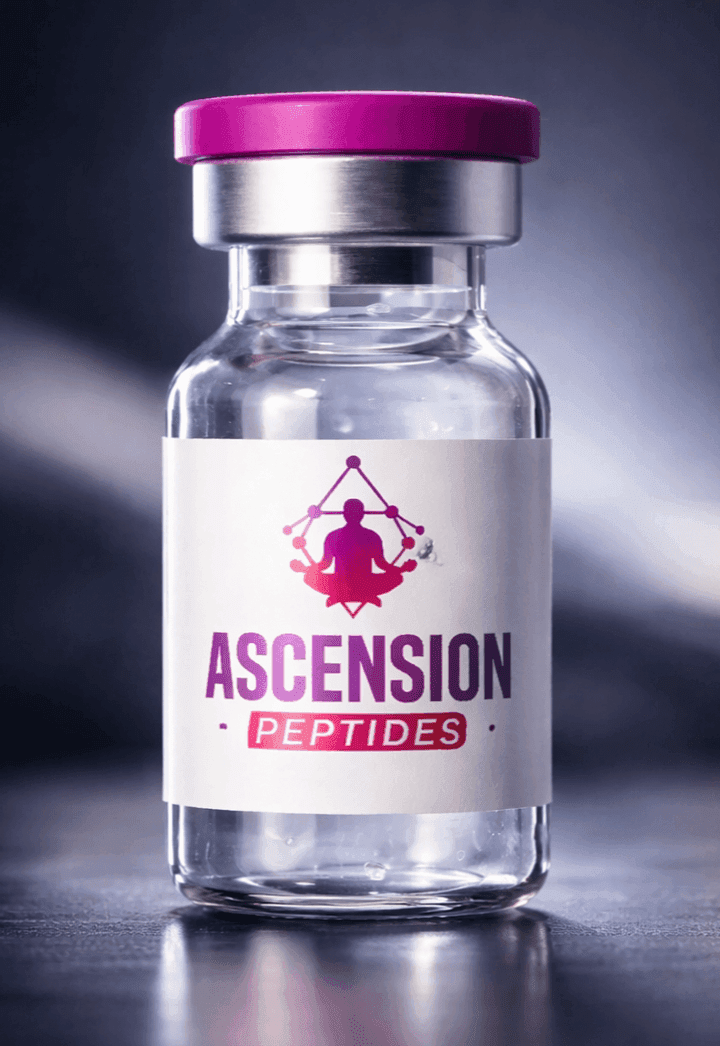
Ascension Peptides is the vendor we recommend for KPV. It lists a 10mg KPV vial at $50.00 (USD), inside the normal 10mg price band, and it is also where this site spends its own money on the compounds it stocks.
Documentation you can check. Every batch is independently tested by a third-party lab, currently Kovera Labs (older batches by MZ Biolabs). The certificates cover HPLC purity, LC-MS identity, net content per vial, endotoxin, a rapid sterility screen and heavy metals, with a pass mark of >98% purity. Ascension publishes 85 batch-specific certificates in a public COA library, and when we checked one Kovera report against the lab's own records, it matched.
Terms worth knowing. Orders ship within the United States only, free over $250, and buying 3, 5 or 10 units saves 3%, 5% or 10%. All sales are final, though damaged or incorrect items are replaced if reported quickly. New customers get 50% off with code PEPTIDEDECK.
What to Demand From Any KPV Vendor
A pick is only as good as the batch in front of you. KPV is a small, cheap peptide that a lot of sellers list and comparatively few test properly, and the sellers who do test well change often enough that you should re-check any vendor, ours included, every time. What does not change is the checklist:
A batch-specific COA you can match to your vial. Not a product-page PDF, not a screenshot. A certificate with a lot number, a testing date, and results that belong to the batch you are being shipped.
A testing lab you can look up. The lab should have a real presence and a way to confirm the certificate ID. A certificate from a lab that does not exist online is a design exercise, not a test result.
Purity at ≥98% by HPLC, with a chromatogram behind it. A bare percentage in a table is a claim. The chromatogram is the evidence.
Mass-spec identity confirmation. KPV is 342.4 g/mol. Purity without identity tells you the vial is full of something clean.
Research-use framing, with no dosing or treatment claims. A seller that markets KPV as a therapy while calling it a research chemical is telling you which rules it thinks apply to it.
Honest stock status and a visible shipping origin. Vague "in stock" badges with three-week fulfilment are a common tell.
After Ascension, Verified Peptides and Sports Technology Labs are the two sellers in the comparison table below publishing batch-specific certificates from labs you can independently look up, which is why they sit near the top of it as alternatives. Core Peptides, Biotech Peptides, and Limitless Biotech are cheaper and easier to find in stock, but their certificates are product-level or simply "available" on request, so treat those listings as unconfirmed until you have the batch paperwork in hand.
For the record on where this site spends its own money: we buy from Ascension Peptides for the compounds they stock, and KPV is one of them.
If you want to compare formats and other sourcing options first, our peptide capsules buying guide walks through vendor vetting more broadly.
How to Verify KPV Quality: Reading a COA
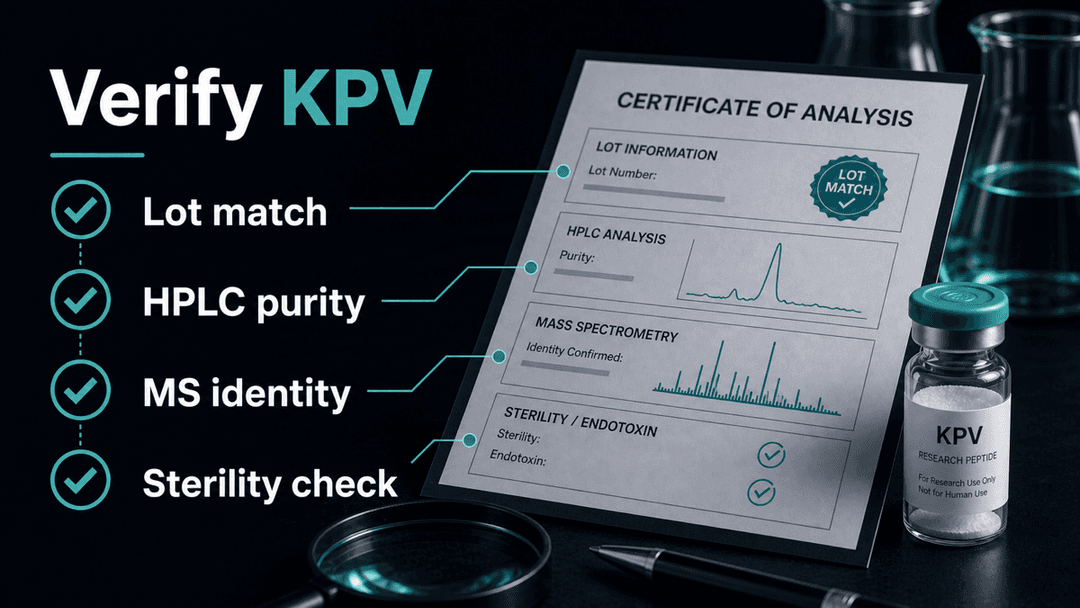
Most guides tell you to "look for third-party testing" and stop there. That advice is nearly useless without knowing what separates a real certificate from window dressing.
Batch-Specific vs Generic COAs
A generic, product-level COA is one certificate slapped on an entire product line. It might have been run months ago on a different synthesis batch. Some vendors recycle the same PDF indefinitely. A batch-specific COA references the exact lot number printed on your vial, with a testing date and results that correspond to what you actually received. When your vial arrives, the lot number on it should match the lot number on the certificate. If it does not, or the vendor cannot produce one, walk away.
HPLC and Mass Spec
HPLC (high-performance liquid chromatography) measures purity, the percentage of the sample that is genuinely KPV. Aim for ≥98%. Reputable KPV batches frequently test in the 98 to 100% range. Mass spectrometry confirms identity by matching the molecular weight (KPV is 342.4 g/mol, formula C16H30N4O4). You want both, because high purity of the wrong molecule is still the wrong molecule.
Labs You Can Verify
Names like Janoshik, MZ Biolabs, and Kovera Labs show up on legitimate KPV certificates and have a verifiable presence. Good COAs also report endotoxin, sterility, and TFA content. If the "lab" on a certificate has no website and no way to confirm the certificate ID, treat the document as unverified.
COA Red Flags
- No lot number anywhere on the certificate
- A testing date more than six months old
- A lab you cannot find or contact online
- A purity figure with no supporting chromatogram
- A PDF that looks edited or lacks official letterhead
What Does KPV Cost in 2026?
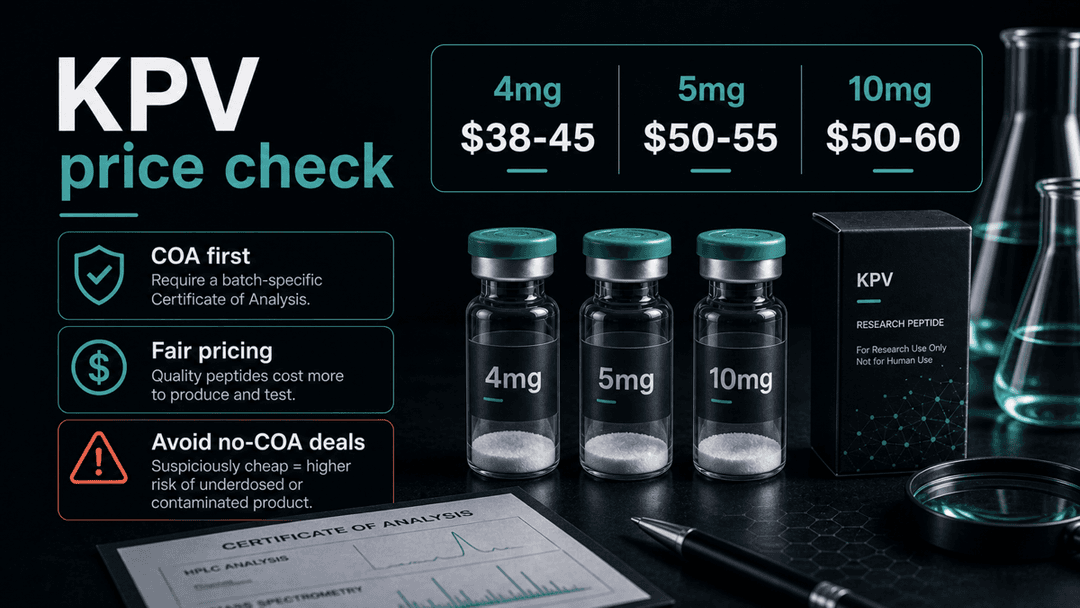
KPV is one of the cheaper research peptides because the molecule is small and simple to synthesize. Here is the realistic landscape.
- 4mg vials: roughly $38–$45 from established vendors
- 5mg vials: roughly $50–$55
- 10mg vials: roughly $50–$60, the best value per milligram
Bulk discounts are common, often 5 to 25% off at higher quantities. The thing to internalize is that price is almost no signal of quality here. A vendor pricing far below the pack is usually cutting the cost of independent testing, which is the single most expensive and most important step. Paying an extra ten or fifteen dollars for a verified batch is the cheapest insurance in this entire transaction.
How to Get KPV
Because KPV is not an approved drug, getting it is straightforward in mechanics and entirely on you in terms of due diligence. There is no prescription to obtain and no clinic visit required. The process looks like this:
- Pick a vendor that publishes batch COAs. This is the whole ballgame. Start with a seller that links real, dated certificates tied to the lot you will actually receive.
- Confirm the COA before you order. Check the lot, the purity (≥98% HPLC), and that the testing lab is verifiable.
- Order the format you need. KPV usually comes as lyophilized powder in 4–10mg vials. Bacteriostatic water and lab supplies are typically sold separately.
- Store it correctly. Keep the sealed vial cool, dry, and away from light. Many vendors recommend freezing for long-term storage of the powder; once reconstituted it should be refrigerated at 2–8°C and protected from repeated freeze-thaw cycles.
- Match the vial to the certificate on arrival. The lot number on your vial should match the COA you reviewed.
Payment is usually credit card or crypto. Credit card gives you chargeback protection if a product turns out fraudulent, which is worth using until you trust a seller.
Vendor Comparison Table
Top Vendors
Ranked by purity, third-party testing, COA availability, and price.
>98% HPLC (certificate pass mark) · Kovera Labs
~98.5% HPLC · Janoshik
Up to 100% HPLC · MZ Biolabs
>99% · Published COA
COA available · Claimed
99% · Claimed
Prices and stock change frequently. Always verify current pricing and the live batch COA before purchasing.
Red Flags to Avoid
The KPV market has the same bad actors as the rest of the peptide space, just at a lower price point.
- No COA, or generic COA only. No batch-specific certificate means no sale.
- Medical or dosing claims. A vendor that markets KPV as a treatment for a specific condition while also calling it a "research chemical" is talking out of both sides of its mouth.
- Prices that are too good. A 5mg or 10mg vial priced far below the pack almost always skipped testing.
- No reputation anywhere. If a vendor is invisible on r/Peptides and the usual community boards, that absence is a reason for caution.
- Pressure tactics. Countdown timers and "today only" scarcity from unknown sellers correlate with lower-quality operations.
Internal Links Worth a Look
If you are researching KPV for skin or recovery reasons, our guide on GHK-Cu for skin and hair covers a peptide with overlapping interest and a clearer body of cosmetic research. For people stacking recovery compounds, the Wolverine Stack explainer breaks down BPC-157 and TB-500.
Related Buying Guides
Use these next if you are comparing adjacent research-peptide sourcing decisions:
Frequently Asked Questions
Where can I buy KPV?
KPV is sold by online research-peptide vendors, not pharmacies or supplement stores. Our top pick is Ascension Peptides, which sells KPV 10mg at $50.00 with batch-specific third-party certificates. No seller is worth trusting blindly, so pick on evidence: the vendor should publish a batch-specific third-party COA, from a lab you can look up, matching the lot number on the vial they ship you. Whichever vendor you choose, confirm the current batch COA before ordering.
Is KPV legal to buy?
KPV is not a scheduled or controlled substance, and it is sold legally for research use only. It is not FDA-approved for any human condition, and buying it for research from a domestic vendor carries low practical legal risk. Using it outside that research framing falls outside the standard drug-approval system, so understand what you are doing before you order.
How much does KPV cost?
Expect roughly $38–$45 for a 4mg vial, $50–$55 for 5mg, and $50–$60 for a 10mg vial in 2026, with bulk discounts common. Price is a poor proxy for quality here, so prioritize a verifiable batch COA over the lowest sticker.
How do I know KPV is real and high purity?
Demand a batch-specific COA whose lot number matches your vial. It should show ≥98% purity by HPLC, identity confirmation by mass spectrometry (molecular weight 342.4), and ideally endotoxin and sterility results. Confirm the testing lab (Janoshik, MZ Biolabs, and Kovera Labs are examples) actually exists and the certificate is verifiable.
Do I need a prescription for KPV?
No. KPV is not an approved drug, so there is no prescription pathway and no clinic gatekeeping. That also means no regulatory body is checking your vendor's quality for you, which is exactly why batch COA verification matters so much.
What is KPV used for in research?
Most published KPV research focuses on its anti-inflammatory activity, especially in the gut, where it has reduced inflammation in colitis models via the PepT1 transporter. Other studies have looked at wound healing and scar formation. This evidence is mostly from cell and animal models, not human clinical trials.
The Bottom Line on Where to Buy KPV
KPV is cheap, simple, and easy to fake, which flips the usual buying logic. The compound is not the risk here; the vendor is. Your framework is short: COA first, reputation second, price last. A batch-specific certificate at ≥98% HPLC from a verifiable lab is worth more than any discount.
We start with Ascension Peptides because its batch certificates are public before you pay, and new customers get 50% off with code PEPTIDEDECK. But the standard matters more than the name. If a seller will send you the current batch certificate before you pay, and the lot on that certificate turns up on the vial in the box, they have passed the only test that matters for a peptide this easy to fake. If they will not, no price is low enough.
Medical Disclaimer: The information in this article is for informational purposes only and does not constitute medical advice. KPV is not FDA-approved and is not intended to diagnose, treat, cure, or prevent any disease. It is sold for research use only. Always consult a qualified healthcare provider before considering any new compound or protocol. The purchase and use of research peptides carries legal and health risks that vary by jurisdiction and individual circumstances.