What is Ozempic face?
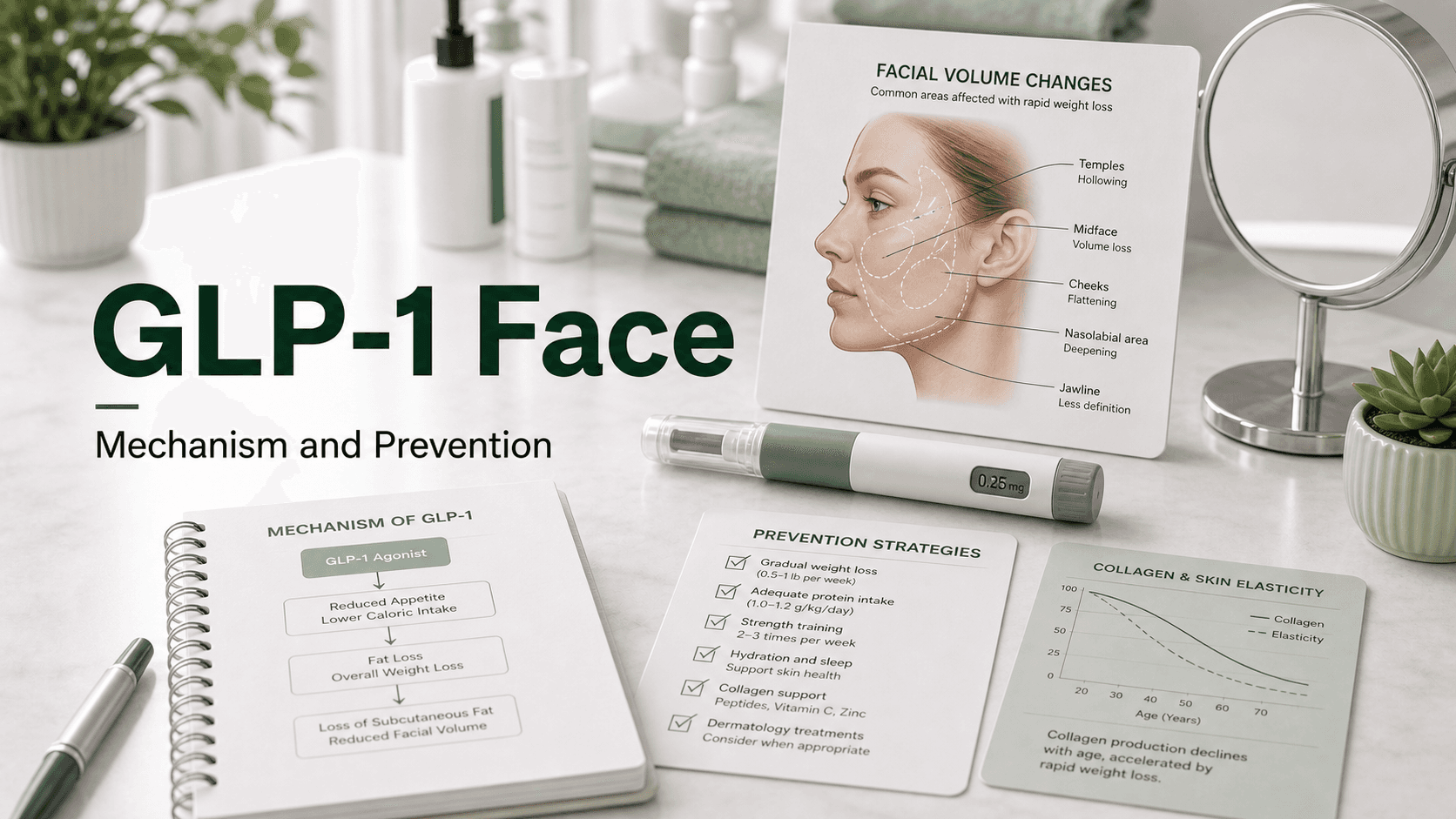
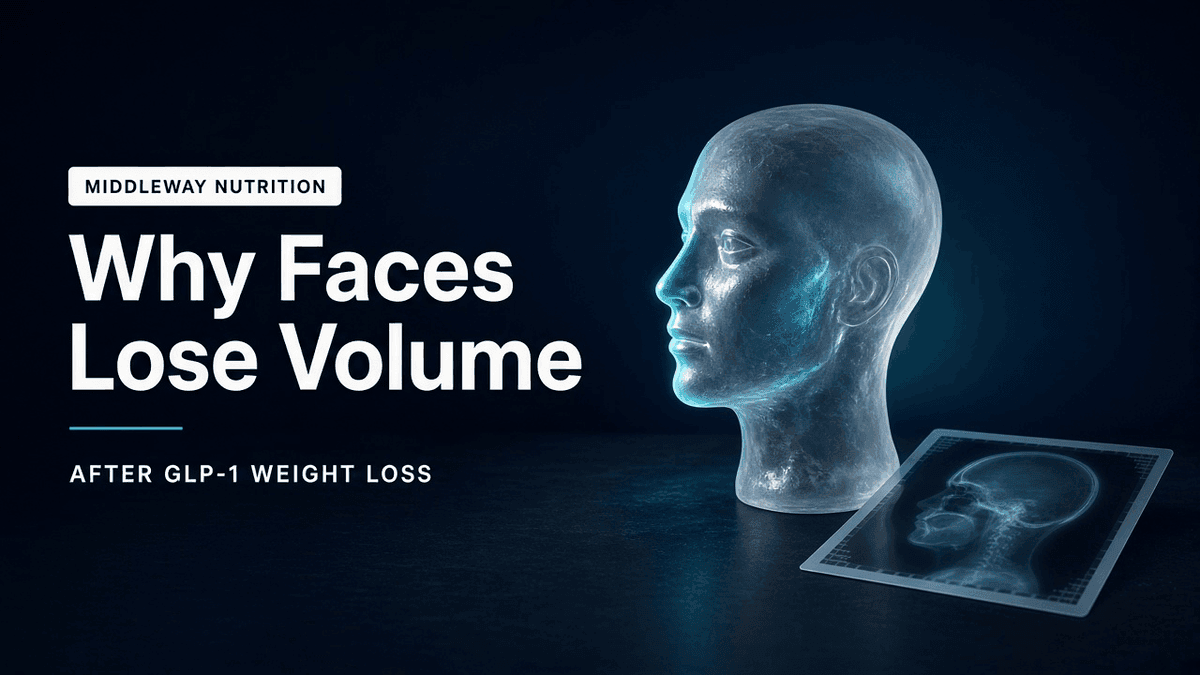
Ozempic face is a media term for an aged or deflated look after major weight loss on a GLP-1 medication. It has no agreed definition and is not listed as an adverse reaction in the Ozempic prescribing information.
The term reached the medical literature by 2023, in a letter titled "Ozempic face: A new challenge for facial plastic surgeons". A 2025 systematic review found 23 plastic-surgery papers on GLP-1 drugs and noted that searches for "Ozempic face" rose alongside searches for "face filler" and "plastic surgeons."
The features people describe most often are:
- Hollowing of the cheeks and temples
- Sunken or tired-looking eyes
- Deeper nose-to-mouth folds and looser skin along the jawline and neck
- More visible fine lines, and an older look overall
The current Ozempic label on DailyMed does not mention facial volume loss; its only skin entry is alopecia (hair loss). Ozempic is approved for adults with type 2 diabetes, including to lower cardiovascular and kidney risk, and is not approved for weight loss. The same drug, semaglutide, is approved for chronic weight management as Wegovy. For the full list of labeled reactions, see our guide to Ozempic side effects.
Why does Ozempic face happen?
It happens because the face loses fat when the body does, and fat is what keeps the cheeks, temples and under-eye area full. GLP-1 drugs cannot choose where fat comes off, and skin that has been stretched for years does not always shrink back at the same speed.
Facial fat sits in separate pads
The fat under facial skin is not one continuous layer. Cadaver work published in Plastic and Reconstructive Surgery in 2007 showed it is split into distinct compartments: three in the cheek, three in the forehead, separate pads around the eye, and the jowl fat lower down. The authors concluded that "the face does not age as a confluent or composite mass." When several pads shrink at once, the face hollows unevenly rather than simply getting smaller.
How much facial volume is lost
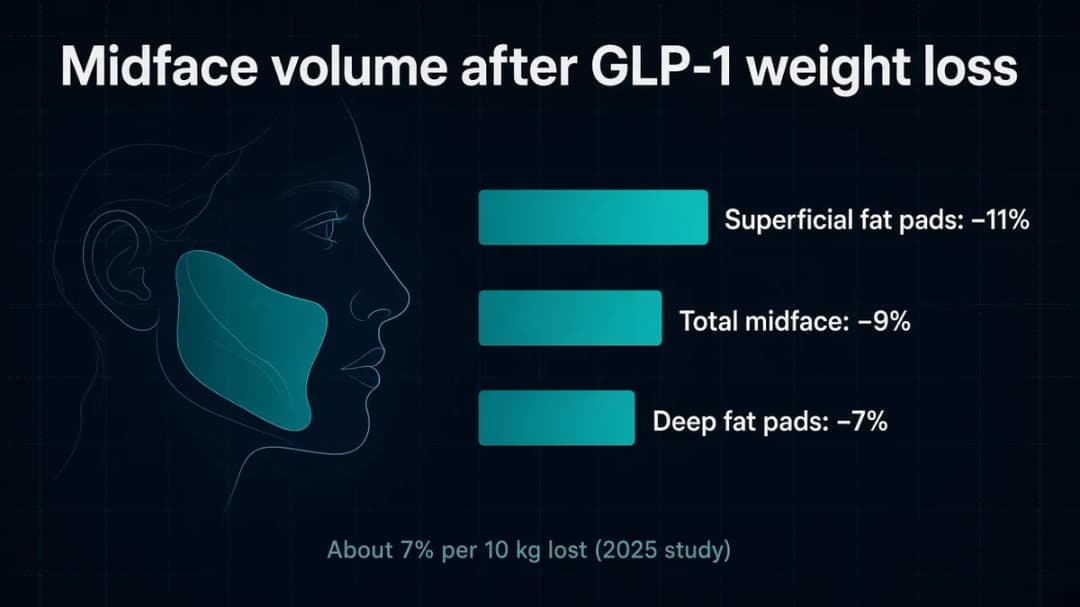
The best direct measurement so far is a 2025 retrospective study in Otolaryngology–Head and Neck Surgery. Researchers found 20 patients with CT or MRI head scans from before and after starting a GLP-1 drug and measured their midface volume.
| Measure (Sharma et al., 2025) | Result |
|---|---|
| Patients with before-and-after scans | 20 |
| Median age | 54 years |
| Average time on a GLP-1 drug | 321 days |
| Average weight lost | 11.0 kg (about 24 lb) |
| Median change in total midface volume | −9% |
| Median change in superficial fat pads | −11% |
| Median change in deep fat pads | −7% |
| Estimated loss per 10 kg of body weight | About 7% of midface volume |
Weight loss tracked with superficial fat loss but not deep fat loss, which fits what people see: the padding just under the skin goes first. The study is small and retrospective, so treat the numbers as a first estimate, not a prediction for any one person.
Is the drug itself aging the skin?
That is not established. A 2026 review in Aesthetic Surgery Journal of 46 reports concluded that the evidence "favors weight-loss-associated deflation superimposed on baseline anatomy and aging." Lab papers propose direct drug effects on skin and fat cells, but no human study has compared GLP-1 weight loss with the same loss by diet. We cover those proposed mechanisms on our GLP-1 face and skin aging page.
Is Ozempic face only caused by Ozempic?
No. Any large, fast weight loss can produce the same look, which is why people also talk about "Wegovy face" and "Mounjaro face."
A 2024 systematic review of bariatric patients found that massive weight loss after surgery or medical treatment was linked to facial aging. The mid-cheek lost the most volume, the central neck showed the most skin laxity, and patients' apparent age was higher after the loss.
What differs between drugs is mainly how much weight they take off. On average, the GLP-1 doses used for diabetes produce less weight loss than the doses used for obesity:
| Drug and dose | Trial or source | Average weight change | Timeframe |
|---|---|---|---|
| Ozempic 1 mg (semaglutide) | Ozempic label, 1 mg vs 2 mg trial | −5.6 kg | 40 weeks |
| Ozempic 2 mg (semaglutide) | Same trial | −6.4 kg | 40 weeks |
| Wegovy 2.4 mg (semaglutide) | STEP 1, NEJM 2021 | −14.9% of body weight | 68 weeks |
| Semaglutide 7.2 mg | STEP UP, Lancet Diabetes Endocrinol 2025 | −18.7% of body weight | 72 weeks |
| Tirzepatide 15 mg (Zepbound) | SURMOUNT-1, NEJM 2022 | −20.9% of body weight | 72 weeks |
The Ozempic trial enrolled adults with type 2 diabetes (about 99 to 100 kg at baseline), while the other trials enrolled adults with obesity and no diabetes, so this is not a head-to-head comparison. The point is simpler: a dose that removes more weight is likely to remove more facial fat. Our Ozempic before and after guide explains why Ozempic results usually trail Wegovy results.
Who is most likely to get Ozempic face?
People who lose a larger share of their body weight, and people over about 40, appear most likely to notice it. Speed of loss probably matters as well, but that has not been proven on its own.
- Amount of weight lost. In the imaging study above, more weight lost meant more superficial facial fat lost. In a 2026 survey of 1,226 patients on prescription weight-loss treatment, 29.2% reported facial volume loss and 37.7% reported skin sagging. Concerns were more common in people who lost more than 20% of their body weight than in those who lost less than 10%, and more common in GLP-1 users.
- Age. Facial fat and skin elasticity both decline with age. A study of 186 pairs of identical twins found that a 4-point higher BMI made the heavier twin look older before age 40 but younger after 40. After midlife, facial fat tends to read as youthful, so losing it shows more.
- Smoking and sun damage. In the same twin study, the longer a twin had smoked, the older they looked.
- Rate of loss. Many clinicians believe faster loss gives skin less time to adapt, but the 2026 review lists the independent effect of rate as uncertain.
- Starting face shape. Someone with a lean face before treatment has less facial fat to spare than someone who carried weight in the cheeks and neck.
Ozempic face before and after: what changes, and when?
There is no validated timeline. Published cases describe changes that build over months of steady loss, not weeks; in the imaging study, the average patient had been on a GLP-1 drug for 321 days at the second scan.
A panel of 10 aesthetic clinicians in a 2025 Delphi consensus, funded by a filler manufacturer, discussed defining medication-driven "rapid" weight loss as more than 10% of body weight over roughly 3 to 6 months. That is a working definition for clinicians, not a point at which facial change starts.
How to prevent Ozempic face
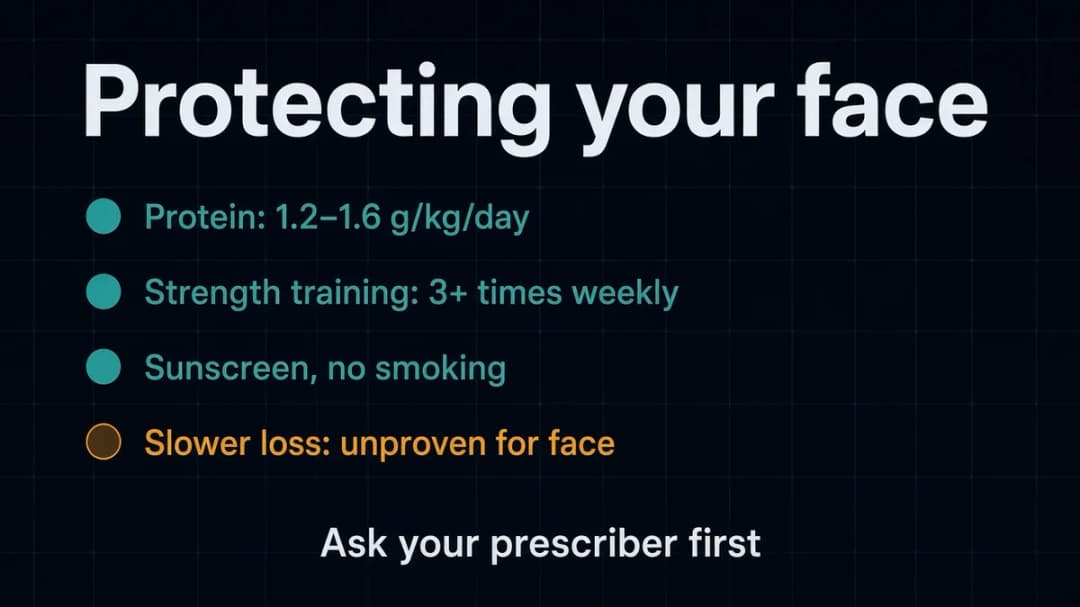
No method has been shown to prevent Ozempic face in a controlled trial. The steps below protect muscle, skin or overall health, and some may soften facial changes, but the face-specific evidence is thin.
| Step | What the evidence shows | Evidence for the face specifically |
|---|---|---|
| Avoid losing faster than you need to | Lean-mass loss is affected by the degree of calorie restriction and how fast weight comes off, per the 2025 joint nutrition advisory | Unproven. Rate has not been tested on its own |
| Eat enough protein | Higher targets of 1.2–1.6 g/kg/day have been proposed during active weight loss, or an absolute 80–120 g/day (same advisory) | Indirect. Supports muscle, not tested on facial fat |
| Strength training | The advisory recommends strength training at least 3 times weekly plus at least 150 minutes of moderate aerobic exercise to preserve muscle and bone | Indirect. Does not rebuild facial fat |
| Sun protection and not smoking | Smoking was linked to an older appearance in the twin study | General skin aging, not GLP-1 specific |
| Early biostimulator injections | Small studies: one open-label study of 41 people and one case series of 4 | Early, uncontrolled data only |
Pace of weight loss. GLP-1 doses step up on a label schedule, mainly to limit nausea. Changing the dose or pace is your prescriber's call, not something to adjust alone. Our Ozempic for weight loss guide covers off-label use and what to expect.
Protein and muscle. The lean-mass share of GLP-1 weight loss varies widely: a 2024 review reported 40% to 60% of weight lost in some trials and about 15% or less in others. Keeping muscle does not refill the cheeks, but it helps make the weight you lose mostly fat. See how much protein to eat on a GLP-1 and building muscle on a GLP-1.
Early injectables. A 2026 open-label study of 41 GLP-1 users treated with poly-L-lactic acid plus hyaluronic acid fillers reported better contour and skin quality, and a 2025 case series of 4 patients reported stable facial measurements despite an average loss of 24.3 lb. Neither had a control group. A 2026 prevention algorithm describes itself as hypothesis-generating (Level of Evidence V).
Hydration, facial exercises and collagen supplements are popular online, but none has been tested for preventing Ozempic face.
Ozempic face treatment: fillers, fat grafting and surgery
Treatment replaces lost volume, tightens loose skin, or both. Plastic surgeons most often use hyaluronic acid fillers, followed by fat grafting; the right choice depends on how much volume loss and skin laxity are involved.
The American Society of Plastic Surgeons 2025 Procedural Statistics Report, released September 1, 2026, gives the clearest picture of demand:
- 82% of ASPS member surgeons reported consultation requests related to GLP-1 use in 2025.
- For GLP-1-related facial consults, surgeons most often reported facelifts (71%), neck lifts (64%), eyelid surgery (37%) and brow lifts (19%).
- The facial rejuvenation approaches surgeons used most were hyaluronic acid fillers (69%), autologous fat grafting (49%), light or energy-based devices (45%) and biostimulatory injectables (33%).
- Facial fat grafting rose 39%, from 24,605 procedures in 2024 to 34,117 in 2025, the largest increase of any cosmetic surgical procedure. Facelifts rose 13% to 77,933 and neck lifts rose 21% to 27,315.
ASPS notes its statistics "do not establish a causal relationship" with GLP-1 use. A 2026 survey of 406 clinicians in Dermatologic Surgery, the American Society for Dermatologic Surgery's journal, reported a mean 137% rise in patients on GLP-1 drugs from 2023 to 2024.
| Treatment | What it does | What to know |
|---|---|---|
| Hyaluronic acid fillers | Replace volume in cheeks, temples, under-eyes and lips | FDA-regulated devices. Effects are temporary and the FDA notes duration depends on the material and area treated |
| Biostimulators (poly-L-lactic acid, calcium hydroxylapatite) | Prompt the skin to build collagen over several sessions | Small, uncontrolled studies in GLP-1 users so far |
| Fat grafting | Moves your own fat, taken by liposuction, into the face | No study has measured fat-graft survival in people on GLP-1 drugs, per a 2026 scoping review; the Delphi panel reached no consensus on it |
| Energy-based devices (radiofrequency, ultrasound, lasers) | Tighten mild skin laxity | Do not replace lost volume |
| Facelift or neck lift | Removes and repositions loose skin and deeper tissue | The Delphi panel advised waiting at least 6 months after weight has stabilized |
Every option carries risks. The FDA warns that filler injected into a blood vessel can cause tissue death, blindness and stroke, and that needle-free filler devices are not approved. Choose a board-certified dermatologist or plastic surgeon.
Does Ozempic face go away?
Usually not on its own while the weight stays off. Facial fat comes back mainly if body weight comes back, and no study has shown loose facial skin tightening fully on its own.
No study has tracked facial volume after people stop a GLP-1 drug, so the answer rests on body weight. In the STEP 1 trial extension, 327 people who stopped semaglutide 2.4 mg after losing 17.3% of their weight regained 11.6 percentage points within a year, about two-thirds of the loss. That may refill the face, but most cardiometabolic gains also drifted back toward baseline.
If you keep the weight off, the options are to accept the change, restore volume with fillers or fat grafting, or tighten skin once weight is stable.
When should you talk to a clinician?
Ozempic face is cosmetic, not dangerous, but what drives it can be medical. Talk to your prescriber if you are losing weight much faster than expected, cannot eat enough protein, or are losing strength. Call them too if nausea, vomiting or diarrhea are severe or persistent: the Ozempic label warns that fluid loss from these side effects can lead to acute kidney injury.
Do not stop or change your dose to protect your face without talking to your prescriber, since it affects blood sugar, weight and heart risk. A board-certified dermatologist or plastic surgeon can assess which layers are involved before any treatment. See also GLP-1 long-term side effects and Ozempic hair loss and muscle loss.
Frequently Asked Questions
What is Ozempic face?
Ozempic face is an informal term for facial hollowing, sagging and wrinkles after losing a lot of weight quickly on a GLP-1 drug. It is not a medical diagnosis or a labeled side effect; it comes from lost facial fat and skin that has not tightened to match.
Does everyone on Ozempic get Ozempic face?
No. In a 2026 survey of 1,226 people on prescription weight-loss treatment, 29.2% reported facial volume loss. It is more likely with larger weight loss, older age and a naturally lean face.
How much weight do you have to lose to get Ozempic face?
There is no set threshold. A 2025 imaging study estimated about 7% of midface volume lost for every 10 kg of body weight lost, with the superficial fat pads shrinking most.
Is there a Wegovy face or Mounjaro face?
Yes. The same change can happen on any drug that causes major weight loss. Wegovy is semaglutide at weight-management doses, and tirzepatide (Mounjaro, Zepbound) produced an average loss of 20.9% at its top dose in SURMOUNT-1.
Can you prevent Ozempic face?
Not reliably. Adequate protein, regular strength training, sun protection and avoiding unnecessarily fast weight loss support muscle and skin health, but none has been proven to prevent facial volume loss.
Do fillers fix Ozempic face?
Fillers can replace lost volume, and hyaluronic acid fillers were the facial approach ASPS surgeons used most in 2025. They are temporary and suit volume loss better than heavy skin laxity, which may need a device or surgery.
Does Ozempic face go away after stopping?
Not on its own unless weight is regained. In the STEP 1 extension, people regained about two-thirds of their lost weight within a year of stopping semaglutide, which may refill the face but also reverses the health gains.
Is Ozempic face the same as normal aging?
It looks similar because facial aging also involves fat-pad loss and reduced skin elasticity. Current evidence suggests weight-loss deflation is layered on top of a person's existing anatomy and age, which is why people over 40 tend to notice it more.
Sources
- Sharma RK, et al. Radiographic midfacial volume changes in patients on GLP-1 agonists. Otolaryngol Head Neck Surg. 2025.
- Yoo KH. GLP-1 receptor agonist-associated facial changes: a comprehensive review. Aesthet Surg J. 2026.
- Daneshgaran G, et al. "Ozempic face" in plastic surgery: a systematic review. Aesthet Surg J Open Forum. 2025.
- Santiago Mangual KP, et al. Aesthetic, muscle, and dermatologic effects of medical weight management. Int J Womens Dermatol. 2026.
- Jafar AB, et al. Soft tissue facial changes following massive weight loss: a systematic review. Aesthet Surg J Open Forum. 2024.
- Rohrich RJ, Pessa JE. The fat compartments of the face. Plast Reconstr Surg. 2007.
- Guyuron B, et al. Factors contributing to the facial aging of identical twins. Plast Reconstr Surg. 2009.
- Nikolis A, et al. Consensus statements on managing aesthetic needs in prescription medication-driven weight loss patients. J Cosmet Dermatol. 2025.
- American Society of Plastic Surgeons. 2025 Procedural Statistics Report. 2026.
- Fabi S, et al. Aesthetic concerns and nonsurgical treatment trends in patients with GLP-1 agonist-associated weight loss. Dermatol Surg. 2026.
- Mozaffarian D, et al. Nutritional priorities to support GLP-1 therapy for obesity: a joint advisory. Am J Lifestyle Med. 2025.
- Neeland IJ, et al. Changes in lean body mass with GLP-1-based therapies and mitigation strategies. Diabetes Obes Metab. 2024.
- Wilding JPH, et al. Weight regain after withdrawal of semaglutide: the STEP 1 trial extension. Diabetes Obes Metab. 2022.
- U.S. Food and Drug Administration. Dermal fillers (soft tissue fillers).
- Ozempic (semaglutide) injection prescribing information and Wegovy prescribing information. DailyMed.